Soles
Work Boots vs Cowboy Boots
A stirrup boot and a ladder boot are not the same tool.
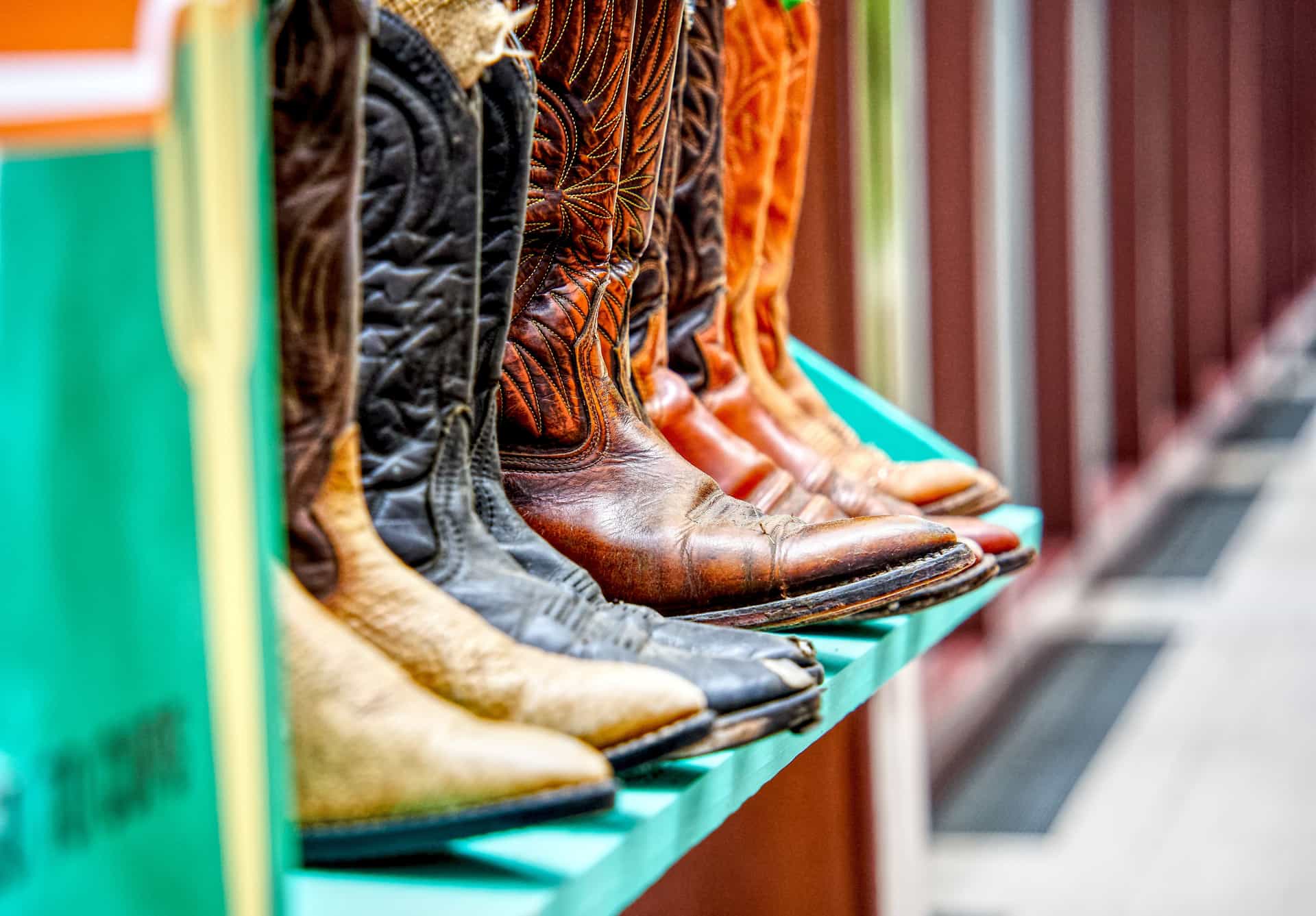
Disclosure: product links on this page go to Amazon. As an Amazon Associate we earn from qualifying purchases, at no extra cost to you. It does not change which boots we recommend or the order they appear in — here is the full disclosure.
Quick picks
| # | Product | Best for | Toe & rating | Price |
|---|---|---|---|---|
| 1 |  Ariat WorkHog XT Waterproof Carbon Toe Work Boot Ariat builds the WorkHog XT around lateral stability and a wide midfoot platform — the pull-on answer for outdoor work on ground that never sits level. | Western shape, rated and capped | Carbon safety toe, non-metallicASTM F2413 I/C EH SRO on the WorkHog XT Incognito carbon toe, per Ariat's published specification | |
| 2 | Ariat Groundbreaker H2O EH Steel Toe Wellington Work Boot Waterproof, EH-rated, steel-toe pull-on at the bottom of Ariat's range — the low-cost way into a lace-free waterproof boot. | Cheapest rated pull-on | Steel safety toeEH rated with steel safety toe | |
| 3 |  Thorogood American Heritage 6" Moc Toe Safety Toe MAXWear Wedge (804-4200) A Goodyear-welted, USA-built wedge with a steel toe and an EH rating — the default answer for anyone who stands on a flat hard floor and wants a boot that can be resoled. | The lace-up benchmark | Steel safety toe, moc toe shapeASTM F2413-18, EH |
Tap a row to jump to that boot's full write-up. The price column goes straight to Amazon.
The six differences
| Work boot | Traditional cowboy boot | |
|---|---|---|
| Toe protection | ASTM F2413 cap available on almost every model | None on a traditional boot; western work models add one |
| Outsole | Oil- and slip-resistant rubber, often slip-rated | Leather or thin rubber, designed to slide in a stirrup |
| Heel | Flat wedge or a defined 90-degree breast for rungs | Angled, tall and undercut — built to catch a stirrup |
| Toe shape | Round, plain or moc: room across the toes | Pointed or snip, which narrows the forefoot |
| Closure | Laces, which let you tune tension zone by zone | Pull-on, which cannot be adjusted at all |
| Ankle support | Lacing couples the shaft to the leg | Tall shaft, but nothing tightens it |
Why a cowboy boot is shaped the way it is
Almost every feature of a traditional western boot traces back to riding. The pointed toe finds a stirrup without looking. The tall, undercut heel stops the foot sliding through the iron. The smooth sole lets the boot leave the stirrup cleanly, and the pull-on shaft means nothing can catch if you come off the horse.
On a work site those same features read as: narrow forefoot, unstable heel, slippery sole, no adjustability. The smooth sole is the dangerous one — on a wet slab or an oily plant floor it is exactly what a slip-resistance rating exists to prevent.
What a western work boot changes
The category is well established and it fixes the important things. Ariat builds the WorkHog XT with a carbon safety toe, a slip-resisting Duratread outsole and a waterproof membrane, and the Groundbreaker pull-on is a cheap, EH-rated, steel-toe way into the shape. What you keep is the pull-on convenience, the tall shaft and the look; what you give up is the smooth sole and the pointed toe.
A 90-degree heel is worth looking for specifically. Ariat states one on several work models, and it does the job a western heel cannot: gives a ladder rung a corner to catch.
Pull-on is a genuine advantage, with a genuine cost
The best argument for the western shape at work has nothing to do with riding: no laces. In mud, concrete slurry or grain dust, laces clog, freeze and wear through, and a pull-on boot has none of that. For anyone on and off a truck all day it is also simply faster.
The cost is that you cannot tune the fit. A lace-up boot lets you run the forefoot loose and the ankle tight; a pull-on has one fit, decided by the last and your instep. That is why sizing a pull-on is less forgiving — the full argument is in pull-on vs lace-up work boots.
The real use case: ranch and agriculture
If you actually ride during your working day, this stops being a comparison and becomes a requirement — a lugged work boot is a hazard in a stirrup, because the tread can jam. Ranch work is the case where a western boot with a rated cap is the correct answer rather than a style preference.
Everyone else is choosing between convenience and adjustability, and should choose on that basis rather than on tradition.
The verdict
Do not wear a traditional cowboy boot for site work. No certified cap, a sole designed to slide and a heel designed to catch a stirrup are three separate reasons, and the sole alone is enough.
If you ride during the working day, buy a western work boot with an ASTM F2413 cap — the WorkHog XT is the well-equipped version, the Groundbreaker the budget one.
If you do not ride, buy a lace-up work boot, or a non-western pull-on if you want the convenience. You get adjustable fit and a far wider choice of soles, and the only thing you lose is the shape.
The picks in full
Illustrative category photo — not this model#1 — Western shape, rated and capped
Ariat WorkHog XT Waterproof Carbon Toe Work Boot
Ariat builds the WorkHog XT around lateral stability and a wide midfoot platform — the pull-on answer for outdoor work on ground that never sits level.
Published specifications
- Toe
- Carbon safety toe, non-metallic
- Safety rating
- ASTM F2413 I/C EH SRO on the WorkHog XT Incognito carbon toe, per Ariat's published specification
- Upper
- Leather upper with DRYShield waterproof breathable construction
- Outsole
- Ariat work outsole, slip-resistant (SRO on the rated models)
- Midsole / shank
- ATS Max platform with an extra-wide midfoot and a dual-density EVA midsole
- Construction
- Not published as a welt construction
- Waterproof
- Waterproof — DRYShield
- Insulation
- Not insulated
Specifications read from Ariat product page (WorkHog XT waterproof carbon toe) on 2026-09-27. We have not worn this boot.
What works
- Lateral stability is the design brief, and it shows on uneven ground
- Carries an SRO slip designation as well as EH on the rated models
- Pull-on entry with a lacing-free instep
What doesn't
- Ariat publishes the full designation on some WorkHog XT models and not others — check the exact variant
- Wide midfoot platform feels clumsy indoors
- Not resoleable
Who this is wrong for
Tight indoor work in confined spaces. The wide platform that helps on rubble is a hindrance in a crawl space.
Sizing
Ariat runs a touch long for many owners; a half size down is a common report. Because it is a pull-on, size for the instep first.
Illustrative category photo — not this model#2 — Cheapest rated pull-on
Ariat Groundbreaker H2O EH Steel Toe Wellington Work Boot
Waterproof, EH-rated, steel-toe pull-on at the bottom of Ariat's range — the low-cost way into a lace-free waterproof boot.
Published specifications
- Toe
- Steel safety toe
- Safety rating
- EH rated with steel safety toe
- Upper
- Leather upper with waterproof PRO construction
- Outsole
- Ariat work outsole
- Midsole / shank
- 4LR footbed technology for cushioning and support
- Construction
- Not published as a welt construction
- Waterproof
- Waterproof — Ariat PRO construction
- Insulation
- Not insulated
- Widths
- A wide (EE) version is listed
Specifications read from Authorized retailer spec page (Academy) — Ariat Groundbreaker Wide H2O EH steel toe wellington on 2026-09-27. We have not worn this boot.
What works
- Cheapest waterproof EH pull-on here
- Wide version genuinely stocked
- No laces to deal with in mud
What doesn't
- Entry-tier materials — expect a shorter life than the WorkHog XT
- Steel toe conducts cold
- Retailer page publishes less detail than Ariat's own pages
Who this is wrong for
Anyone in real cold. A steel cap with no insulation is the worst toe-temperature combination available.
Sizing
Groundbreaker pull-ons need room at the instep to get on. If your foot is high-volume, take the EE before you take a longer size.
Illustrative category photo — not this model#3 — The lace-up benchmark
Thorogood American Heritage 6" Moc Toe Safety Toe MAXWear Wedge (804-4200)
A Goodyear-welted, USA-built wedge with a steel toe and an EH rating — the default answer for anyone who stands on a flat hard floor and wants a boot that can be resoled.
Published specifications
- Toe
- Steel safety toe, moc toe shape
- Safety rating
- ASTM F2413-18, EH
- Upper
- Tobacco full-grain American leather, unlined
- Outsole
- MAXWear Wedge slip-resistant outsole
- Midsole / shank
- Rubber midsole with composite shank
- Construction
- Goodyear storm welt
- Waterproof
- Not waterproof
- Insulation
- Not insulated
- Widths
- D and EE, sizes 7-14 in both widths
- Weight
- Not published on the manufacturer page
- Made in
- Made in USA with USA and globally sourced components
Specifications read from Thorogood product page (804-4200) on 2026-09-27. We have not worn this boot.
What works
- Goodyear storm welt is a resoleable construction, not a disposable one
- Flat wedge spreads load evenly on concrete instead of concentrating it under a heel
- Unlined upper breaks in to the foot rather than around a liner
- EE width is stocked across the whole size run, not just the middle
What doesn't
- Not waterproof and not insulated — the unlined upper soaks
- A flat wedge gives up bite on mud, gravel and ladder rungs
- Manufacturer publishes no weight figure, so weight comparisons are guesswork
Who this is wrong for
Anyone working outdoors on soft or uneven ground, or in standing water. The wedge has no lugs to bite and the unlined upper is not waterproof.
Sizing
Thorogood's moc-toe last is widely reported to run large; owner reviews consistently suggest going a half size down from a measured Brannock length. D and EE are both stocked, so take the width rather than sizing up for room.
Frequently asked questions
Can you wear cowboy boots for work?
Not a traditional pair on a site that requires protective footwear: there is no ASTM F2413 cap, and the smooth leather sole is the opposite of slip-resistant. Western work boots are a different matter — they keep the shape and add a rated cap, a rubber slip-resisting outsole and often a membrane.
Are cowboy boots good for standing all day?
Generally no. The narrow forefoot restricts a foot that needs to spread under load, and the tall angled heel concentrates weight on a small area rather than spreading it. A flat wedge does the opposite, which is why it became the standard for anyone standing on a hard floor.
Do cowboy work boots have steel toes?
Western work models do — Ariat, Justin and others sell steel, composite and carbon-toe versions with published ASTM F2413 ratings. Traditional dress or riding boots do not, and there is no way to add certified protection to a boot that was not built with it.
Why do cowboy boots have a pointed toe and a tall heel?
Both are stirrup features. The pointed toe finds the stirrup without looking down, and the tall undercut heel stops the foot sliding all the way through the iron — a genuine safety feature on horseback. On a ladder rung or a slab, the same heel is a liability.
Sources
- OSHA 29 CFR 1910.136 — Foot protection — The federal rule itself: when protective footwear is required, and which consensus standards it accepts
- ASTM F2413 protective footwear standard — technical summary — Label format, the mandatory I and C designations, and each optional code
- Reebok Work Sublite Cushion — ASTM F3445 slip-resistance rating — Slip resistance stated against a named ASTM test method
Read next
Pull-On vs Lace-Up Work Boots
The closure argument on its own, without the western styling.
Best Pull-On Work Boots
If it is the no-laces convenience you are actually after.
Why Work Boots Have Raised Heels
What a heel breast is for, and why a stirrup heel is not that.
Best Slip-Resistant Work Boots
The rating a leather western sole cannot meet.