Soles
Pull-On vs Lace-Up Work Boots
You are trading fit control for speed. Know which you need.
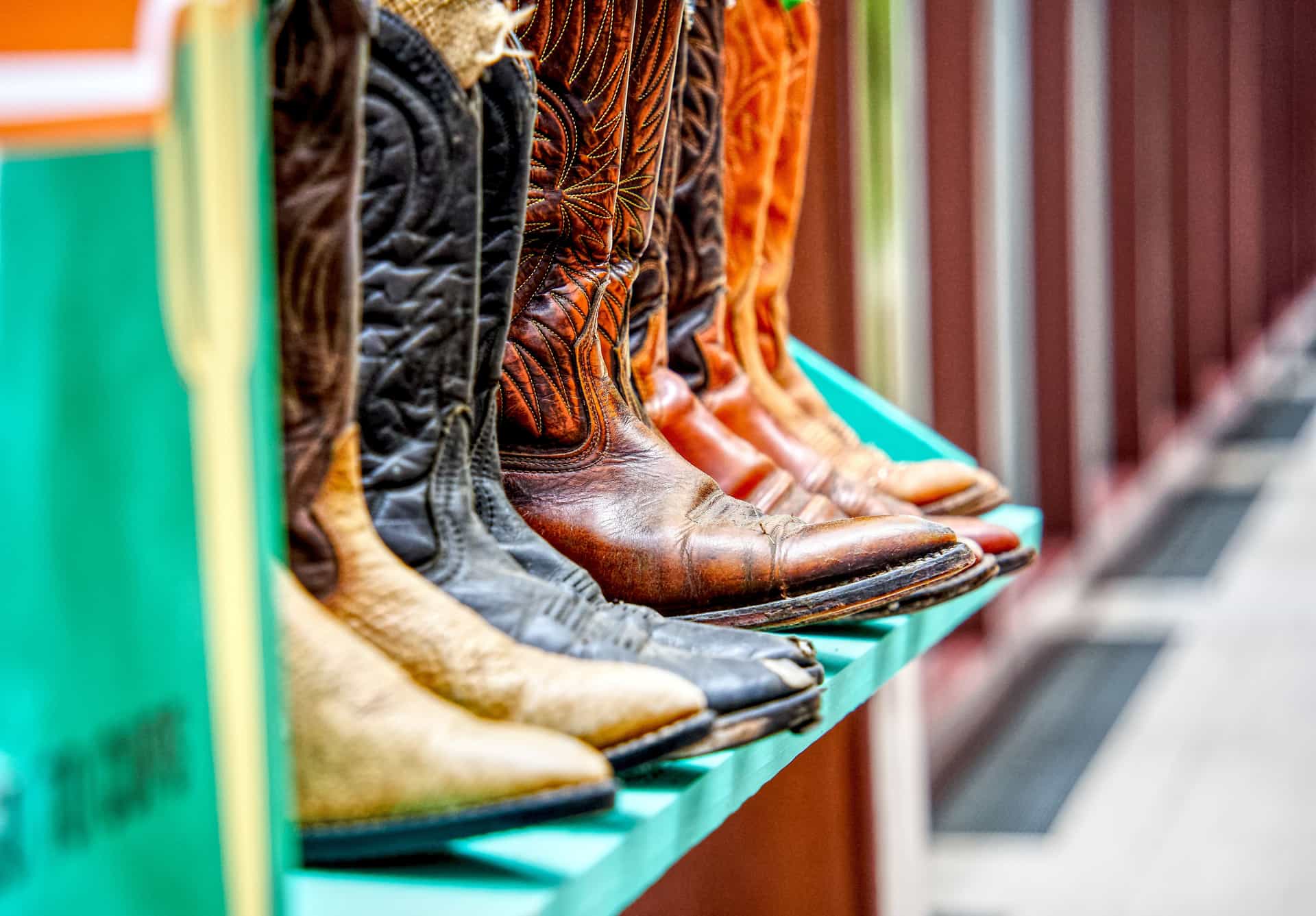
Disclosure: product links on this page go to Amazon. As an Amazon Associate we earn from qualifying purchases, at no extra cost to you. It does not change which boots we recommend or the order they appear in — here is the full disclosure.
Quick picks
| # | Product | Best for | Toe & rating | Price |
|---|---|---|---|---|
| 1 |  Wolverine Rancher Pull-On Steel-Toe Work Wellington A waterproof pull-on with a steel toe, EH and SR rating — no laces to tie, no laces to catch, and the current ASTM F2413-24 designation. | The pull-on | Steel safety toeASTM F2413-24 I/C EH SR | |
| 2 | Ariat WorkHog XT Waterproof Carbon Toe Work Boot Ariat builds the WorkHog XT around lateral stability and a wide midfoot platform — the pull-on answer for outdoor work on ground that never sits level. | Pull-on with stability | Carbon safety toe, non-metallicASTM F2413 I/C EH SRO on the WorkHog XT Incognito carbon toe, per Ariat's published specification | |
| 3 |  Thorogood American Heritage 6" Moc Toe Safety Toe MAXWear Wedge (804-4200) A Goodyear-welted, USA-built wedge with a steel toe and an EH rating — the default answer for anyone who stands on a flat hard floor and wants a boot that can be resoled. | The lace-up | Steel safety toe, moc toe shapeASTM F2413-18, EH |
Tap a row to jump to that boot's full write-up. The price column goes straight to Amazon.
The comparison
| Pull-on | Lace-up | |
|---|---|---|
| Fit control | None. The boot fits or it does not | Extensive — heel lock, instep relief, tension by zone |
| Speed on and off | Seconds | A minute, more with speed hooks and a tall shaft |
| Ankle support | From the shaft alone | From the shaft plus lacing you can tighten |
| Debris and water | The open top is a funnel | Laces and a gusseted tongue close the opening |
| Snag and fire hazard | Nothing to catch or char | Laces can catch in machinery and burn |
Fit control is the real cost
A pull-on has to be wide enough at the instep for your foot to get through, which frequently means it is looser at the heel than a laced boot would be. You cannot fix that afterwards, because there is nothing to tighten.
Heel slip is what causes blisters and what drives your toes forward into the safety cap, so this is not cosmetic. If you have a narrow heel or a hard-to-fit foot, a pull-on is a genuinely worse choice and no amount of quality in the boot changes that.
The workarounds are a thicker sock or a heel-grip insole. Both help and neither is as good as a lace.
Speed is not a convenience argument
It is a safety one in two trades. Welders need boots off fast when something hot goes down the shaft, and the seconds it takes to unlace are seconds you do not have. Farm and ranch work has the same consideration around machinery, where a lace caught in a PTO shaft is a well-known hazard.
For everyone else — drivers in and out of a cab, anyone asked to remove boots at a customer's door — it is genuine convenience rather than safety, and worth weighing accordingly.
The open top is the pull-on's weakness
A pull-on shaft is a funnel. Grain, sawdust, concrete dust, gravel, water from above, welding spatter — all of it goes in and none of it comes out on its own. A laced boot with a gusseted tongue closes down around the ankle and keeps most of it out.
Welders solve this by wearing leather spats over the boot top, which is the right answer: the boot handles the removal problem, the spat handles the entry problem. If you are considering a pull-on for dusty work, budget for gaiters.
The third option: a dial
BOA-type dial closures sit between the two. Irish Setter uses one on the Kasota, and you can retension it in one motion with a gloved hand mid-shift — which laces do not allow and pull-ons cannot do at all.
The limitation is the flip side of the strength: a dial pulls even tension across the whole instep, so you cannot lace loosely over one pressure point the way you can with laces. And it is a mechanical part that can be damaged by impact, which rules it out for demolition and scrap work.
Buy a pull-on if…
- You need boots off fast — welding, hot work.
- You work around machinery where a lace can catch.
- You are in and out of a cab or a customer's house all day.
- You work in deep mud where laces clog and freeze solid.
- Your feet are a standard width and your heel is not narrow.
Buy a lace-up if…
- You have a narrow heel, a high instep or any hard-to-fit foot.
- You need ankle support you can tighten.
- You work in dust or debris that would funnel down an open shaft.
- You want to change tension across a day as your feet swell.
- You want the option of window lacing around a pressure point.
Where both lose
Neither solves a boot that is the wrong shape for your foot. Lacing can rescue a boot that is fractionally loose; it cannot rescue one that is too narrow underfoot, and a pull-on cannot rescue anything at all. Start with getting the size right.
The picks in full
Illustrative category photo — not this model#1 — The pull-on
Wolverine Rancher Pull-On Steel-Toe Work Wellington
A waterproof pull-on with a steel toe, EH and SR rating — no laces to tie, no laces to catch, and the current ASTM F2413-24 designation.
Published specifications
- Toe
- Steel safety toe
- Safety rating
- ASTM F2413-24 I/C EH SR
- Upper
- Premium waterproof full-grain leather
- Outsole
- Slip-resistant work outsole
- Midsole / shank
- Not published on the manufacturer page
- Construction
- Not published as a welt construction
- Waterproof
- Waterproof full-grain leather upper
- Insulation
- Not insulated
Specifications read from Wolverine product page (Rancher pull-on steel toe wellington) on 2026-09-27. We have not worn this boot.
What works
- Carries the SR slip-resistance designation as well as EH
- On and off in seconds, which matters if you are in and out of a cab
- No laces to catch in machinery or on rungs
What doesn't
- No lacing means no way to fine-tune fit or lock the heel
- Pull-on shafts let debris in at the top
- Harder to get a precise fit than a lace-up
Who this is wrong for
Anyone with a narrow heel or a hard-to-fit foot. Without laces, you cannot correct heel slip, and heel slip is what causes blisters.
Sizing
Pull-ons must be sized for the widest part of your foot to get past the instep, which often means a slightly loose heel. Size for the instep, then fix the heel with a thicker sock or a heel-grip insole.
Illustrative category photo — not this model#2 — Pull-on with stability
Ariat WorkHog XT Waterproof Carbon Toe Work Boot
Ariat builds the WorkHog XT around lateral stability and a wide midfoot platform — the pull-on answer for outdoor work on ground that never sits level.
Published specifications
- Toe
- Carbon safety toe, non-metallic
- Safety rating
- ASTM F2413 I/C EH SRO on the WorkHog XT Incognito carbon toe, per Ariat's published specification
- Upper
- Leather upper with DRYShield waterproof breathable construction
- Outsole
- Ariat work outsole, slip-resistant (SRO on the rated models)
- Midsole / shank
- ATS Max platform with an extra-wide midfoot and a dual-density EVA midsole
- Construction
- Not published as a welt construction
- Waterproof
- Waterproof — DRYShield
- Insulation
- Not insulated
Specifications read from Ariat product page (WorkHog XT waterproof carbon toe) on 2026-09-27. We have not worn this boot.
What works
- Lateral stability is the design brief, and it shows on uneven ground
- Carries an SRO slip designation as well as EH on the rated models
- Pull-on entry with a lacing-free instep
What doesn't
- Ariat publishes the full designation on some WorkHog XT models and not others — check the exact variant
- Wide midfoot platform feels clumsy indoors
- Not resoleable
Who this is wrong for
Tight indoor work in confined spaces. The wide platform that helps on rubble is a hindrance in a crawl space.
Sizing
Ariat runs a touch long for many owners; a half size down is a common report. Because it is a pull-on, size for the instep first.
Illustrative category photo — not this model#3 — The lace-up
Thorogood American Heritage 6" Moc Toe Safety Toe MAXWear Wedge (804-4200)
A Goodyear-welted, USA-built wedge with a steel toe and an EH rating — the default answer for anyone who stands on a flat hard floor and wants a boot that can be resoled.
Published specifications
- Toe
- Steel safety toe, moc toe shape
- Safety rating
- ASTM F2413-18, EH
- Upper
- Tobacco full-grain American leather, unlined
- Outsole
- MAXWear Wedge slip-resistant outsole
- Midsole / shank
- Rubber midsole with composite shank
- Construction
- Goodyear storm welt
- Waterproof
- Not waterproof
- Insulation
- Not insulated
- Widths
- D and EE, sizes 7-14 in both widths
- Weight
- Not published on the manufacturer page
- Made in
- Made in USA with USA and globally sourced components
Specifications read from Thorogood product page (804-4200) on 2026-09-27. We have not worn this boot.
What works
- Goodyear storm welt is a resoleable construction, not a disposable one
- Flat wedge spreads load evenly on concrete instead of concentrating it under a heel
- Unlined upper breaks in to the foot rather than around a liner
- EE width is stocked across the whole size run, not just the middle
What doesn't
- Not waterproof and not insulated — the unlined upper soaks
- A flat wedge gives up bite on mud, gravel and ladder rungs
- Manufacturer publishes no weight figure, so weight comparisons are guesswork
Who this is wrong for
Anyone working outdoors on soft or uneven ground, or in standing water. The wedge has no lugs to bite and the unlined upper is not waterproof.
Sizing
Thorogood's moc-toe last is widely reported to run large; owner reviews consistently suggest going a half size down from a measured Brannock length. D and EE are both stocked, so take the width rather than sizing up for room.
Frequently asked questions
Pull on work boots vs lace up — which is better?
Neither in general. A pull-on gives you speed and no snag hazard and zero fit adjustment; a lace-up gives you heel lock, pressure-point relief and tension you can change through the day, and takes longer to get on. If your feet are hard to fit, the lace-up is the better boot almost regardless of trade.
Do pull-on work boots have good ankle support?
Support comes from the shaft height and stiffness rather than from lacing, so a tall well-built pull-on can support the ankle reasonably. What you cannot do is tighten it — so if your ankle needs a snug fit rather than just a tall shaft, a lace-up is the better choice.
Why do welders wear pull-on boots?
Because they come off in one motion when something hot goes down the shaft, and there are no laces to catch spatter or char through. The trade-off is that the open top is a funnel, which is why welders commonly pair pull-ons with leather spats over the boot top.
How should pull-on boots fit?
Size for the instep, because that is what your foot has to get past. That often leaves the heel slightly looser than a laced boot would be. If the heel slips, a thicker sock or a heel-grip insole helps — but significant heel lift in a pull-on is a sign the boot is wrong for your foot.
Sources
- ASTM F2413 protective footwear standard — technical summary — Label format, the mandatory I and C designations, and each optional code
Read next
Best Pull-On Work Boots
If speed and no-snag are what you need, these are the picks.
Best Work Boots for Welders
The trade where the speed argument is a safety argument.
Work Boot Sizing Guide
A pull-on cannot be adjusted, so the fit has to be right first time.
Best Wide Work Boots
Width is what usually decides whether a pull-on can work for you.