Comfort & Fit
Best Work Boots for Concrete
The hardest surface most people work on, and the sole built for it.
Disclosure: product links on this page go to Amazon. As an Amazon Associate we earn from qualifying purchases, at no extra cost to you. It does not change which boots we recommend or the order they appear in — here is the full disclosure.
Quick picks
| # | Product | Best for | Toe & rating | Price |
|---|---|---|---|---|
| 1 |  Thorogood American Heritage 6" Moc Toe Safety Toe MAXWear Wedge (804-4200) A Goodyear-welted, USA-built wedge with a steel toe and an EH rating — the default answer for anyone who stands on a flat hard floor and wants a boot that can be resoled. | The reference concrete wedge | Steel safety toe, moc toe shapeASTM F2413-18, EH | |
| 2 | KEEN Utility San Jose 6" Aluminum Toe Wedge Work Boot A wedge-sole boot with an asymmetrical aluminum toe that KEEN states weighs 35% less than steel — the lightweight answer for flat-floor trades. | Wedge plus air-infused midsole | Asymmetrical aluminum safety toeASTM F2413-18 M/I/75/C/75 with EH (KEEN Utility safety-toe standard); KEEN states aluminum toes weigh 35% less than steel | |
| 3 | Georgia Boot AMP LT Wedge Composite Toe Waterproof Work Boot (GB00592) A waterproof composite-toe wedge whose SPR leather is specified against named caustics — the pick where the floor is flat and the spills are chemical. | Waterproof wedge | Ergo-Fit composite toeMeets ASTM F2413 Protective Toe Classification and ASTM F2413 Electrical Hazard Classification | |
| 4 |  BRUNT The Marin Waterproof Composite Toe Work Boot A waterproof composite toe with an adjustable width system — BRUNT's SWITCH-FIT lets one boot run regular or relaxed, which is a genuinely useful answer for a foot between widths. | PU midsole for midsole life | Composite safety toe — non-metallic, 15% lighter than steel per BRUNTComposite safety toe with electrical hazard (EH) protection; outsole and midsole meet ASTM D471-06 903 oil and isooctane chemical resistance | |
| 5 | Danner Bull Run Moc Toe 8" Steel Toe Stitchdown construction gives the Bull Run a wider platform than a welted boot of the same size — more stable underfoot, and handcrafted in the USA. | Widest stable platform | Steel safety toe, moc toe shapeSteel safety toe meets ASTM F2413 for impact and compression | |
| 6 |  Superfeet Work Cushion Insoles A work-specific insole with a tapered forefoot designed to fit under a safety toe — the detail most aftermarket insoles get wrong. | The cheapest first move | Not applicable — insoleNot applicable to the Work Cushion; Superfeet's Work PR model is tested to ASTM F2413 and EN ISO 22568-4:2021 Type PS |
Tap a row to jump to that boot's full write-up. The price column goes straight to Amazon.
Why concrete specifically
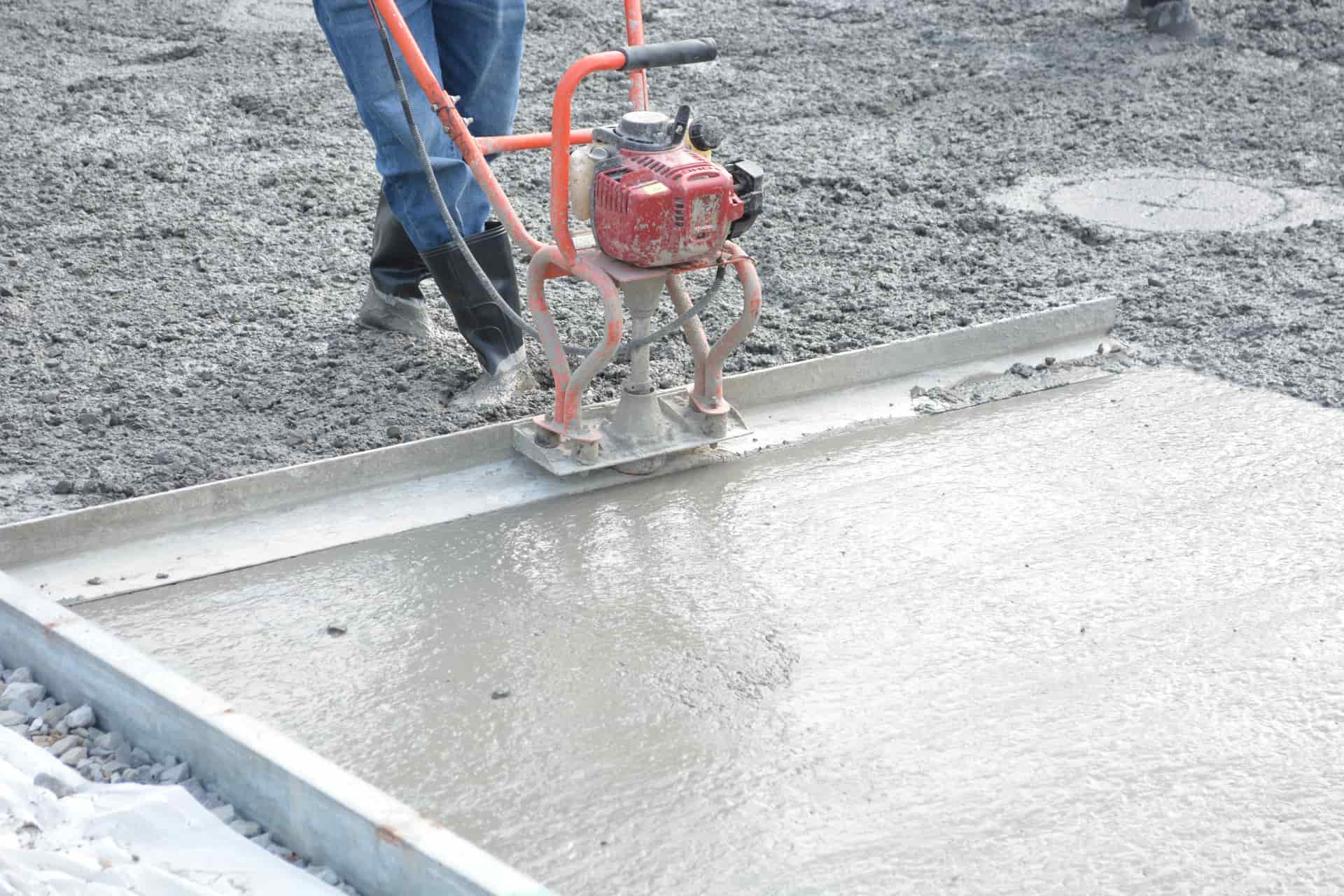
Every surface absorbs some of the energy of a footfall. Soil, floorboards, even asphalt in summer deform slightly and take a share. Concrete deforms essentially not at all, so all of it comes back up through the boot, the foot, the knee and the lower back.
That is why concrete comes up so often in the evidence on standing work. NIOSH's review links prolonged standing to increased low back pain, fatigue, muscle pain and leg swelling, with clear effects from around three hours — and the harder the surface, the earlier that clock starts.
The wedge, explained properly
A wedge outsole runs flat and continuous from toe to heel with no separate heel block. Two things follow.
Load spreads across the whole footprint. Instead of your weight passing through a heel the size of a coaster, it is carried by the full contact area of the sole. On a surface that gives you nothing back, that distribution is the entire benefit.
There is no heel strike transition. On a heeled boot the heel lands first and the forefoot slaps down. A flat sole lands closer to all at once, which is gentler on an unyielding floor.
The cost is traction and edge-holding: no heel breast for a ladder rung, nothing to bite into mud. Full comparison in wedge sole vs lug sole.
EVA versus PU, and why it matters here
| EVA | Polyurethane (PU) | |
|---|---|---|
| Feel when new | Softer and lighter — usually feels better in the shop | Firmer, denser, less immediately plush |
| Behavior over a year of full-time use | Compresses and stops rebounding; the boot goes flat | Holds its rebound substantially longer under the same load |
| Weight | Lighter | Heavier |
| Who publishes it | Georgia's AMP LT uses a dual-density EVA midsole | BRUNT and Wolverine both specify PU midsoles |
On concrete, PU is usually the better buy despite being heavier and less immediately comfortable, because the thing you are protecting against is cumulative and the boot needs to still be working in month ten.
The intervention that beats boots
If you work at a fixed station — a bench, a machine, a till — an anti-fatigue mat does more than any boot, for less money. NIOSH's guidance on standing work centers on giving the worker the ability to change posture and reduce static load, and a mat is the cheapest way to put some give into an unyielding floor.
Boots are the answer when you move around, because you cannot carry the floor with you. If you do not move around, ask for a mat first.
What to look for
- A flat wedge outsole, not a defined heel.
- A PU midsole if you want it to last.
- A removable footbed you can replace annually.
- Enough width for the foot to spread under load.
- A resoleable construction — concrete eats outsoles, and the rest of the boot usually outlives them.
- An anti-fatigue mat, if you stand in one place.
The picks in full
Illustrative category photo — not this model#1 — The reference concrete wedge
Thorogood American Heritage 6" Moc Toe Safety Toe MAXWear Wedge (804-4200)
A Goodyear-welted, USA-built wedge with a steel toe and an EH rating — the default answer for anyone who stands on a flat hard floor and wants a boot that can be resoled.
Published specifications
- Toe
- Steel safety toe, moc toe shape
- Safety rating
- ASTM F2413-18, EH
- Upper
- Tobacco full-grain American leather, unlined
- Outsole
- MAXWear Wedge slip-resistant outsole
- Midsole / shank
- Rubber midsole with composite shank
- Construction
- Goodyear storm welt
- Waterproof
- Not waterproof
- Insulation
- Not insulated
- Widths
- D and EE, sizes 7-14 in both widths
- Weight
- Not published on the manufacturer page
- Made in
- Made in USA with USA and globally sourced components
Specifications read from Thorogood product page (804-4200) on 2026-09-27. We have not worn this boot.
What works
- Goodyear storm welt is a resoleable construction, not a disposable one
- Flat wedge spreads load evenly on concrete instead of concentrating it under a heel
- Unlined upper breaks in to the foot rather than around a liner
- EE width is stocked across the whole size run, not just the middle
What doesn't
- Not waterproof and not insulated — the unlined upper soaks
- A flat wedge gives up bite on mud, gravel and ladder rungs
- Manufacturer publishes no weight figure, so weight comparisons are guesswork
Who this is wrong for
Anyone working outdoors on soft or uneven ground, or in standing water. The wedge has no lugs to bite and the unlined upper is not waterproof.
Sizing
Thorogood's moc-toe last is widely reported to run large; owner reviews consistently suggest going a half size down from a measured Brannock length. D and EE are both stocked, so take the width rather than sizing up for room.
Illustrative category photo — not this model#2 — Wedge plus air-infused midsole
KEEN Utility San Jose 6" Aluminum Toe Wedge Work Boot
A wedge-sole boot with an asymmetrical aluminum toe that KEEN states weighs 35% less than steel — the lightweight answer for flat-floor trades.
Published specifications
- Toe
- Asymmetrical aluminum safety toe
- Safety rating
- ASTM F2413-18 M/I/75/C/75 with EH (KEEN Utility safety-toe standard); KEEN states aluminum toes weigh 35% less than steel
- Upper
- Leather upper
- Outsole
- Oil- and slip-resistant wedge outsole
- Midsole / shank
- Air-infused KEEN Luftcell midsole
- Construction
- Not published as a welt construction
- Waterproof
- Both a non-waterproof and a waterproof San Jose are listed; check the specific variant
- Insulation
- Not insulated
Specifications read from KEEN Utility product page (San Jose 6" aluminum toe) on 2026-09-27. We have not worn this boot.
What works
- Lightest metal safety toe on this list, with a published figure
- Wedge sole suits concrete and finished floors
- Luftcell midsole is softer underfoot than a plain rubber wedge
What doesn't
- Aluminum is still metal — it conducts cold and trips detectors
- A wedge gives up traction on mud and gravel
- Not resoleable
Who this is wrong for
Cold outdoor work. A metal cap of any kind pulls heat out of the toes; take a composite or carbon toe into the cold.
Sizing
KEEN's roomy forefoot plus a wedge platform means the boot feels wide immediately. Do not read that as too big — check heel hold before you size down.
Illustrative category photo — not this model#3 — Waterproof wedge
Georgia Boot AMP LT Wedge Composite Toe Waterproof Work Boot (GB00592)
A waterproof composite-toe wedge whose SPR leather is specified against named caustics — the pick where the floor is flat and the spills are chemical.
Published specifications
- Toe
- Ergo-Fit composite toe
- Safety rating
- Meets ASTM F2413 Protective Toe Classification and ASTM F2413 Electrical Hazard Classification
- Upper
- Abrasion-resistant SPR leather, stated to resist caustic alkali, sulfuric acid, calcium hydroxide, potassium phosphate and caustic potash
- Outsole
- Carbo-Tec rubber outsole over dual-density EVA — heat, chemical, abrasion and slip resistant
- Midsole / shank
- Cushioning EVA midsole with a fiberglass shank
- Construction
- Not published as a welt construction
- Waterproof
- Waterproof — Georgia Waterproof System
- Insulation
- Not insulated
Specifications read from Georgia Boot product page (AMP LT Wedge composite toe, GB00592) on 2026-09-27. We have not worn this boot.
What works
- Names the specific chemicals the upper resists instead of saying chemical-resistant
- Fiberglass shank keeps the whole boot non-metallic underfoot
- Wedge sole plus waterproofing is a rare combination
What doesn't
- Memory-foam insoles pack down faster than PU
- EVA midsole compresses over a year of hard use
- Not resoleable
Who this is wrong for
Cold-weather outdoor work. A dual-density EVA midsole stiffens in the cold and this boot has no insulation.
Sizing
Georgia's AMP LT last is medium-volume. If you swap the memory-foam insole for a firmer orthotic you will gain a little room, which can make a snug pair workable.
Illustrative category photo — not this model#4 — PU midsole for midsole life
BRUNT The Marin Waterproof Composite Toe Work Boot
A waterproof composite toe with an adjustable width system — BRUNT's SWITCH-FIT lets one boot run regular or relaxed, which is a genuinely useful answer for a foot between widths.
Published specifications
- Toe
- Composite safety toe — non-metallic, 15% lighter than steel per BRUNT
- Safety rating
- Composite safety toe with electrical hazard (EH) protection; outsole and midsole meet ASTM D471-06 903 oil and isooctane chemical resistance
- Upper
- Leather upper, waterproof on this version
- Outsole
- BRUNT rubber outsole — oil- and slip-resistant, heat-resistant to 572°F / 300°C
- Midsole / shank
- BRUNT polyurethane (PU) midsole
- Construction
- Not published as a welt construction on this model
- Waterproof
- Waterproof
- Insulation
- Not insulated
- Widths
- SWITCH-FIT adjustable between regular (D) and relaxed (EE)
Specifications read from BRUNT Workwear product page (The Marin waterproof comp toe) on 2026-09-27. We have not worn this boot.
What works
- The width system solves a real fitting problem rather than inventing one
- Chemical resistance cited to a named ASTM test method
- PU midsole outlasts EVA
What doesn't
- BRUNT does not publish a full ASTM F2413 designation string on the page
- Direct-to-consumer only, so trying before buying is harder
- Not a welted construction
Who this is wrong for
Anyone who needs to see the complete ASTM designation before they buy. BRUNT states EH and composite-toe compliance but publishes less of the marking line than KEEN or Red Wing.
Sizing
Use SWITCH-FIT before you change size. Most people who think they need a longer boot actually need the relaxed (EE) setting on the same length.
Illustrative category photo — not this model#5 — Widest stable platform
Danner Bull Run Moc Toe 8" Steel Toe
Stitchdown construction gives the Bull Run a wider platform than a welted boot of the same size — more stable underfoot, and handcrafted in the USA.
Published specifications
- Toe
- Steel safety toe, moc toe shape
- Safety rating
- Steel safety toe meets ASTM F2413 for impact and compression
- Upper
- Tobacco leather upper
- Outsole
- Danner Wedge outsole — non-marking, oil- and slip-resistant, won't track debris
- Midsole / shank
- Not published on the manufacturer page
- Construction
- Handcrafted stitchdown construction
- Waterproof
- Not waterproof in this version; a GTX version is listed separately
- Insulation
- Not insulated
- Made in
- Built in the USA
Specifications read from Danner product page (Bull Run Moc Toe 8" steel toe) on 2026-09-27. We have not worn this boot.
What works
- Stitchdown is the most stable of the resoleable constructions
- Non-marking wedge works indoors and out
- A US-built moc toe with a safety cap, which is a short list
What doesn't
- Not waterproof — the GTX version costs more
- Stitchdown boots take longer to break in than cemented ones
- No published weight
Who this is wrong for
Anyone who needs the boot comfortable on day one. Stitchdown leather needs real break-in; buy it three weeks before you need it.
Sizing
Stitchdown adds a visible platform edge but not interior room. Size to your measured length; the extra width you see is outside the upper, not inside it.
Illustrative category photo — not this model#6 — The cheapest first move
Superfeet Work Cushion Insoles
A work-specific insole with a tapered forefoot designed to fit under a safety toe — the detail most aftermarket insoles get wrong.
Published specifications
- Toe
- Not applicable — insole
- Safety rating
- Not applicable to the Work Cushion; Superfeet's Work PR model is tested to ASTM F2413 and EN ISO 22568-4:2021 Type PS
- Upper
- Not applicable
- Outsole
- Not applicable
- Midsole / shank
- Not applicable
- Construction
- Molded work insole with a tapered forefoot
- Waterproof
- Not applicable
- Insulation
- Not applicable
Specifications read from Superfeet product page (Work Cushion) on 2026-09-27. We have not worn this boot.
What works
- The tapered forefoot is the difference between fitting and jamming
- A cheap way to extend a boot whose factory footbed has packed out
- Puncture-resistant and ESD variants exist for specific hazards
What doesn't
- Takes up volume — a snug boot becomes a tight one
- Does not fix a boot that is the wrong shape
- Needs replacing periodically like any insole
Who this is wrong for
A boot that already fits tightly. Pull the factory footbed out before adding this, and if it still crowds, the boot is too small.
Sizing
Trim to the factory footbed, not to the boot. Use the old insole as the template and cut once.
Frequently asked questions
What sole is best for concrete floors?
A flat wedge. It spreads body weight across the whole footprint rather than concentrating it under a heel, which matters most on a surface that gives you nothing back. Lugs provide no benefit on a smooth slab and reduce the contact area that is doing the work.
Why does concrete make my feet and back hurt?
Because it does not deform. Softer surfaces absorb part of each footfall; concrete returns essentially all of it up through the boot and the leg. NIOSH's review of prolonged standing links it to increased low back pain, fatigue, muscle pain and leg swelling, with clear effects from around three hours onward.
Are anti-fatigue mats better than good boots?
At a fixed station, yes — a mat puts give into the floor itself, which is more effective than anything a sole can do, and it costs less. Boots are the answer when you move around, because you cannot take the mat with you. If you stand in one place, ask for a mat before you buy boots.
How long do work boots last on concrete?
The outsole wears faster on concrete than on most surfaces, and the midsole compresses faster too. Expect a cemented boot to be finished within a year of full-time use. A welted or stitchdown boot can be resoled, which is why the traditional concrete boots are the resoleable ones.
Sources
- NIOSH Science Blog — Prolonged Standing at Work — NIOSH's own summary of the evidence on prolonged standing
- Evidence of health risks associated with prolonged standing at work (CDC Stacks) — The underlying review: low back pain, fatigue, leg swelling, vascular effects
- Timberland PRO technology glossary — Anti-Fatigue Technology and the inverted-cone footbed geometry, in Timberland's words
Read next
Best Wedge Sole Work Boots
The full wedge list, including the pull-on and waterproof options.
Best Work Boots for Warehouse Workers
Same surface, different problem — distance rather than static load.
Best Work Boots for Concrete & Masonry
If you pour it as well as stand on it, the wet mix attacks the boot too.
Best Work Boots for Standing All Day
The general case, with the evidence set out in full.