Soles
Why Do Work Boots Have Raised Heels?
It is a hook, not a fashion. Here is what it catches.
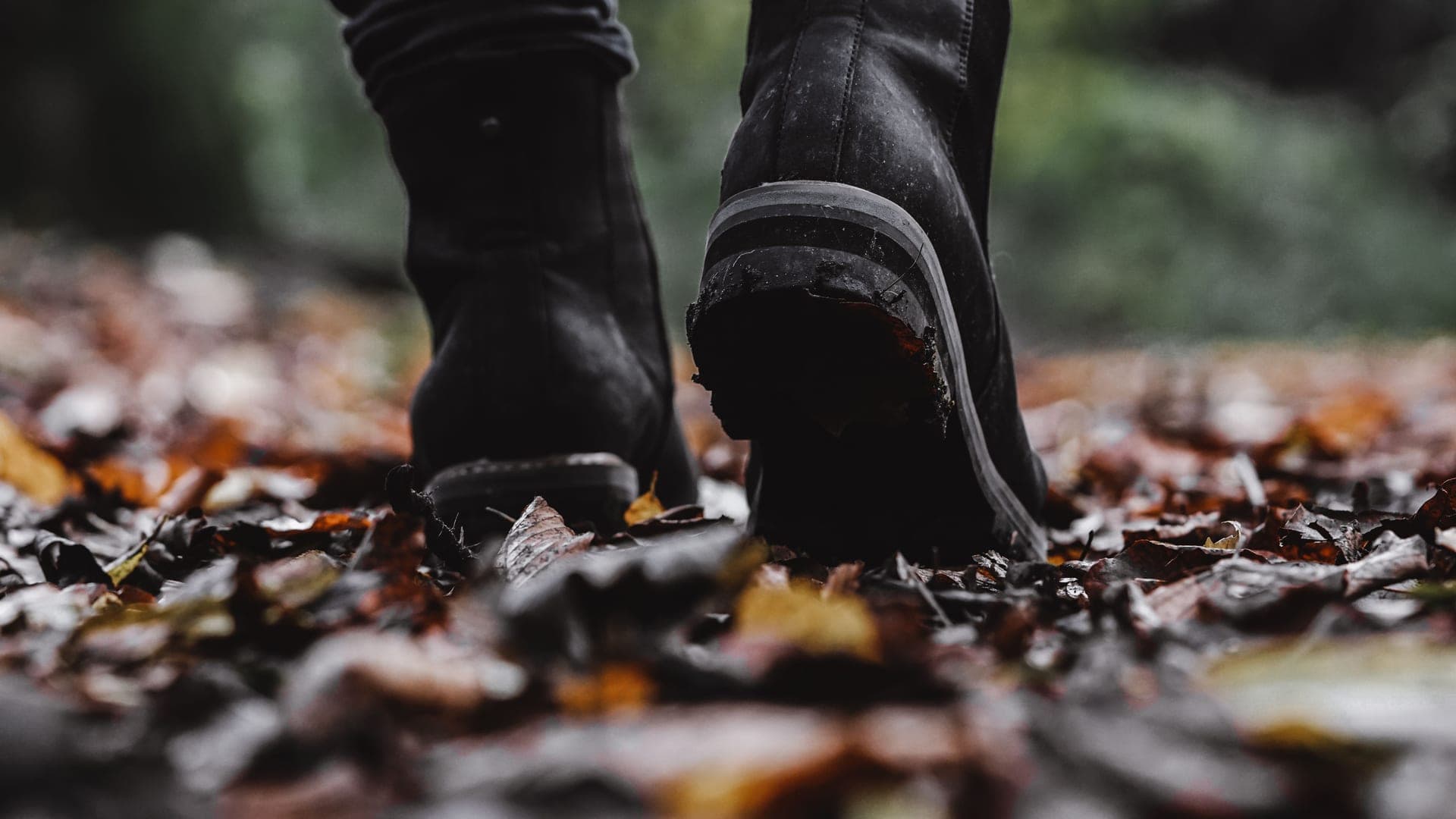
The heel breast is the whole point
Look at a logger or western boot from the side. The heel does not slope down into the arch — it drops in a near-vertical face. That face is called the breast, and everything about the raised heel exists to create it.
A curved sole rolls off a rung. A square corner sits into it and stays there. That is the mechanism, and it is why lineman and logger boots publish heel geometry as a specification: BRUNT states a 90-degree heel on the Perkins, Danner publishes a 90-degree heel on the Quarry USA, and Nicks describes the logger heel breast as one of the four defining features of a climbing boot.
Where it came from
Three lineages converge on the same shape.
Riding. A heel stops the foot sliding forward through a stirrup, which is the difference between coming off a horse and being dragged by one. That is the origin of the western boot heel and it is the same geometry.
Climbing and logging. Poles, ladders, and standing on felled timber all reward a boot that can catch an edge. A pronounced logger heel is the extreme version.
Trench and ditch work. A heel catches the lip of an excavation and a shovel's tread, which is worth more than it sounds if you dig.
When the heel is the wrong feature
On a flat hard floor a heel does two unhelpful things. It concentrates your body weight onto a small area at the back of the foot rather than spreading it across the whole footprint. And it produces a heel-first landing followed by a forefoot slap, where a flat sole lands closer to all at once.
On concrete, over a shift, both of those add up. That is the whole argument for the flat wedge, and it is why indoor trades converged on wedges while climbing trades kept the heel.
How much heel
| Style | Roughly | For |
|---|---|---|
| Wedge | No separate heel at all | Concrete, decking, finished floors |
| Standard work heel | A modest defined heel with a square breast | General site work, ladders occasionally |
| Logger heel | Tall and pronounced | Pole and tree work, standing on timber, spur straps |
| Western / riding heel | Tall and often angled | Stirrups, ranch work |
More heel is not better. A tall logger heel on a warehouse floor is uncomfortable and slightly unstable, and the trade-off runs the other way too — a wedge on a pole is a genuine safety problem.
The posture question
You will read that heel height changes your posture and loads your back differently. That is plausible in principle — any change in heel-to-toe drop alters how you stand — but we have not found evidence that settles it for work boots specifically, at the modest drops work boots use.
What is better established is the load of standing itself: NIOSH links prolonged standing to increased low back pain, fatigue and leg swelling, with clear effects from around three hours onward, and the intervention it points at is posture variation rather than heel geometry. If you have back pain from standing, look at that first.
Deciding for yourself
Ask one question: does anything you stand on have an edge you need to catch? Rungs, stirrups, battens, trench lips, felled timber. If yes, you want a heel with a defined breast. If everything you stand on is flat, the heel is doing nothing for you and a wedge will be more comfortable.
No product recommendations on this page, deliberately: A short explainer answering one question. The boots it points at live on the wedge and lug roundups it links to.
Frequently asked questions
Why do work boots have a raised heel?
So the square corner where the heel meets the arch — the heel breast — can catch on an edge: a ladder rung, a stirrup, a roof batten, the lip of a trench. A curved sole rolls off those; a square corner locates against them. It is a functional hook, not a style feature.
Why do work boots have heels if I work indoors?
They largely should not. On a flat hard floor a heel concentrates your weight onto a small area and produces a heel-first landing, both of which you feel at the end of a shift. Indoor trades converged on flat wedge soles for exactly this reason.
Are logger heels better than flat soles?
Only for what they are for. A logger heel is superb on a pole, on rungs and standing on felled timber, and it is uncomfortable and slightly unstable on a warehouse floor. Neither shape is better in general — they are for different surfaces.
Do raised heels affect your back?
Any change in heel-to-toe drop alters how you stand, but we have not found evidence that settles the question for work boots at the modest drops they use. What is better established is that prolonged standing itself increases low back pain, and the intervention that helps is being able to vary your posture.
Why do work boots have white soles?
Non-marking outsoles are often made from a light-colored compound because the pigments used to make rubber black can transfer to floors as scuff marks. That is why you see pale soles on boots intended for finished floors, food service and aviation work.
Sources
- Nicks Boots — what lineman boots are — Shank stiffness, shaft height and heel geometry for pole work
- NIOSH Science Blog — Prolonged Standing at Work — NIOSH's own summary of the evidence on prolonged standing