Safety Toes
Metatarsal Guard Boots: When Mt Protection Is the Right Call
The bones a toe cap does nothing for, and the two ways to cover them.
Disclosure: product links on this page go to Amazon. As an Amazon Associate we earn from qualifying purchases, at no extra cost to you. It does not change which boots we recommend or the order they appear in — here is the full disclosure.
Quick picks
| # | Product | Best for | Toe & rating | Price |
|---|---|---|---|---|
| 1 |  Rocky Worksmart Composite Toe Internal MET Guard Waterproof Work Boot An internal metatarsal guard inside a waterproof composite-toe boot — Mt-class protection without the external bulge that catches on everything. | Internal guard, non-metallic cap | Composite safety toe with an internal metatarsal guardComposite safety toe with internal metatarsal protection; Rocky lists ASTM F2413 compliance on the Worksmart line | |
| 2 | Rocky IronClad Waterproof Steel Toe MET Guard Work Boot (RKK0362) A steel toe with an internal met guard on a seven-layer IronClad outsole — the heaviest-duty combination Rocky publishes. | Heaviest-duty combination | Steel safety toe with an internal metatarsal guardSafety toe meeting the ASTM F2413 electrical hazard standard, per Rocky's product page | |
| 3 | Red Wing King Toe 6-inch Safety Toe Metguard Boot (#4456) The King Toe platform with an external metatarsal guard — the boot to buy when the hazard assessment says something can land on the top of your foot. | Visible external guard | Safety toe with an external metatarsal guardSafety toe plus metatarsal protection per ASTM F2413; see the product page for the model's full designation line | |
| 4 |  Superfeet Work Puncture Resistant Insole A flexible puncture-resistant insole tested to ASTM F2413 and EN ISO 22568-4:2021 Type PS — the retrofit for sites with nails and swarf underfoot. | Adding puncture protection underfoot | Not applicable — insoleTested to ASTM F2413 and EN ISO 22568-4:2021 Type PS |
Tap a row to jump to that boot's full write-up. The price column goes straight to Amazon.
What the guard covers
Your metatarsals are the five long bones running from the ankle to the base of the toes — the whole top surface of the foot. A toe cap typically extends back only as far as the ball of the foot. Everything behind that is protected by leather.
Under ASTM F2413, the supplemental Mt code certifies that the footwear's metatarsal guard withstands a 75 foot-pound impact — the same energy as the toe-cap test — while limiting the force transmitted to the metatarsal region below a defined threshold. Earlier versions of the standard specified several levels of metatarsal protection; the current edition requires the highest one.
When Mt is required
OSHA 29 CFR 1910.136 requires protective footwear where there is a danger of foot injury from falling or rolling objects, and points to ASTM F2413 as the consensus standard. It does not name Mt specifically. What happens in practice is that the employer conducts a hazard assessment, identifies an instep-impact hazard, and specifies Mt-rated footwear for that work.
The hazards that usually trigger it:
- Foundry and forge work — molten metal and heavy castings.
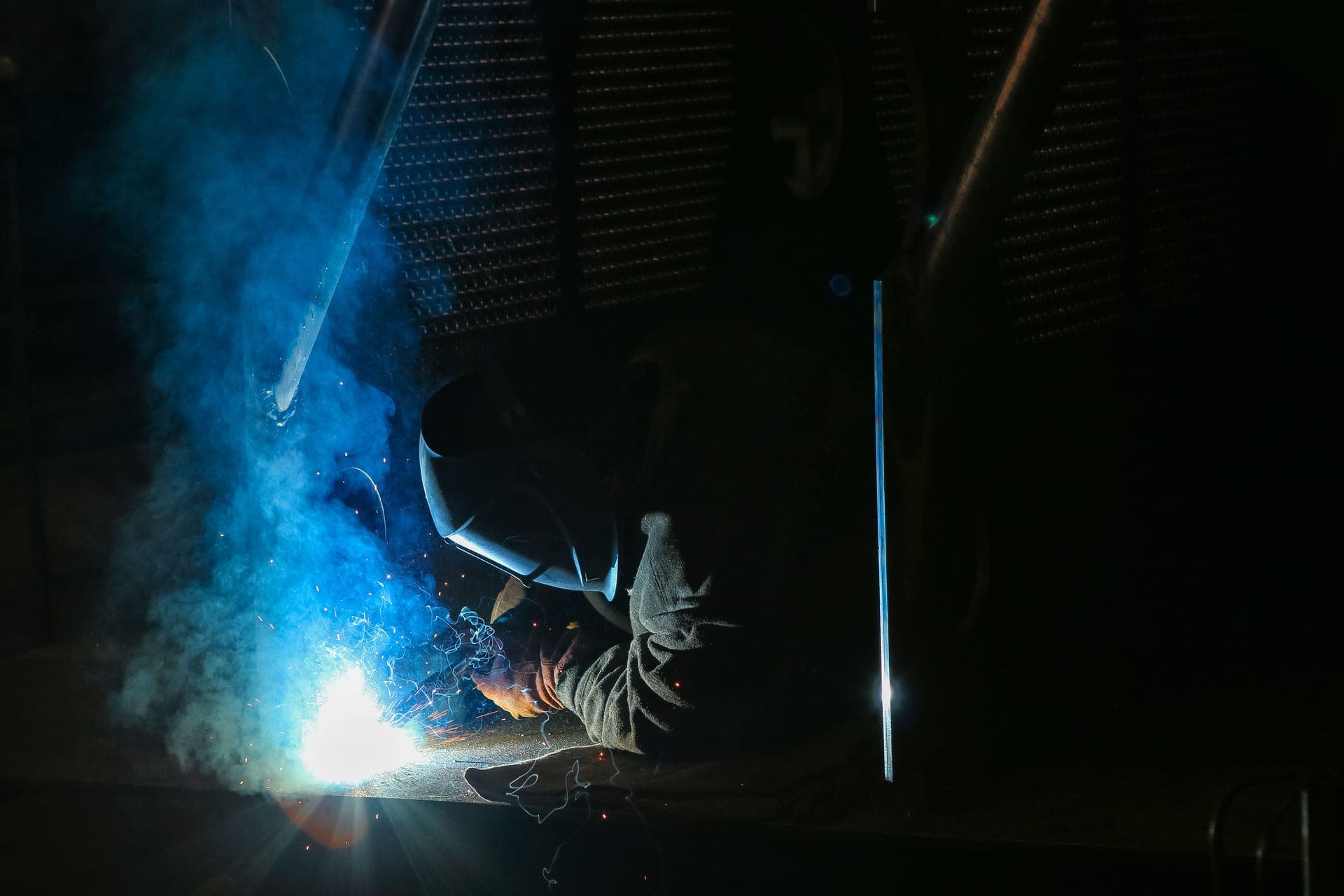
- Welding and fabrication — dropped stock, hot spatter landing on the instep.
- Heavy materials handling — drums, cylinders, pipe, steel plate.
- Mining and quarry work — falling rock.
- Mechanics and heavy equipment — dropped components, which is why the mechanics page covers it too.
If you are not sure whether your work qualifies, ask your safety officer rather than guessing. Mt boots are heavier and less comfortable than plain safety-toe boots, so buying one you do not need is a real cost.
Internal vs external guards
| Internal guard | External guard | |
|---|---|---|
| Where it sits | Inside the upper, over the instep | Outside the upper, a visible flap or shell |
| Kneeling and climbing | Flexes with the foot — you can kneel and climb in it | Awkward to kneel in; catches on ladder rungs |
| Supervisor verification | Not visible — harder to confirm at a glance | Visible, which is why some sites specify it |
| Instep volume | Takes up room inside the boot; a high-volume foot may need a wide | Leaves the interior alone but adds bulk outside |
| Durability | Protected from abrasion by the upper | Takes the abuse directly, and shows it |
The decision usually comes down to two questions. Does your site require visible met protection? And do you kneel or climb? If the answer to the first is yes, take external. If it is no and the answer to the second is yes, take internal.
Lacing a met-guard boot
This is where most of the complaints about met guards come from, and it is fixable. A guard sits exactly where your instep laces tighten, so cinching the whole boot evenly presses the guard down onto the top of your foot and produces the numbness people blame on met guards generally.
Lace loosely over the guard and tightly at the ankle. You want the heel locked and the instep free. If your boot has a hook-and-eyelet combination, the transition point is usually the right place to change tension — use a surgeon's knot there to hold two different tensions in one lace.
Mt is not puncture resistance
They protect opposite surfaces. Mt covers the top of the foot; PR — a plate between the insole and outsole — covers the bottom. If your hazard is nails and swarf underfoot, Mt does nothing for you.
Where a PR-rated boot is not available or not required, a tested puncture-resistant insole is a reasonable retrofit. Superfeet publishes testing to ASTM F2413 and EN ISO 22568-4:2021 Type PS for its Work Puncture Resistant insole. One caveat, and it matters: if your PPE requirement specifies PR-rated footwear, an insole inside a non-rated boot is not the same thing. Check with your safety officer before you rely on it.
The picks in full
Illustrative category photo — not this model#1 — Internal guard, non-metallic cap
Rocky Worksmart Composite Toe Internal MET Guard Waterproof Work Boot
An internal metatarsal guard inside a waterproof composite-toe boot — Mt-class protection without the external bulge that catches on everything.
Published specifications
- Toe
- Composite safety toe with an internal metatarsal guard
- Safety rating
- Composite safety toe with internal metatarsal protection; Rocky lists ASTM F2413 compliance on the Worksmart line
- Upper
- Leather upper with a waterproof membrane
- Outsole
- Rocky work outsole
- Midsole / shank
- Not published on the manufacturer page
- Construction
- Not published as a welt construction
- Waterproof
- Waterproof
- Insulation
- Not insulated
Specifications read from Rocky Boots product page (Worksmart comp toe internal MET guard waterproof) on 2026-09-27. We have not worn this boot.
What works
- Internal guard flexes with the foot — you can kneel and climb in it
- Nothing external to catch on a rung
- Non-metallic cap
What doesn't
- Harder for a supervisor to verify at a glance than an external guard
- The guard takes up instep volume
- Limited published spec detail
Who this is wrong for
Sites that require visible met protection. Some employers specify an external guard precisely because it can be seen.
Sizing
An internal met guard fills the instep. If you have a high-volume foot, expect to need a wide — and lace the instep loosely for the first week.
Illustrative category photo — not this model#2 — Heaviest-duty combination
Rocky IronClad Waterproof Steel Toe MET Guard Work Boot (RKK0362)
A steel toe with an internal met guard on a seven-layer IronClad outsole — the heaviest-duty combination Rocky publishes.
Published specifications
- Toe
- Steel safety toe with an internal metatarsal guard
- Safety rating
- Safety toe meeting the ASTM F2413 electrical hazard standard, per Rocky's product page
- Upper
- Leather upper with a waterproof membrane
- Outsole
- Seven-layer slip- and oil-resisting IronClad outsole
- Midsole / shank
- Not published on the manufacturer page
- Construction
- Not published as a welt construction
- Waterproof
- Waterproof
- Insulation
- Not insulated
Specifications read from Rocky Boots product page (IronClad steel toe MET guard, RKK0362) on 2026-09-27. We have not worn this boot.
What works
- Steel handles repeated heavy impact better than any composite
- Internal met guard keeps the profile clean
- The heaviest outsole spec Rocky publishes
What doesn't
- Heavy, and it feels it by hour ten
- Steel toe plus steel-heavy build conducts cold
- Not resoleable
Who this is wrong for
Anyone who walks long distances. This is a boot for standing in one hazardous place, not covering ground.
Sizing
Between the steel cap and the met guard, the front half of this boot has the least spare volume of anything here. Fit it in the afternoon, when your feet are at their largest.
Illustrative category photo — not this model#3 — Visible external guard
Red Wing King Toe 6-inch Safety Toe Metguard Boot (#4456)
The King Toe platform with an external metatarsal guard — the boot to buy when the hazard assessment says something can land on the top of your foot.
Published specifications
- Toe
- Safety toe with an external metatarsal guard
- Safety rating
- Safety toe plus metatarsal protection per ASTM F2413; see the product page for the model's full designation line
- Upper
- Leather upper
- Outsole
- Red Wing work outsole
- Midsole / shank
- Not published on the product page
- Construction
- Not published as a welt construction
- Waterproof
- Not stated on the product page
- Insulation
- Not stated on the product page
Specifications read from Red Wing Shoes product page (#4456) on 2026-09-27. We have not worn this boot.
What works
- An external guard is visibly there — a supervisor can confirm compliance at a glance
- Keeps the King Toe room that makes the platform worth buying
What doesn't
- An external guard catches on ladder rungs and is awkward to kneel in
- Heavier than the plain King Toe
- Red Wing publishes less spec detail on this model than on the #2240
Who this is wrong for
Anyone who kneels constantly or climbs a lot. An internal met guard flexes better for both — look at the Rocky and KEEN internal-met models.
Sizing
Met-guard boots change how the instep laces. Lace it loosely over the guard and tight at the ankle; a guard cinched down on the instep is what causes the numbness people blame on met guards generally.
Illustrative category photo — not this model#4 — Adding puncture protection underfoot
Superfeet Work Puncture Resistant Insole
A flexible puncture-resistant insole tested to ASTM F2413 and EN ISO 22568-4:2021 Type PS — the retrofit for sites with nails and swarf underfoot.
Published specifications
- Toe
- Not applicable — insole
- Safety rating
- Tested to ASTM F2413 and EN ISO 22568-4:2021 Type PS
- Upper
- Not applicable
- Outsole
- Not applicable
- Midsole / shank
- Not applicable
- Construction
- Flexible puncture-resistant insole
- Waterproof
- Not applicable
- Insulation
- Not applicable
Specifications read from Superfeet product page (Work Puncture Resistant) on 2026-09-27. We have not worn this boot.
What works
- Cites the specific standards it was tested to
- Flexible, so it does not fight the boot's own flex
- Turns an existing pair into a puncture-protected pair
What doesn't
- An insole is not a substitute for a PR-rated boot if your employer specifies one
- Takes up volume
- Protects only the area it covers
Who this is wrong for
Anyone whose PPE requirement specifies PR-rated footwear. A compliant boot is rated as a boot, not as an insole in a boot — check with your safety officer first.
Sizing
Replace the factory footbed rather than stacking on top of it, and trim to the old insole's outline.
Frequently asked questions
Metatarsal boots meaning?
A metatarsal boot carries an Mt designation under ASTM F2413, meaning it has a guard over the instep certified to withstand a 75 foot-pound impact while limiting the force transmitted to the metatarsal bones. The toe cap protects only the toes; the Mt guard covers the long bones behind them.
Does OSHA require metatarsal guards?
Not by name. OSHA 29 CFR 1910.136 requires protective footwear where a foot-injury hazard exists and points to ASTM F2413. Employers can and do require Mt-rated footwear where their own hazard assessment identifies an instep-impact hazard — the assessment drives the requirement, not the regulation's text.
Are internal or external met guards better?
Neither is better in general. Internal guards flex with the foot so you can kneel and climb in them, and nothing catches on a rung. External guards are visible, which some sites require precisely so compliance can be checked at a glance, and they keep the abuse outside the boot. Match the guard to how you actually move.
Why do met guard boots make my feet numb?
Almost always lacing. The guard sits exactly where the instep laces tighten, so even tension across the whole boot presses it into the top of your foot. Lace loosely over the guard and tightly at the ankle — a surgeon's knot at the transition holds two different tensions in one lace.
Sources
- ASTM F2413 protective footwear standard — technical summary — Label format, the mandatory I and C designations, and each optional code
- OSHA 29 CFR 1910.136 — Foot protection — The federal rule itself: when protective footwear is required, and which consensus standards it accepts
Read next
ASTM F2413 Explained
Where Mt sits among the other optional codes, and what each one tests.
Best Work Boots for Welders
The trade where met guards come up most, alongside quick-release fit.
Best Work Boots for Mechanics
Dropped components and oily floors — two hazards, two different features.
Best Steel Toe Work Boots
Repeat impact is where steel still wins, and met-guard work is full of it.