Trades
Best Work Boots for Electricians
EH-rated, ladder-capable, and honest about what the rating does not cover.
Disclosure: product links on this page go to Amazon. As an Amazon Associate we earn from qualifying purchases, at no extra cost to you. It does not change which boots we recommend or the order they appear in — here is the full disclosure.
Quick picks
| # | Product | Best for | Toe & rating | Price |
|---|---|---|---|---|
| 1 |  KEEN Utility Detroit XT Carbon-Fiber Toe Work Boot Carbon-fiber toe on the Detroit XT platform: the same impact and compression rating with a lighter, non-conductive cap. | No metal near the foot | Carbon-fiber safety toe, non-metallicMeets ASTM F2412-17 and F2413-17 M I/75 C/75, EH; carbon safety toes save about 15% weight over steel, per KEEN | |
| 2 |  BRUNT The Perkins Waterproof Composite Toe Work Boot The Perkins swaps the Marin's profile for a defined 90-degree heel — the version to buy if you spend the day on ladders, scaffolding or roof edges. | Ladder work, 90° heel | Composite safety toe, non-metallicComposite safety toe with electrical hazard (EH) protection; slip- and oil-resistant | |
| 3 | Carhartt Ground Force Waterproof 6" Composite Toe Work Boot A waterproof composite toe with a heat-rated outsole and an APMA-accepted footbed — the pick when arch support is the deciding factor. | EH plus a named slip rating | Composite safety toe — lightweight, non-metallic, non-conductiveComposite safety toe meeting ASTM F2413-24 EH; outsole meets ASTM F3445-24 SR | |
| 4 | Wolverine Overpass CarbonMAX 6" Composite Toe Waterproof Boot A waterproof CarbonMAX composite toe on a flexible dual-compound outsole — the Overpass is built to move with the foot rather than brace it. | Flex for crawl spaces | CarbonMAX composite safety toe, non-metallicASTM F2413 M/I/C EH rated composite toe | |
| 5 |  Thorogood American Heritage 6" Moc Toe Safety Toe MAXWear Wedge (804-4200) A Goodyear-welted, USA-built wedge with a steel toe and an EH rating — the default answer for anyone who stands on a flat hard floor and wants a boot that can be resoled. | EH in a resoleable boot | Steel safety toe, moc toe shapeASTM F2413-18, EH | |
| 6 |  KEEN Utility Vista Energy Shift Carbon-Fiber Toe Work Sneaker A safety-toe work sneaker with a midsole KEEN rates at up to 50% energy return — for warehouse and plant floors where you cover distance rather than terrain. | Service calls on smooth floors | Carbon-fiber safety toe, non-metallicKEEN Utility safety toe tested to ASTM F2413-18 M/I/75/C/75; the ESD version adds an electrostatic dissipative outsole |
Tap a row to jump to that boot's full write-up. The price column goes straight to Amazon.
What the job actually requires
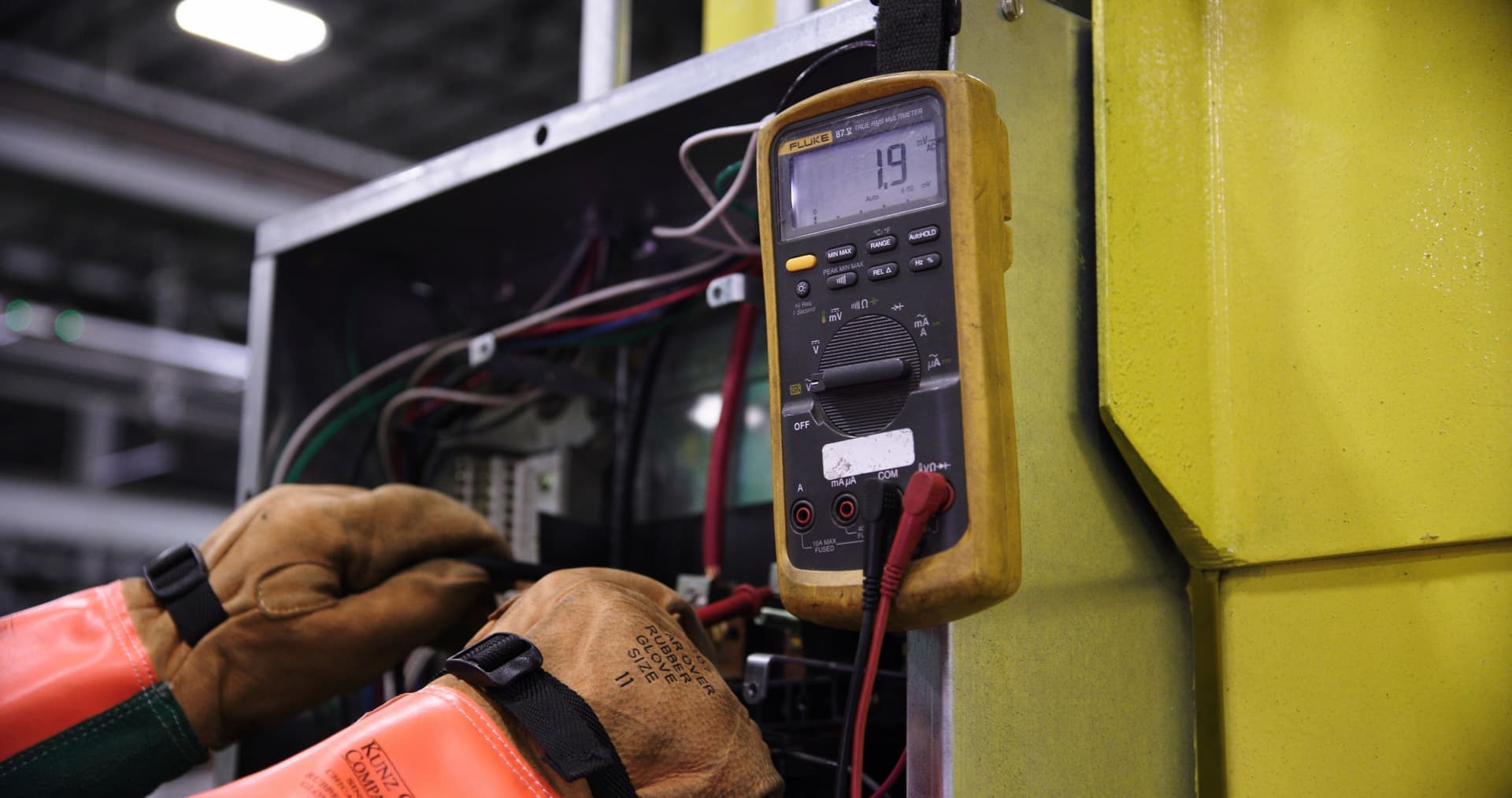
Start with the rule. OSHA 29 CFR 1910.136(a) requires protective footwear where there is a danger of foot injury from falling or rolling objects, objects piercing the sole, or where footwear will protect the employee from an electrical hazard. That last clause is why this trade is different from every other one in this hub.
The corresponding designation is EH. Under ASTM F2413 it means the outsole and heel are built with insulating properties and tested to withstand 18,000 volts at 60 Hz for one minute with no leakage above 1.0 milliampere — in dry conditions.
Does the toe cap have to be non-metallic?
Not for the EH rating. EH is a property of the outsole and heel, and plenty of EH-rated boots have steel caps — the Thorogood 804-4200 on this list is one. Most electricians still choose composite or carbon fiber, on the reasonable principle of keeping metal away from the foot.
If that is your preference, check the shank too. A composite cap over a steel shank is still metal in the boot. Look for a non-metallic or fiberglass shank stated on the spec sheet.
The heel is the feature nobody mentions
Residential and commercial electrical work is ladder work. What holds you on a rung is a defined 90-degree heel breast — a square step where the heel meets the arch, so the rung sits into a corner rather than under a curved sole.
BRUNT publishes a 90-degree heel on the Perkins and Danner publishes one on the Quarry USA. A flat wedge sole has no heel breast at all, which is why a Thorogood moc toe is superb on a slab and mediocre on a ladder. The trade-off is covered in wedge sole vs lug sole.
Crawl spaces, attics and kneeling
The other half of the job is getting into places nobody designed for feet. That argues for a flexible boot with a low, clean profile — the Wolverine Overpass's dual-compound outsole and nylon shank are built for exactly that, and it is the opposite specification from a climbing boot.
If your work is mostly service calls on finished floors, consider whether you need a boot at all. A safety-toe work shoe like KEEN's Vista Energy Shift is lighter, and the ESD version handles static-sensitive environments — though it gives up ankle support and abrasion resistance entirely.
What to look for
- EH on the designation line, not just on a hangtag.
- A non-metallic cap — and a non-metallic shank if you want no metal at all.
- A 90-degree heel breast if you are on ladders daily.
- An SR or SRO slip designation against ASTM F3445 — basements are wet and finished floors are slick.
- No exposed metal hardware where it could bridge anything.
- Six inches, not eight. You will be kneeling and crouching constantly; a tall shaft fights you.
The picks in full
Illustrative category photo — not this model#1 — No metal near the foot
KEEN Utility Detroit XT Carbon-Fiber Toe Work Boot
Carbon-fiber toe on the Detroit XT platform: the same impact and compression rating with a lighter, non-conductive cap.
Published specifications
- Toe
- Carbon-fiber safety toe, non-metallic
- Safety rating
- Meets ASTM F2412-17 and F2413-17 M I/75 C/75, EH; carbon safety toes save about 15% weight over steel, per KEEN
- Upper
- Leather upper with the KEEN.DRY waterproof breathable membrane
- Outsole
- Oil- and slip-resistant outsole with siping for wet grip
- Midsole / shank
- KEEN.ReGEN cushioning midsole
- Construction
- Not published as a welt construction
- Waterproof
- Waterproof — KEEN.DRY membrane
- Insulation
- Not insulated
Specifications read from KEEN Utility Detroit XT collection specifications on 2026-09-27. We have not worn this boot.
What works
- Same 75 ft-lb impact rating as steel at lower weight
- Non-metallic cap does not conduct cold or set off detectors
- KEEN states the weight saving as a figure rather than a vibe
What doesn't
- Costs more than the steel-toe version of the same boot
- A composite or carbon cap that takes a heavy hit must be retired, not just inspected
- Not resoleable
Who this is wrong for
Jobs with repeated heavy impact on the toe box. Steel handles repeat strikes better; a non-metallic cap is a one-serious-hit component.
Sizing
Same Detroit XT last as the steel-toe version, so size the same. If you are moving from a steel toe, expect the cap to feel slightly higher-volume.
Illustrative category photo — not this model#2 — Ladder work, 90° heel
BRUNT The Perkins Waterproof Composite Toe Work Boot
The Perkins swaps the Marin's profile for a defined 90-degree heel — the version to buy if you spend the day on ladders, scaffolding or roof edges.
Published specifications
- Toe
- Composite safety toe, non-metallic
- Safety rating
- Composite safety toe with electrical hazard (EH) protection; slip- and oil-resistant
- Upper
- Waterproof leather upper
- Outsole
- BRUNT rubber outsole with a 90° heel — high-heat resistant to 572°F / 300°C
- Midsole / shank
- BRUNT polyurethane (PU) midsole
- Construction
- Not published as a welt construction on this model
- Waterproof
- Waterproof
- Insulation
- Not insulated
- Widths
- SWITCH-FIT adjustable between regular (D) and relaxed (EE)
Specifications read from BRUNT Workwear product page (The Perkins waterproof comp toe) on 2026-09-27. We have not worn this boot.
What works
- The 90° heel breast is the single most useful feature for climbing work
- Same width-adjustment system as the Marin
- Non-metallic toe, so no cold conduction
What doesn't
- A defined heel is less comfortable than a wedge on flat concrete
- Full ASTM designation string is not published on the page
- Not resoleable
Who this is wrong for
Flat-floor trades. If your day is spent on level concrete, the heel breast concentrates load where a wedge would spread it.
Sizing
Same last and SWITCH-FIT system as the Marin, so size the same. Check heel hold specifically — a defined heel makes heel lift more noticeable.
Illustrative category photo — not this model#3 — EH plus a named slip rating
Carhartt Ground Force Waterproof 6" Composite Toe Work Boot
A waterproof composite toe with a heat-rated outsole and an APMA-accepted footbed — the pick when arch support is the deciding factor.
Published specifications
- Toe
- Composite safety toe — lightweight, non-metallic, non-conductive
- Safety rating
- Composite safety toe meeting ASTM F2413-24 EH; outsole meets ASTM F3445-24 SR
- Upper
- Leather upper with Storm Defender waterproof breathable protection and FastDry lining
- Outsole
- Oil- and slip-resistant non-marking rubber lug outsole with a defined heel and ladder-lock grooves; heat-resistant to 300°C / 572°F
- Midsole / shank
- Carhartt LWD midsole with a nylon shank
- Construction
- Not published as a welt construction
- Waterproof
- Waterproof — Storm Defender
- Insulation
- Not insulated in this model
Specifications read from Carhartt product page (Ground Force waterproof 6" composite toe) on 2026-09-27. We have not worn this boot.
What works
- Both an EH and an SR designation, each against a named ASTM standard
- APMA acceptance is third-party, not marketing
- Ladder-lock grooves are a specific feature for a specific job
What doesn't
- Not resoleable
- Lug outsole tracks debris onto finished floors
- No published weight
Who this is wrong for
Finished-floor work. A deep lug outsole carries grit into rooms you are being paid not to damage.
Sizing
Carhartt's Ground Force last is fairly generous. If you plan to use your own orthotic, pull the INSITE footbed out first — the two together will crowd the boot.
Illustrative category photo — not this model#4 — Flex for crawl spaces
Wolverine Overpass CarbonMAX 6" Composite Toe Waterproof Boot
A waterproof CarbonMAX composite toe on a flexible dual-compound outsole — the Overpass is built to move with the foot rather than brace it.
Published specifications
- Toe
- CarbonMAX composite safety toe, non-metallic
- Safety rating
- ASTM F2413 M/I/C EH rated composite toe
- Upper
- Premium waterproof leather with an abrasion-resistant toe
- Outsole
- Dual-compound rubber and PU outsole
- Midsole / shank
- Advanced comfort PU midsole with a nylon shank
- Construction
- Not published as a welt construction
- Waterproof
- Waterproof leather upper
- Insulation
- Not insulated
Specifications read from Wolverine product page (Overpass CarbonMAX 6") on 2026-09-27. We have not worn this boot.
What works
- Genuinely flexible for a safety-toe boot
- Waterproof leather rather than a membrane-only claim
- Removable footbed, so an orthotic actually fits
What doesn't
- A nylon shank is not a climbing shank
- PU midsoles eventually crumble with age and disuse
- Not resoleable
Who this is wrong for
Pole and ladder work. A flexible boot with a nylon shank is the wrong platform for standing on a rung all day.
Sizing
The Overpass runs close to true. Because the footbed is removable, fit it with your orthotic in place if you use one — swapping later changes the fit by a half size in feel.
Illustrative category photo — not this model#5 — EH in a resoleable boot
Thorogood American Heritage 6" Moc Toe Safety Toe MAXWear Wedge (804-4200)
A Goodyear-welted, USA-built wedge with a steel toe and an EH rating — the default answer for anyone who stands on a flat hard floor and wants a boot that can be resoled.
Published specifications
- Toe
- Steel safety toe, moc toe shape
- Safety rating
- ASTM F2413-18, EH
- Upper
- Tobacco full-grain American leather, unlined
- Outsole
- MAXWear Wedge slip-resistant outsole
- Midsole / shank
- Rubber midsole with composite shank
- Construction
- Goodyear storm welt
- Waterproof
- Not waterproof
- Insulation
- Not insulated
- Widths
- D and EE, sizes 7-14 in both widths
- Weight
- Not published on the manufacturer page
- Made in
- Made in USA with USA and globally sourced components
Specifications read from Thorogood product page (804-4200) on 2026-09-27. We have not worn this boot.
What works
- Goodyear storm welt is a resoleable construction, not a disposable one
- Flat wedge spreads load evenly on concrete instead of concentrating it under a heel
- Unlined upper breaks in to the foot rather than around a liner
- EE width is stocked across the whole size run, not just the middle
What doesn't
- Not waterproof and not insulated — the unlined upper soaks
- A flat wedge gives up bite on mud, gravel and ladder rungs
- Manufacturer publishes no weight figure, so weight comparisons are guesswork
Who this is wrong for
Anyone working outdoors on soft or uneven ground, or in standing water. The wedge has no lugs to bite and the unlined upper is not waterproof.
Sizing
Thorogood's moc-toe last is widely reported to run large; owner reviews consistently suggest going a half size down from a measured Brannock length. D and EE are both stocked, so take the width rather than sizing up for room.
Illustrative category photo — not this model#6 — Service calls on smooth floors
KEEN Utility Vista Energy Shift Carbon-Fiber Toe Work Sneaker
A safety-toe work sneaker with a midsole KEEN rates at up to 50% energy return — for warehouse and plant floors where you cover distance rather than terrain.
Published specifications
- Toe
- Carbon-fiber safety toe, non-metallic
- Safety rating
- KEEN Utility safety toe tested to ASTM F2413-18 M/I/75/C/75; the ESD version adds an electrostatic dissipative outsole
- Upper
- Textile and synthetic upper
- Outsole
- Oil- and slip-resistant outsole; ESD outsole on the ESD version
- Midsole / shank
- KEEN.ReGEN midsole, returning up to 50% energy per step, per KEEN
- Construction
- Cemented athletic construction
- Waterproof
- Not waterproof
- Insulation
- Not insulated
Specifications read from KEEN Utility product page (Vista Energy Shift ESD) on 2026-09-27. We have not worn this boot.
What works
- By far the lightest safety-toe option on this list
- ESD version solves a real problem for electronics and plant work
- Athletic flex suits smooth floors and long walking distances
What doesn't
- No ankle support at all
- Textile upper is not a match for abrasion, sparks or sharp debris
- Not waterproof, not resoleable
Who this is wrong for
Anyone on uneven ground, around welding, or handling anything that drags across the upper. This is an indoor smooth-floor shoe.
Sizing
Sneaker sizing, so it feels shorter than a boot in the same number. Leave a thumbnail of room ahead of the longest toe.
Frequently asked questions
EH rated work boots meaning?
EH stands for electrical hazard. Under ASTM F2413 the boot's outsole and heel are built with electrically insulating properties and tested to withstand 18,000 volts at 60 Hz for one minute with no current flow or leakage above 1.0 milliampere, under dry conditions. It is secondary protection against accidental contact with energized circuits.
Are steel toe boots an electrical hazard?
Not to the EH test, which measures the outsole and heel rather than the cap — many EH-rated boots have steel toes. Most electricians still prefer a non-metallic cap on principle. If that is your preference, check the shank as well, because a composite cap over a steel shank still puts metal in the boot.
Do electricians need composite toe boots?
Not as a rule, unless your employer's hazard assessment or site policy says so. A composite or carbon cap is the common preference because it keeps metal away from the foot and does not conduct temperature, but a steel-toe boot with a valid EH designation complies with the same standard.
How do I know when my EH boots stop protecting me?
The rating lives in the outsole and heel, so it degrades as the tread wears, when the sole is wet or contaminated, and if anything conductive becomes embedded in the tread. There is no indicator light — inspect the outsole regularly and replace the boots on tread condition, not on appearance.
Sources
- OSHA 29 CFR 1910.136 — Foot protection — The federal rule itself: when protective footwear is required, and which consensus standards it accepts
- ASTM F2413 safety footwear ratings explained — The 18,000-volt / 60 Hz / one-minute EH test condition, stated in full
- ASTM F2413 protective footwear standard — technical summary — Label format, the mandatory I and C designations, and each optional code
- Carolina Shoe — electrical hazard test conditions — A manufacturer stating the EH test in full: 18,000 volts at 60 Hz for one minute without leakage
Read next
Best EH-Rated Work Boots
The EH rating in detail, including what it does not cover.
Steel Toe vs Composite Toe
The cap decision most electricians end up making.
ASTM F2413 Explained
The rating your trade actually needs, and what each code on the label certifies.
Work Boot Sizing Guide
Get the fit right before you spend money — most boot complaints are fit.
How to Break In Work Boots
What to do in the two weeks before your first full shift in a new pair.