Brands
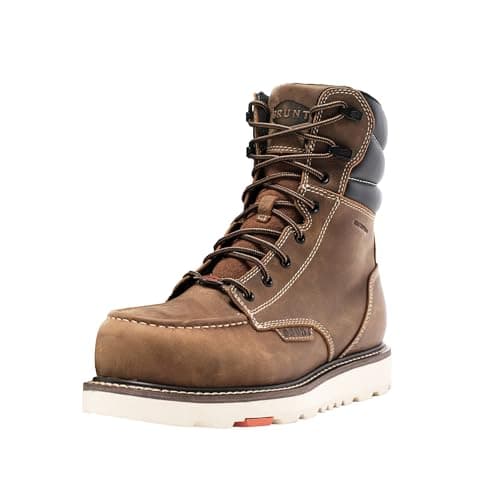
BRUNT Work Boots Review
SWITCH-FIT is the real feature. The missing ASTM line is the real caveat.
Disclosure: product links on this page go to Amazon. As an Amazon Associate we earn from qualifying purchases, at no extra cost to you. It does not change which boots we recommend or the order they appear in — here is the full disclosure.
Quick picks
| # | Product | Best for | Toe & rating | Price |
|---|---|---|---|---|
| 1 | BRUNT The Marin Waterproof Composite Toe Work Boot A waterproof composite toe with an adjustable width system — BRUNT's SWITCH-FIT lets one boot run regular or relaxed, which is a genuinely useful answer for a foot between widths. | The BRUNT to buy: adjustable D-to-EE width | Composite safety toe — non-metallic, 15% lighter than steel per BRUNTComposite safety toe with electrical hazard (EH) protection; outsole and midsole meet ASTM D471-06 903 oil and isooctane chemical resistance | |
| 2 | 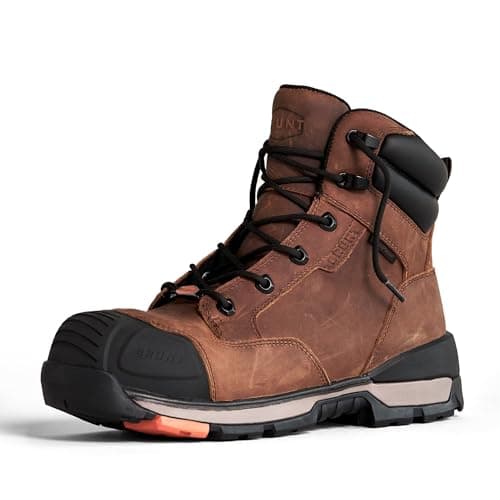 BRUNT The Perkins Waterproof Composite Toe Work Boot The Perkins swaps the Marin's profile for a defined 90-degree heel — the version to buy if you spend the day on ladders, scaffolding or roof edges. | The same boot with a 90-degree heel, for less | Composite safety toe, non-metallicComposite safety toe with electrical hazard (EH) protection; slip- and oil-resistant | |
| 3 | 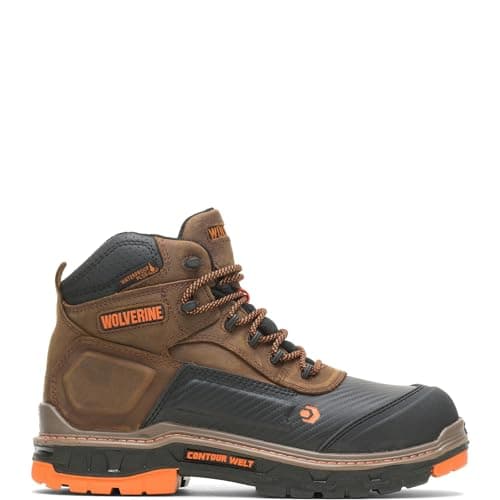 Wolverine Overpass CarbonMAX 6" Composite Toe Waterproof Boot A waterproof CarbonMAX composite toe on a flexible dual-compound outsole — the Overpass is built to move with the foot rather than brace it. | A cheaper waterproof composite toe | CarbonMAX composite safety toe, non-metallicASTM F2413 M/I/C EH rated composite toe | |
| 4 | 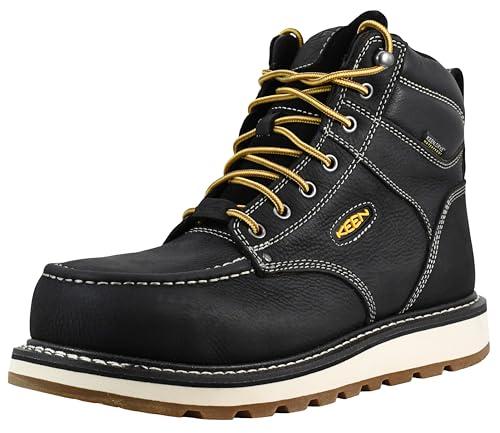 KEEN Utility Cincinnati 6" Composite Toe Waterproof Wedge Work Boot A welted wedge with a waterproof membrane and a non-metallic cap — a combination that barely exists anywhere else, and the pick when the floor is flat and wet. | A welt, if you want the boot resoled | Asymmetrical non-metallic safety toe. KEEN's own page calls it a carbon safety toe and states it weighs 15% less than steel; retailers list the same cap as a composite toeKEEN does not publish a designation string on this model's page. Authorized-retailer listings for the Cincinnati non-metallic toe state it meets or exceeds ASTM F3445-21 and ASTM F2413-18 M I/75 C/75 EH | |
| 5 | 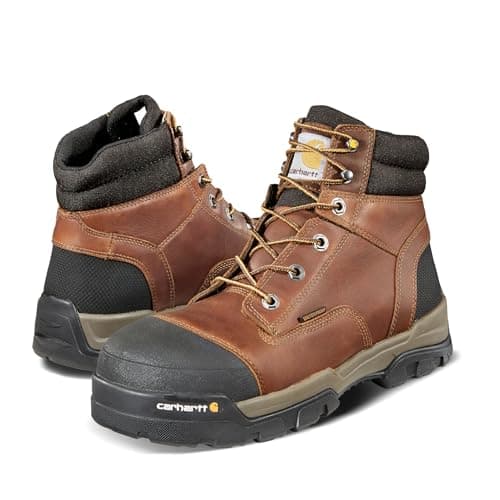 Carhartt Ground Force Waterproof 6" Composite Toe Work Boot A waterproof composite toe with a heat-rated outsole and an APMA-accepted footbed — the pick when arch support is the deciding factor. | The full ASTM designation, published | Composite safety toe — lightweight, non-metallic, non-conductiveComposite safety toe meeting ASTM F2413-24 EH; outsole meets ASTM F3445-24 SR |
Tap a row to jump to that boot's full write-up. The price column goes straight to Amazon.
What this review is, and is not
This site has not worn, tested or owned a BRUNT boot, and it does not publish numeric scores or wear tests. What follows is an assessment of what BRUNT publishes about its own boots, read against what competing makers publish at the same price, with every gap in BRUNT's documentation named rather than filled in. How we research sets out the method in full.
If you want a tested-on-site verdict, this is not it, and nobody publishing a boot review online this week has worn these boots for a year either. What is checkable is the specification, and that turns out to be enough to make a decision.
SWITCH-FIT is the feature, and it is genuinely unusual
Both BRUNT boots here publish SWITCH-FIT: an adjustable width system that runs the same boot as a regular (D) or a relaxed (EE) fit. Every other maker in this registry solves width by stocking separate widths, which means committing before the boot arrives and relying on the maker actually stocking your size in your width — something Thorogood and Carolina do well and most makers do not do at all.
Being able to change width after the boot is on your foot is a real answer to the most common fit failure in work boots, and it is the strongest reason on this page to buy BRUNT rather than a competitor. Best wide work boots covers the published-width alternative.
The two BRUNT boots, side by side
| The Marin | The Perkins | |
|---|---|---|
| Toe | Composite, non-metallic; BRUNT states 15% lighter than steel | Composite, non-metallic |
| Published safety | Composite toe with EH; outsole and midsole meet ASTM D471-06 903 oil and isooctane chemical resistance | Composite toe with EH; slip- and oil-resistant |
| Outsole | BRUNT rubber, oil- and slip-resistant, heat-resistant to 572°F / 300°C | BRUNT rubber with a 90-degree heel, heat-resistant to 572°F / 300°C |
| Midsole | BRUNT polyurethane | BRUNT polyurethane |
| Waterproof | Yes | Yes |
| Insulation | None | None |
| Widths | SWITCH-FIT, regular (D) or relaxed (EE) | SWITCH-FIT, regular (D) or relaxed (EE) |
| Construction | Not published as a welt | Not published as a welt |
The Marin — the default BRUNT
A waterproof leather boot with a composite cap BRUNT states is 15% lighter than steel, electrical hazard protection, a PU midsole, and an outsole rated heat-resistant to 572°F / 300°C. The spec that stands out beyond SWITCH-FIT is the chemical resistance: BRUNT publishes that the outsole and midsole meet ASTM D471-06 903 for oil and isooctane, which is a specific test rather than the phrase "chemical resistant." Very few makers at this price name a test.
The honest cons. BRUNT states EH and composite-toe compliance but publishes less of the ASTM marking line than KEEN, Red Wing or Carhartt — if you need the complete designation on file for a site induction, you will not get it from the product page. No welt, so this is a replace-rather-than-rebuild boot. No insulation.
Wrong for: anyone who needs the full designation line before buying, and anyone working in real cold.
The Perkins — the ladder version
Mechanically the same boot with the profile changed: a defined 90-degree heel instead of the Marin's rounder shape. That heel breast is what catches a rung, which makes the Perkins the one to buy if your day is spent on ladders, scaffolding or roof edges — and it was the cheaper of the two at the last price refresh.
The honest cons. On level concrete the heel breast concentrates load exactly where a flat wedge would spread it, so it is the worse boot for a flat-floor trade. Same documentation gap as the Marin, same lack of a welt.
Wrong for: flat-floor trades.
What the same money buys elsewhere
Three comparisons worth making before you commit, all at or near the same price:
Wolverine Overpass. A waterproof CarbonMAX composite cap rated ASTM F2413 M/I/C EH, on a dual-compound outsole with a nylon shank, below both BRUNT boots at the last refresh. It publishes the M/I/C EH designation, which BRUNT does not, and it is built to flex. It has no width adjustment at all.
KEEN Cincinnati. A Goodyear welt with the KEEN.DRY membrane and a non-metallic cap, under $200 — the only boot in this price band that can be resoled. If you expect to own the boot for years rather than replace it, this is the structural argument against buying either BRUNT. KEEN does not publish a model-specific ASTM string either, so on documentation it is no better.
Carhartt Ground Force. Publishes the most current revisions of anything in the band — ASTM F2413-24 EH for the cap and ASTM F3445-24 SR for the outsole — plus an APMA-accepted footbed and a heat-rated lug outsole. This is the boot to buy if the missing designation line is what is stopping you.
How to decide between SWITCH-FIT and a published width
If you know your width, buy a boot that publishes it. Thorogood publishes D and EE across the full size run, Carolina publishes D, 2E and 4E, and Red Wing publishes B, D, EE and H on the King Toe 2240 along with 44% more toe room than a standard work boot. A measured width in a boot built on that width fits better than an adjustable system aiming at two.
If you do not know your width, or you sit between two, or your feet change volume through the day, SWITCH-FIT is the better answer and BRUNT is the only maker here offering it. The work boot sizing guide has the measuring method — do that first, because it may settle the question for free.
The picks in full
#1 — The BRUNT to buy: adjustable D-to-EE width
BRUNT The Marin Waterproof Composite Toe Work Boot
A waterproof composite toe with an adjustable width system — BRUNT's SWITCH-FIT lets one boot run regular or relaxed, which is a genuinely useful answer for a foot between widths.
Published specifications
- Toe
- Composite safety toe — non-metallic, 15% lighter than steel per BRUNT
- Safety rating
- Composite safety toe with electrical hazard (EH) protection; outsole and midsole meet ASTM D471-06 903 oil and isooctane chemical resistance
- Upper
- Leather upper, waterproof on this version
- Outsole
- BRUNT rubber outsole — oil- and slip-resistant, heat-resistant to 572°F / 300°C
- Midsole / shank
- BRUNT polyurethane (PU) midsole
- Construction
- Not published as a welt construction on this model
- Waterproof
- Waterproof
- Insulation
- Not insulated
- Widths
- SWITCH-FIT adjustable between regular (D) and relaxed (EE)
Specifications read from BRUNT Workwear product page (The Marin waterproof comp toe) on 2026-09-27. We have not worn this boot.
What works
- The width system solves a real fitting problem rather than inventing one
- Chemical resistance cited to a named ASTM test method
- PU midsole outlasts EVA
What doesn't
- BRUNT does not publish a full ASTM F2413 designation string on the page
- Direct-to-consumer only, so trying before buying is harder
- Not a welted construction
Who this is wrong for
Anyone who needs to see the complete ASTM designation before they buy. BRUNT states EH and composite-toe compliance but publishes less of the marking line than KEEN or Red Wing.
Sizing
Use SWITCH-FIT before you change size. Most people who think they need a longer boot actually need the relaxed (EE) setting on the same length.
#2 — The same boot with a 90-degree heel, for less
BRUNT The Perkins Waterproof Composite Toe Work Boot
The Perkins swaps the Marin's profile for a defined 90-degree heel — the version to buy if you spend the day on ladders, scaffolding or roof edges.
Published specifications
- Toe
- Composite safety toe, non-metallic
- Safety rating
- Composite safety toe with electrical hazard (EH) protection; slip- and oil-resistant
- Upper
- Waterproof leather upper
- Outsole
- BRUNT rubber outsole with a 90° heel — high-heat resistant to 572°F / 300°C
- Midsole / shank
- BRUNT polyurethane (PU) midsole
- Construction
- Not published as a welt construction on this model
- Waterproof
- Waterproof
- Insulation
- Not insulated
- Widths
- SWITCH-FIT adjustable between regular (D) and relaxed (EE)
Specifications read from BRUNT Workwear product page (The Perkins waterproof comp toe) on 2026-09-27. We have not worn this boot.
What works
- The 90° heel breast is the single most useful feature for climbing work
- Same width-adjustment system as the Marin
- Non-metallic toe, so no cold conduction
What doesn't
- A defined heel is less comfortable than a wedge on flat concrete
- Full ASTM designation string is not published on the page
- Not resoleable
Who this is wrong for
Flat-floor trades. If your day is spent on level concrete, the heel breast concentrates load where a wedge would spread it.
Sizing
Same last and SWITCH-FIT system as the Marin, so size the same. Check heel hold specifically — a defined heel makes heel lift more noticeable.
#3 — A cheaper waterproof composite toe
Wolverine Overpass CarbonMAX 6" Composite Toe Waterproof Boot
A waterproof CarbonMAX composite toe on a flexible dual-compound outsole — the Overpass is built to move with the foot rather than brace it.
Published specifications
- Toe
- CarbonMAX composite safety toe, non-metallic
- Safety rating
- ASTM F2413 M/I/C EH rated composite toe
- Upper
- Premium waterproof leather with an abrasion-resistant toe
- Outsole
- Dual-compound rubber and PU outsole
- Midsole / shank
- Advanced comfort PU midsole with a nylon shank
- Construction
- Not published as a welt construction
- Waterproof
- Waterproof leather upper
- Insulation
- Not insulated
Specifications read from Wolverine product page (Overpass CarbonMAX 6") on 2026-09-27. We have not worn this boot.
What works
- Genuinely flexible for a safety-toe boot
- Waterproof leather rather than a membrane-only claim
- Removable footbed, so an orthotic actually fits
What doesn't
- A nylon shank is not a climbing shank
- PU midsoles eventually crumble with age and disuse
- Not resoleable
Who this is wrong for
Pole and ladder work. A flexible boot with a nylon shank is the wrong platform for standing on a rung all day.
Sizing
The Overpass runs close to true. Because the footbed is removable, fit it with your orthotic in place if you use one — swapping later changes the fit by a half size in feel.
#4 — A welt, if you want the boot resoled
KEEN Utility Cincinnati 6" Composite Toe Waterproof Wedge Work Boot
A welted wedge with a waterproof membrane and a non-metallic cap — a combination that barely exists anywhere else, and the pick when the floor is flat and wet.
Published specifications
- Toe
- Asymmetrical non-metallic safety toe. KEEN's own page calls it a carbon safety toe and states it weighs 15% less than steel; retailers list the same cap as a composite toe
- Safety rating
- KEEN does not publish a designation string on this model's page. Authorized-retailer listings for the Cincinnati non-metallic toe state it meets or exceeds ASTM F3445-21 and ASTM F2413-18 M I/75 C/75 EH
- Upper
- Barnyard-resistant leather upper
- Outsole
- Oil- and slip-resistant rubber wedge outsole
- Midsole / shank
- KEEN Luftcell air-infused midsole, stated at nearly 100,000 micro air bubbles per cubic centimeter, over a removable dual-density PolyAer insole
- Construction
- Goodyear welt
- Waterproof
- Waterproof — KEEN.DRY breathable membrane
- Insulation
- Not published on this model's page — treat as uninsulated
Specifications read from KEEN product page (Men's Cincinnati 6-inch Waterproof, carbon safety toe), with the Cincinnati collection page for the wedge sole and welt on 2026-11-09. We have not worn this boot.
What works
- Waterproof and resoleable in one wedge, which is close to unique
- KEEN's roomy toe box suits feet that spread by mid-shift
- Barnyard-resistant leather holds up to the chemistry a farm floor throws at it
What doesn't
- KEEN publishes no ASTM designation string on the model page, so the exact classification rests on retailer listings
- No published weight, and a welted waterproof boot is not light
- No insulation, so this is a three-season wedge
Who this is wrong for
Anyone who needs a published, model-specific ASTM string on file for a site induction. The Thorogood and the Carhartt both publish theirs.
Sizing
KEEN lasts run wide through the forefoot and short in the heel. With a narrow heel, lace a heel lock through the top two eyelet pairs rather than sizing down.
#5 — The full ASTM designation, published
Carhartt Ground Force Waterproof 6" Composite Toe Work Boot
A waterproof composite toe with a heat-rated outsole and an APMA-accepted footbed — the pick when arch support is the deciding factor.
Published specifications
- Toe
- Composite safety toe — lightweight, non-metallic, non-conductive
- Safety rating
- Composite safety toe meeting ASTM F2413-24 EH; outsole meets ASTM F3445-24 SR
- Upper
- Leather upper with Storm Defender waterproof breathable protection and FastDry lining
- Outsole
- Oil- and slip-resistant non-marking rubber lug outsole with a defined heel and ladder-lock grooves; heat-resistant to 300°C / 572°F
- Midsole / shank
- Carhartt LWD midsole with a nylon shank
- Construction
- Not published as a welt construction
- Waterproof
- Waterproof — Storm Defender
- Insulation
- Not insulated in this model
Specifications read from Carhartt product page (Ground Force waterproof 6" composite toe) on 2026-09-27. We have not worn this boot.
What works
- Both an EH and an SR designation, each against a named ASTM standard
- APMA acceptance is third-party, not marketing
- Ladder-lock grooves are a specific feature for a specific job
What doesn't
- Not resoleable
- Lug outsole tracks debris onto finished floors
- No published weight
Who this is wrong for
Finished-floor work. A deep lug outsole carries grit into rooms you are being paid not to damage.
Sizing
Carhartt's Ground Force last is fairly generous. If you plan to use your own orthotic, pull the INSITE footbed out first — the two together will crowd the boot.
Frequently asked questions
Are BRUNT work boots good?
On published specification they are competitive: waterproof, composite-toe, EH-rated boots with heat-rated outsoles and named chemical-resistance testing on the Marin. The weakness is documentation — BRUNT publishes less of the ASTM marking line, no welt construction, no weight and no shank material, all of which competitors at the same price do publish.
What is BRUNT SWITCH-FIT?
An adjustable width system that lets the same boot run as a regular (D) or a relaxed (EE) fit. It is the strongest reason to choose BRUNT over a competitor, because every other maker here requires you to commit to a width before the boot arrives — and most do not publish a width run at all.
What is the difference between the BRUNT Marin and Perkins?
The heel. The Perkins has a defined 90-degree heel breast designed to catch a ladder rung; the Marin has a rounder profile. Both are waterproof composite-toe boots with EH, the same PU midsole, the same 572°F outsole rating and SWITCH-FIT. The Perkins was the cheaper of the two at the last price refresh.
Can BRUNT boots be resoled?
Neither model publishes a welt construction, so treat both as replace-rather-than-rebuild boots. If resoleability matters, KEEN's Cincinnati is a Goodyear-welted waterproof boot in the same price band.
Does BRUNT publish ASTM ratings?
It states composite-toe compliance and electrical hazard protection, and on the Marin it publishes ASTM D471-06 903 oil and isooctane chemical resistance for the outsole and midsole. What it does not publish is the full F2413 marking line — the M/I/75/C/75-style string that KEEN, Carhartt and Timberland PRO print.
Sources
- ASTM F2413 protective footwear standard — technical summary — Label format, the mandatory I and C designations, and each optional code
- What changed in ASTM F2413-18 — Why the Class 50 tier and the numeric suffix disappeared from the marking
- ASTM F2413 safety footwear ratings explained — The 18,000-volt / 60 Hz / one-minute EH test condition, stated in full