Comfort & Fit
Best Work Boots for Sweaty Feet
The boot that keeps water out also keeps your sweat in.
Disclosure: product links on this page go to Amazon. As an Amazon Associate we earn from qualifying purchases, at no extra cost to you. It does not change which boots we recommend or the order they appear in — here is the full disclosure.
Quick picks
| # | Product | Best for | Toe & rating | Price |
|---|---|---|---|---|
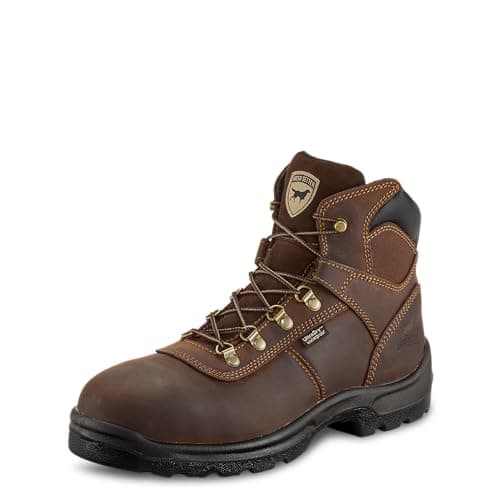
| 1 | Irish Setter Ely 6-inch Leather Steel Toe Work Boot (83612) A black full-grain steel toe with EH protection and a direct-attach sole — no features to pay for beyond the ones the standard requires. | A rated boot with no membrane | Steel safety toeSteel toe with electrical hazard protection meeting ASTM safety standards | |
| 2 | 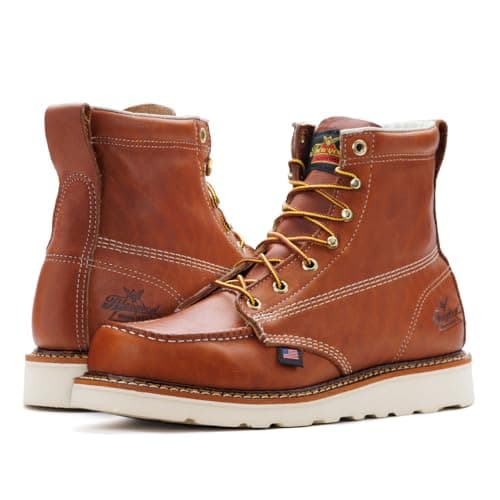 Thorogood American Heritage 6" Moc Toe Safety Toe MAXWear Wedge (804-4200) A Goodyear-welted, USA-built wedge with a steel toe and an EH rating — the default answer for anyone who stands on a flat hard floor and wants a boot that can be resoled. | Unlined leather that breathes | Steel safety toe, moc toe shapeASTM F2413-18, EH | |
| 3 | 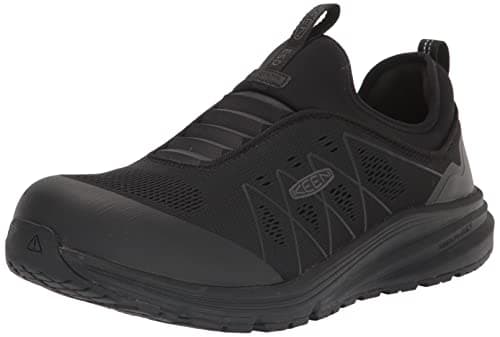 KEEN Utility Vista Energy Shift Carbon-Fiber Toe Work Sneaker A safety-toe work sneaker with a midsole KEEN rates at up to 50% energy return — for warehouse and plant floors where you cover distance rather than terrain. | The most breathable rated option | Carbon-fiber safety toe, non-metallicKEEN Utility safety toe tested to ASTM F2413-18 M/I/75/C/75; the ESD version adds an electrostatic dissipative outsole | |
| 4 | 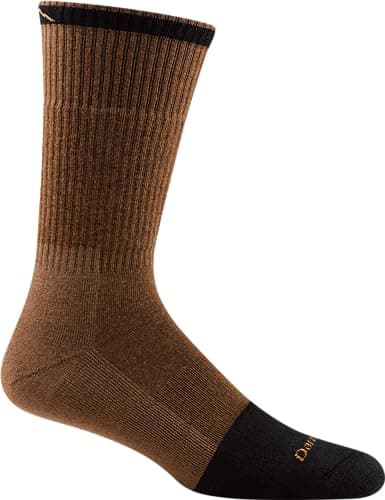 Darn Tough Work Steely Boot Midweight Sock with Full Cushion Toe Box A merino-blend work sock with extra padding specifically at the toe box — aimed at the one place a steel cap presses. | The sock, which matters more than the boot | Not applicable — sockNot applicable | |
| 5 | 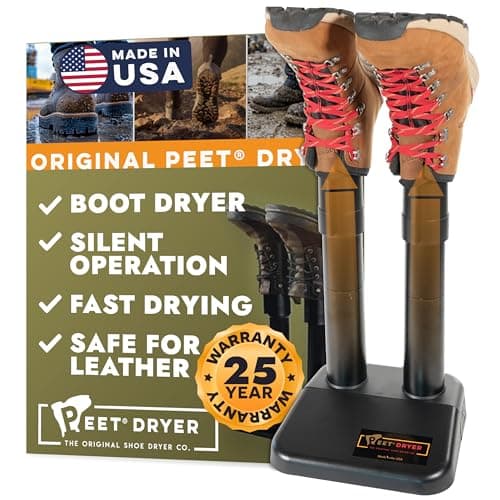 PEET Original Electric Shoe and Boot Dryer A 36-watt convection dryer with no fan and no element blast — it dries boots overnight without the heat that kills leather and delaminates adhesives. | Drying boots through, every night | Not applicable — boot dryerNot applicable |
Tap a row to jump to that boot's full write-up. The price column goes straight to Amazon.
Why waterproof boots make sweaty feet worse
A waterproof membrane is a barrier with pores small enough to block liquid water and large enough to pass water vapor. That second half works, but only as fast as the vapor pressure difference across the membrane allows — and inside a hot boot on a hot day there is barely a difference to drive it. The result is a boot that is dry on the outside and wet on the inside by lunchtime.
Nothing about this is a defect. It is the trade you make when you buy waterproofing, and it is the right trade if you stand in water. If you do not, you are paying money for a feature that is actively making your problem worse. Waterproof vs water-resistant sets out the middle ground, which for most people with sweaty feet is the correct place to land: treated leather that sheds a shower and still breathes.
| Change | Why it works | What it costs |
|---|---|---|
| Drop the waterproof membrane | Removes the barrier that traps vapor | You get wet feet in standing water |
| Switch to merino socks | Wool moves moisture off skin instead of holding it | Several times the price of cotton |
| Dry the boots overnight, insoles out | A damp boot starts the next shift already saturated | A dryer, and the habit |
| Rotate two pairs | 48 hours is what a leather boot actually needs to dry through | A second pair of boots |
| Replace a packed-out footbed | The footbed is the sponge; it holds the moisture and the bacteria | An insole every six to twelve months |
| Choose a non-metallic cap | Steel conducts heat into the toe box on a hot day | Slightly less tolerance of repeated heavy impact |
The sock is a bigger lever than the boot
Cotton absorbs sweat and holds it against the skin, which is how blisters start and how a boot ends up smelling. Merino moves it. That is the entire argument, and it is the cheapest meaningful upgrade available in work footwear — a midweight merino-blend work sock costs a fraction of a boot and changes more about how the day feels.
Buy the socks before you fit the boots and then fit the boots wearing them. Changing sock thickness afterwards shifts the fit by roughly half a size in feel, which is enough to turn a good boot into a tight one.
Drying is the step everyone skips
A leather work boot needs around 48 hours to dry through properly, and almost nobody gives it 12. That is why boots get progressively worse through a week: each shift starts wetter than the last. A convection dryer solves it overnight without the heat that cracks leather and delaminates adhesives — the key specification is gentle warm air rather than an element blast, which is why forced-hot-air dryers and radiators are a false economy.
Pull the insoles out and dry them separately. The footbed is where the moisture sits, and a boot that feels dry can be damp underfoot at the start of the next shift. That same damp footbed is the odor mechanism — why work boots smell goes through it properly, and the fix is almost always the footbed rather than the boot.
The cap, and the heat it carries
Steel conducts, which is normally discussed as a cold-weather problem. It runs the other way too: on a hot roof or a sunlit slab, a steel cap brings heat into the toe box faster than a non-metallic one. Composite and carbon caps meet the identical ASTM F2413 impact and compression thresholds, so there is no safety argument against switching — steel toe vs composite toe has the full comparison, and best hot-weather work boots is the shortlist if heat rather than sweat is your main complaint.
Before you buy a boot, change the sock
The cheapest intervention here costs under $20 and is the one most people skip: best socks for work boots covers the fiber rule — merino or technical synthetic, never cotton — and how many pairs you actually need for every pair to dry between shifts.
The picks in full
#1 — A rated boot with no membrane
Irish Setter Ely 6-inch Leather Steel Toe Work Boot (83612)
A black full-grain steel toe with EH protection and a direct-attach sole — no features to pay for beyond the ones the standard requires.
Published specifications
- Toe
- Steel safety toe
- Safety rating
- Steel toe with electrical hazard protection meeting ASTM safety standards
- Upper
- Full-grain black leather
- Outsole
- Direct attach sole
- Midsole / shank
- Not published on the manufacturer page
- Construction
- Direct attach
- Waterproof
- Not waterproof in the 83612; the 83618 is the waterproof version
- Insulation
- Not insulated
Specifications read from Irish Setter product page (Ely 83612) on 2026-09-27. We have not worn this boot.
What works
- Black leather passes dress codes that brown work boots do not
- Direct attach is flexible from day one
- Simple boot, simple price
What doesn't
- Direct attach is not resoleable
- Not waterproof
- Very little published spec detail
Who this is wrong for
Wet work. Buy the waterproof 83618 instead — the 83612 upper is not sealed.
Sizing
Irish Setter's work lasts run close to true. Because the boot is unlined-feeling and flexible, it will not stretch much to fix a tight fit.
#2 — Unlined leather that breathes
Thorogood American Heritage 6" Moc Toe Safety Toe MAXWear Wedge (804-4200)
A Goodyear-welted, USA-built wedge with a steel toe and an EH rating — the default answer for anyone who stands on a flat hard floor and wants a boot that can be resoled.
Published specifications
- Toe
- Steel safety toe, moc toe shape
- Safety rating
- ASTM F2413-18, EH
- Upper
- Tobacco full-grain American leather, unlined
- Outsole
- MAXWear Wedge slip-resistant outsole
- Midsole / shank
- Rubber midsole with composite shank
- Construction
- Goodyear storm welt
- Waterproof
- Not waterproof
- Insulation
- Not insulated
- Widths
- D and EE, sizes 7-14 in both widths
- Weight
- Not published on the manufacturer page
- Made in
- Made in USA with USA and globally sourced components
Specifications read from Thorogood product page (804-4200) on 2026-09-27. We have not worn this boot.
What works
- Goodyear storm welt is a resoleable construction, not a disposable one
- Flat wedge spreads load evenly on concrete instead of concentrating it under a heel
- Unlined upper breaks in to the foot rather than around a liner
- EE width is stocked across the whole size run, not just the middle
What doesn't
- Not waterproof and not insulated — the unlined upper soaks
- A flat wedge gives up bite on mud, gravel and ladder rungs
- Manufacturer publishes no weight figure, so weight comparisons are guesswork
Who this is wrong for
Anyone working outdoors on soft or uneven ground, or in standing water. The wedge has no lugs to bite and the unlined upper is not waterproof.
Sizing
Thorogood's moc-toe last is widely reported to run large; owner reviews consistently suggest going a half size down from a measured Brannock length. D and EE are both stocked, so take the width rather than sizing up for room.
#3 — The most breathable rated option
KEEN Utility Vista Energy Shift Carbon-Fiber Toe Work Sneaker
A safety-toe work sneaker with a midsole KEEN rates at up to 50% energy return — for warehouse and plant floors where you cover distance rather than terrain.
Published specifications
- Toe
- Carbon-fiber safety toe, non-metallic
- Safety rating
- KEEN Utility safety toe tested to ASTM F2413-18 M/I/75/C/75; the ESD version adds an electrostatic dissipative outsole
- Upper
- Textile and synthetic upper
- Outsole
- Oil- and slip-resistant outsole; ESD outsole on the ESD version
- Midsole / shank
- KEEN.ReGEN midsole, returning up to 50% energy per step, per KEEN
- Construction
- Cemented athletic construction
- Waterproof
- Not waterproof
- Insulation
- Not insulated
Specifications read from KEEN Utility product page (Vista Energy Shift ESD) on 2026-09-27. We have not worn this boot.
What works
- By far the lightest safety-toe option on this list
- ESD version solves a real problem for electronics and plant work
- Athletic flex suits smooth floors and long walking distances
What doesn't
- No ankle support at all
- Textile upper is not a match for abrasion, sparks or sharp debris
- Not waterproof, not resoleable
Who this is wrong for
Anyone on uneven ground, around welding, or handling anything that drags across the upper. This is an indoor smooth-floor shoe.
Sizing
Sneaker sizing, so it feels shorter than a boot in the same number. Leave a thumbnail of room ahead of the longest toe.
#4 — The sock, which matters more than the boot
Darn Tough Work Steely Boot Midweight Sock with Full Cushion Toe Box
A merino-blend work sock with extra padding specifically at the toe box — aimed at the one place a steel cap presses.
Published specifications
- Toe
- Not applicable — sock
- Safety rating
- Not applicable
- Upper
- Not applicable
- Outsole
- Not applicable
- Midsole / shank
- Not applicable
- Construction
- Midweight merino wool blend knit, full cushion toe box
- Waterproof
- Not applicable — merino wicks rather than blocks
- Insulation
- Midweight — moisture-wicking and thermoregulating merino blend
- Made in
- Knit in mills in Vermont, USA
Specifications read from Retail product listing — Darn Tough Work Steely midweight boot sock on 2026-09-27. We have not worn this boot.
What works
- The padding is placed where a steel cap actually causes pain
- Merino manages sweat, which is what causes most work-boot blisters
- Midweight works across more of the year than a heavyweight sock
What doesn't
- Costs several times a cotton work sock
- Extra toe padding takes up room in an already-snug boot
- Merino needs washing care to last
Who this is wrong for
A boot that is already tight at the toes. Fix the boot's fit first — a thicker sock inside a short boot makes the problem worse.
Sizing
Buy socks before you fit boots, then fit the boots wearing them. Changing sock thickness afterwards changes the fit by roughly a half size in feel.
#5 — Drying boots through, every night
PEET Original Electric Shoe and Boot Dryer
A 36-watt convection dryer with no fan and no element blast — it dries boots overnight without the heat that kills leather and delaminates adhesives.
Published specifications
- Toe
- Not applicable — boot dryer
- Safety rating
- Not applicable
- Upper
- Not applicable
- Outsole
- Not applicable
- Midsole / shank
- Not applicable
- Construction
- Thermal convection — slightly warmed air rises through AirChambers and DryPorts
- Waterproof
- Not applicable
- Insulation
- Not applicable
- Weight
- 2.5 lbs
- Made in
- Made in the USA, per PEET
Specifications read from PEET product page (The Original) on 2026-09-27. We have not worn this boot.
What works
- Gentle enough to leave leather boots on overnight, every night
- Silent, so it can live in a bedroom or hallway
- The warranty term is unusually long and published
What doesn't
- Slow compared with a forced-air dryer
- Only handles one pair at a time
- Does nothing about odor on its own
Who this is wrong for
Anyone who needs boots dry in an hour. Convection is gentle because it is slow — buy the forced-air Advantage model if speed matters.
Sizing
Not a sizing product. Pull the insoles out and dry them separately, or the footbed stays damp under a dry boot.
Frequently asked questions
What work boots are best for sweaty feet?
A leather boot with no waterproof membrane, because the membrane is what traps the sweat. The Irish Setter Ely is a rated, EH-protected boot with no membrane; an unlined boot like Thorogood's 804-4200 breathes even better. Pair either with merino socks and dry the boots overnight with the insoles out.
Are waterproof work boots bad for sweaty feet?
They make the problem worse. A membrane blocks liquid water in both directions and passes vapor only as fast as the pressure difference across it allows, which inside a hot boot is barely at all. Buy waterproofing if you stand in water; skip it if your problem is your own sweat.
How do I stop my work boots from making my feet sweat?
In order of effect: drop the membrane, switch to merino socks, dry the boots overnight with the insoles pulled out, and rotate two pairs so each gets 48 hours. Replacing a packed-out footbed also helps, because the footbed is what holds the moisture and the bacteria.
Do merino wool socks help sweaty feet in work boots?
Yes, and they are the cheapest change you can make. Cotton absorbs sweat and holds it against the skin; merino moves it off. Buy the socks before you fit the boots, because switching sock thickness later changes the fit by about half a size in feel.
Sources
- ASTM F2413 protective footwear standard — technical summary — Label format, the mandatory I and C designations, and each optional code
- NIOSH Science Blog — Prolonged Standing at Work — NIOSH's own summary of the evidence on prolonged standing
Read next
Why Work Boots Smell
Same cause, and the four things that actually fix it.
Best Hot-Weather Work Boots
If the air temperature, not your sweat, is the problem.
Waterproof vs Water-Resistant
The middle ground most people with sweaty feet should buy.
Best Insoles for Work Boots
Replacing the footbed that holds the moisture.