Safety Toes
Best Soft Toe Work Boots
No cap, more room, less weight — and a hard limit on where you can wear them.
Disclosure: product links on this page go to Amazon. As an Amazon Associate we earn from qualifying purchases, at no extra cost to you. It does not change which boots we recommend or the order they appear in — here is the full disclosure.
Quick picks
| # | Product | Best for | Toe & rating | Price |
|---|---|---|---|---|
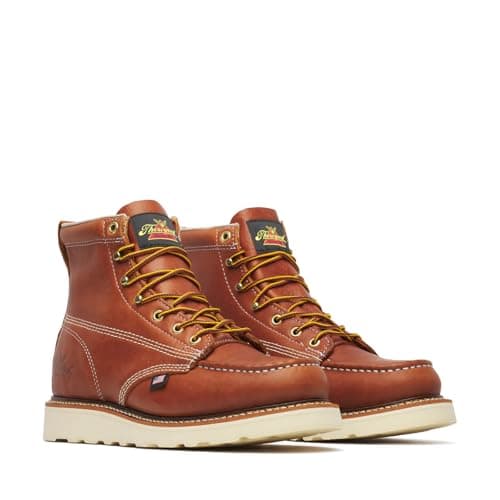
| 1 | Thorogood American Heritage 6" Moc Toe MAXWear Wedge, soft toe (814-4200) The same USA-built wedge platform as the 804-4200 without the steel toe — lighter on the foot, and the right choice only where no safety toe is required. | The USA-built welted wedge, uncapped | Plain (non-safety) moc toeNo safety toe — this model carries no ASTM F2413 toe rating | |
| 2 | 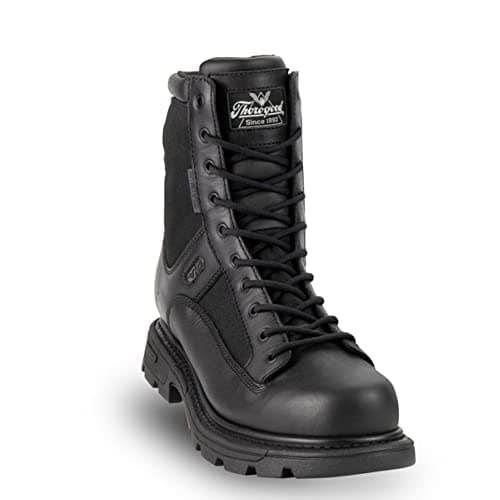 Thorogood GEN-flex2 8" Waterproof Tactical Side Zip (834-7991) The rare side-zip boot built on a Goodyear storm welt rather than cement, with a heavy-duty YKK zipper under a Velcro flap — and a soft toe, which is the trade. | A soft toe you can still resole | Non-safety toe, polishableNo safety-toe rating published — this is a soft-toe boot with no ASTM F2413 toe protection | |
| 3 |  White's Boots The Original Smokejumper Handsewn stitchdown, leather midsole, NFPA-certified and built to be rebuilt — the reference point for what a resoleable boot actually costs. | A rebuildable boot for a career | Soft toe on the Original Smokejumper; White's lists safety-toe models separatelyNFPA certified for wildland fire; no ASTM F2413 protective toe on the soft-toe Original | |
| 4 | 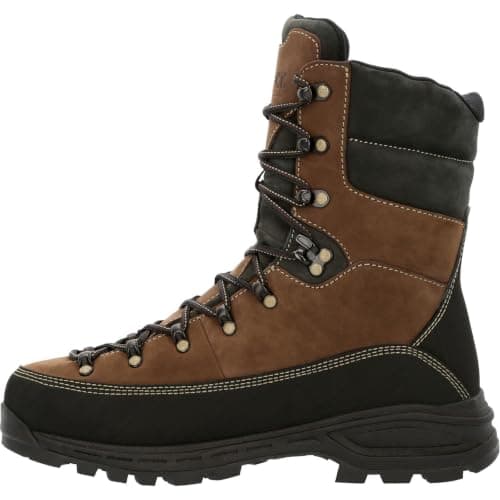 Rocky Mountain Stalker Pro Waterproof 400G Insulated Boot A 10-inch waterproof boot with 400g Thinsulate Ultra — the tier that keeps working when you are active rather than standing still. | Cold-weather chores, no cap | Non-safety toe in this model — check the variant before buying for a job siteNo protective toe designation published for this model |
Tap a row to jump to that boot's full write-up. The price column goes straight to Amazon.
What soft toe means
A soft-toe boot has no protective cap of any material — no steel, no composite, no alloy, no carbon. It is not a weaker safety toe; it is the absence of one, and it carries no ASTM F2413 impact or compression designation at all. Makers also call these plain-toe, non-safety-toe or non-protective models, and the names are used inconsistently enough that the only reliable test is whether the product page states a protective toe classification.
Note the terminology trap: “safety toe” is the umbrella term for any certified cap, so a boot described as a “safety toe” is capped and a boot described as a “soft toe” is not — safety toe vs steel toe untangles the vocabulary properly.
Who can wear one
OSHA 29 CFR 1910.136 requires protective footwear where the employer's hazard assessment identifies a risk of foot injury from falling or rolling objects, objects piercing the sole, or electrical hazards. Where that assessment finds no such risk, there is no footwear requirement, and a great many working people are in that position: carpenters doing finish and trim work, painters, delivery and courier work, groundskeeping, farm and ranch work on your own place, line cooks and front-of-house, inspectors, estimators, and most self-employed trades where you set your own standard.
| Soft toe | Capped (steel, composite, carbon) | |
|---|---|---|
| ASTM F2413 impact/compression | None | 75 ft-lb impact, 2,500 lb compression |
| Weight | Lightest available | Adds roughly the mass of the cap |
| Usable room at the front | Flexes with the foot | Fixed shell, clearance built in |
| Cold conduction | None | Significant with steel, minimal with non-metallic |
| Break-in at the toes | Leather softens to the foot | The cap never changes |
| Job sites requiring PPE footwear | Cannot be worn | Compliant |
The three real advantages
Room. This is the biggest one and the least discussed. A capped boot has a rigid shell your toes cannot push out of the way, which is why safety-toe fit complaints dominate this category. A soft toe has more usable length in the same size, and the leather at the toes breaks in to your foot rather than staying a fixed shape. If you have bunions, hammertoes or an unusually wide forefoot and your job does not require a cap, a soft toe solves a problem no capped boot can.
Weight. Removing the cap removes mass at the far end of the lever your leg swings all day. On the Thorogood pair, the 814 and the 804 are the same boot except for the cap, which makes the comparison unusually clean.
Temperature. Steel conducts heat out of your toes in winter and into them in summer. No cap, no conduction. If you have previously bought an insulated steel-toe boot and still had cold toes, this is why — boot insulation ratings explained covers how the cap fights the insulation you paid for.
What to look at instead of the cap
With the cap out of the decision, construction becomes the main variable, and this is where soft-toe boots get genuinely interesting: some of the best-built work boots made are soft toes. A Goodyear storm welt or a handsewn stitchdown can be resoled indefinitely, which is why White's runs a factory rebuild program and why Thorogood's welted models outlive several outsoles. Cemented and direct-attach boots cannot be resoled at all, regardless of what they cost — resoling work boots sets out which constructions qualify.
The second variable is the sole. A flat wedge is the right answer for hard flat floors and the wrong one for mud and ladder rungs; a lugged outsole is the reverse. Wedge sole vs lug sole is the decision, and it matters more here than it does on a capped boot because you are no longer trading it off against a safety requirement.
The soft-toe exception people buy by accident
A large share of insulated outdoor boots are soft toes, including the Rocky Mountain Stalker on this list, which publishes no protective toe designation. That is fine if you are doing chores, and a problem if you took it to a job site assuming an expensive boot must be rated. Several families are sold in both capped and uncapped builds under one model name, so check the designation on the exact SKU rather than on the family page.
Painting is the trade where this question comes up most often, and the answer depends on the job rather than the trade — best work boots for painters works through when a soft toe is genuinely allowed and when a repaint crew suddenly falls under site rules that require a cap.
The picks in full
#1 — The USA-built welted wedge, uncapped
Thorogood American Heritage 6" Moc Toe MAXWear Wedge, soft toe (814-4200)
The same USA-built wedge platform as the 804-4200 without the steel toe — lighter on the foot, and the right choice only where no safety toe is required.
Published specifications
- Toe
- Plain (non-safety) moc toe
- Safety rating
- No safety toe — this model carries no ASTM F2413 toe rating
- Upper
- Tobacco oil-tanned leather
- Outsole
- MAXWear Wedge slip-resistant outsole
- Midsole / shank
- Rubber midsole
- Construction
- Goodyear storm welt
- Waterproof
- Not waterproof
- Insulation
- Not insulated
- Made in
- Made in USA with USA and globally sourced components
Specifications read from Thorogood product page (814-4200) on 2026-09-27. We have not worn this boot.
What works
- Noticeably lighter than the steel-toe 804-4200 on the same platform
- Resoleable Goodyear welt at a soft-toe price
- No steel cap to press on the toes during break-in
What doesn't
- No toe protection at all — fails most site PPE requirements
- Not waterproof
- Same flat-wedge traction limits as the safety-toe version
Who this is wrong for
Any job site that specifies protective footwear. If your employer's hazard assessment calls for a safety toe, this model does not meet it — buy the 804-4200 instead.
Sizing
Same moc-toe last as the 804-4200 and the same reported tendency to run large. A half size down is the common owner recommendation.
#2 — A soft toe you can still resole
Thorogood GEN-flex2 8" Waterproof Tactical Side Zip (834-7991)
The rare side-zip boot built on a Goodyear storm welt rather than cement, with a heavy-duty YKK zipper under a Velcro flap — and a soft toe, which is the trade.
Published specifications
- Toe
- Non-safety toe, polishable
- Safety rating
- No safety-toe rating published — this is a soft-toe boot with no ASTM F2413 toe protection
- Upper
- Full-grain leather with nylon
- Outsole
- GEN-flex2 outsole with multi-directional traction lugs, oil-resistant
- Midsole / shank
- Rubber midsole with a composite shank; removable single-density polyurethane footbed and an Impact 300 gel heel insert
- Construction
- Goodyear storm welt
- Waterproof
- BBP X-Stream Waterproof membrane lining
- Insulation
- Not insulated
- Widths
- Men's sizes 4-15, women's sizes 6-15
- Weight
- Not published on the manufacturer page
- Made in
- Imported
Specifications read from Thorogood product page (GEN-flex2 8" tactical side zip, 834-7991) on 2026-09-29. We have not worn this boot.
What works
- Welted, so the boot outlives its first outsole
- The zipper is covered, which is what keeps grit out of the teeth
- Gel heel insert under a removable footbed
What doesn't
- No safety toe — it cannot satisfy a site that requires protective footwear
- Thorogood publishes no ASTM designations for this model at all
- Tactical lug tread carries debris onto finished floors
Who this is wrong for
Any job that requires protective footwear under OSHA 1910.136. There is no toe cap in this boot; take the Deuce if you need one.
Sizing
Soft-toe boots have more usable length than a capped boot of the same size, so a half size down from your capped-boot size is often right here.
Illustrative category photo — not this model#3 — A rebuildable boot for a career
White's Boots The Original Smokejumper
Handsewn stitchdown, leather midsole, NFPA-certified and built to be rebuilt — the reference point for what a resoleable boot actually costs.
Published specifications
- Toe
- Soft toe on the Original Smokejumper; White's lists safety-toe models separately
- Safety rating
- NFPA certified for wildland fire; no ASTM F2413 protective toe on the soft-toe Original
- Upper
- 10" full-grain water-resistant leather
- Outsole
- Vibram fire and ice white dot sole
- Midsole / shank
- Leather midsole and shank
- Construction
- Handsewn stitchdown — rebuildable and resoleable
- Waterproof
- Water-resistant leather, not a waterproof membrane
- Insulation
- Not insulated
- Made in
- Handcrafted in the USA
Specifications read from White's Boots product page (The Original Smokejumper) on 2026-09-27. We have not worn this boot.
What works
- Genuinely rebuildable — White's runs a factory rebuild program
- A leather midsole molds to the foot in a way rubber never does
- NFPA certification is a real third-party standard
What doesn't
- The soft-toe Original has no ASTM F2413 protective toe
- Break-in on a stitchdown leather-midsole boot is genuinely weeks
- List price is several times a cemented boot
Who this is wrong for
Anyone who needs a safety toe, or who cannot commit to a long break-in. The Original Smokejumper is a soft toe.
Sizing
Handmade boots are fitted, not guessed. White's publishes a measuring process; use it. A stitchdown leather-midsole boot cannot be returned into shape after it has molded to the wrong foot.
#4 — Cold-weather chores, no cap
Rocky Mountain Stalker Pro Waterproof 400G Insulated Boot
A 10-inch waterproof boot with 400g Thinsulate Ultra — the tier that keeps working when you are active rather than standing still.
Published specifications
- Toe
- Non-safety toe in this model — check the variant before buying for a job site
- Safety rating
- No protective toe designation published for this model
- Upper
- 10" waterproof full-grain leather
- Outsole
- Rocky outdoor outsole
- Midsole / shank
- Not published on the manufacturer page
- Construction
- Not published as a welt construction
- Waterproof
- Waterproof with Rocky Vapor Pass technology
- Insulation
- 400g 3M Thinsulate Ultra Insulation
Specifications read from Authorized retailer spec page (WorkBoots.com) — Rocky Mountain Stalker Pro 400G on 2026-09-27. We have not worn this boot.
What works
- 400g is the right tier if you are moving — 600g overheats an active worker
- Tall waterproof shaft
- Breathability is addressed, not ignored
What doesn't
- No protective toe — this is not a PPE boot
- Too warm for mild weather
- Retailer page, not a manufacturer page
Who this is wrong for
Any site requiring protective footwear. There is no safety toe here.
Sizing
A 10-inch shaft needs lacing discipline: snug at the ankle, looser at the top, or the shaft will bite behind the knee of the calf.
Frequently asked questions
What are soft toe work boots?
Boots with no protective cap of any material — no steel, composite, alloy or carbon — and therefore no ASTM F2413 impact or compression designation. They are also sold as plain-toe or non-safety-toe models. The only reliable way to tell is whether the product page states a protective toe classification.
Are soft toe boots OSHA approved?
OSHA does not approve footwear; it requires protective footwear where an employer's hazard assessment finds a risk of foot injury from falling or rolling objects, sole puncture, or electrical hazards. Where the assessment finds no such hazard, a soft toe is perfectly legal. Where it does, a soft toe cannot comply and nothing aftermarket will make it comply.
Are soft toe boots more comfortable than steel toe?
For most feet, yes, and the reason is room rather than cushioning. A rigid cap is a shell your toes cannot push out of the way, so capped boots build in fixed clearance and never change shape. A soft toe has more usable length in the same size and the leather breaks in to your foot.
Who should wear soft toe work boots?
Trades without a protective footwear requirement: finish carpentry, painting, delivery, groundskeeping, farm work on your own place, kitchen and service work, inspection and estimating, and self-employed work where you set the standard. They are also the honest answer for a hard-to-fit forefoot when no cap is required.
Sources
- OSHA 29 CFR 1910.136 — Foot protection — The federal rule itself: when protective footwear is required, and which consensus standards it accepts
- ASTM F2413 protective footwear standard — technical summary — Label format, the mandatory I and C designations, and each optional code
Read next
Safety Toe vs Steel Toe
The vocabulary, so you can read a spec page correctly.
Are Steel Toe Boots Required by OSHA?
What the rule actually says, and who it applies to.
Resoling Work Boots
With the cap out of the decision, construction is the main variable.
Best Moc Toe Work Boots
Where most of the good soft-toe builds actually live.