Safety Toes
Best Puncture-Resistant Work Boots
A safety toe does nothing for the 90% of your sole a nail can go through.
Disclosure: product links on this page go to Amazon. As an Amazon Associate we earn from qualifying purchases, at no extra cost to you. It does not change which boots we recommend or the order they appear in — here is the full disclosure.
Quick picks
| # | Product | Best for | Toe & rating | Price |
|---|---|---|---|---|
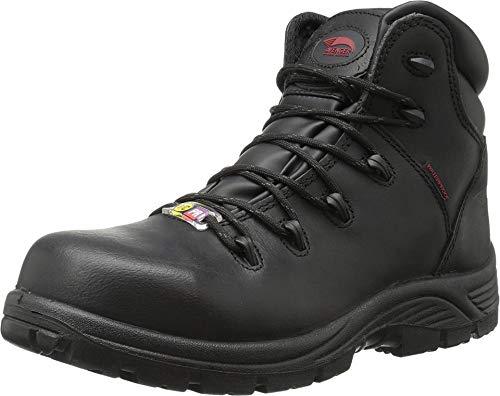
| 1 | Avenger Framer 6" Composite Toe Puncture-Resistant Waterproof Work Boot (A7223) The cheapest honest route to an ASTM F2413 puncture-resistant sole, and the only pick here that is metal-free end to end — a Lenzi textile plate instead of a steel one, under a composite cap. | Metal-free, plate included | Composite safety toe; Avenger states the boot is 100% metal freeASTM F2413 protective toe classification, ASTM F2413 puncture resistant standards and the ASTM F2413 electrical hazard standard. Mark II slip results published as wet 0.50, oily 0.45, oily wet 0.40 | |
| 2 | 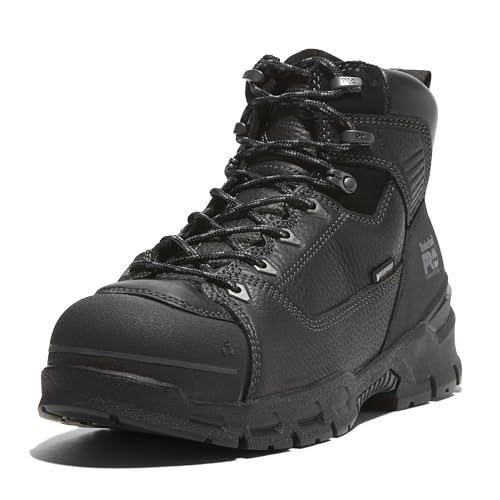 Timberland PRO Endurance EV 6" Composite Toe Puncture-Resistant Waterproof Work Boot (A5YXU) The best-documented puncture-resistant boot on this page: a metal-free cap, a PR plate, a waterproof full-grain upper and an outsole rated heat-resistant to 1,000 degrees F, all published line by line. | Waterproof, and the best documented | Composite safety toe, described by Timberland PRO as metal freeASTM F2413 protective toe classification, ASTM F2413 puncture resistant standards and the ASTM F2413 electrical hazard standard; CSA Grade 1, CAN/CSA-Z195-02 puncture resistance, and CAN/CSA-Z195 protection from open circuits up to 18,000 volts | |
| 3 | 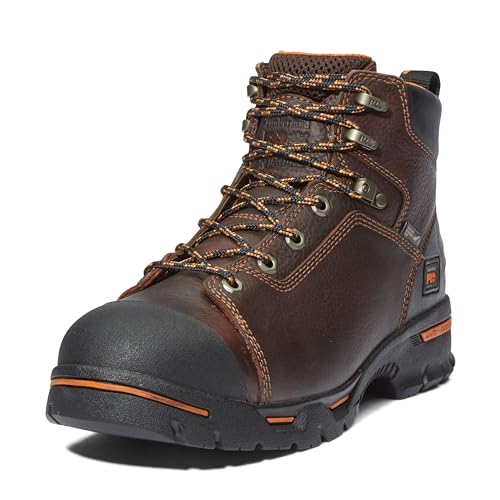 Timberland PRO Endurance 6" Steel Toe Puncture-Resistant Work Boot (52562) The boot American sites have bought for puncture protection for two decades: a steel plate between outsole and midsole, a steel cap on the TiTAN last and a Ladder Lock heel — nothing clever, all published. | The steel-plate standard | Steel safety toe, shaped on Timberland's TiTAN lastASTM F2413 protective toe classification, ASTM F2413 puncture resistant standards and the ASTM F2413 electrical hazard standard; the CSA green triangle for a Grade 1 protective toe and the CSA omega for electric shock resistance | |
| 4 | 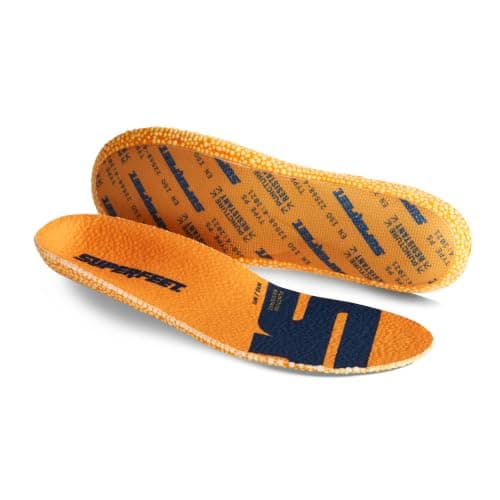 Superfeet Work Puncture Resistant Insole A flexible puncture-resistant insole tested to ASTM F2413 and EN ISO 22568-4:2021 Type PS — the retrofit for sites with nails and swarf underfoot. | Retrofitting boots you already own | Not applicable — insoleTested to ASTM F2413 and EN ISO 22568-4:2021 Type PS |
Tap a row to jump to that boot's full write-up. The price column goes straight to Amazon.
What the PR classification actually covers
A safety toe protects the toe box. It does nothing at all for the rest of the sole, which is where a nail, a screw, a staple, rebar tie wire or a piece of swarf goes through. Puncture resistance is a separate thing entirely: a plate between the outsole and the midsole, under the whole footprint, tested by driving a standard pin at the sole and measuring the force needed to penetrate it.
Under ASTM F2413 the impact (I) and compression (C) toe classifications are mandatory for any boot calling itself safety footwear. Puncture resistance is one of the optional codes you can add alongside EH, metatarsal and the rest — ASTM F2413 explained walks the whole label. Optional means almost nobody specifies it, and that is the single most important fact about this category.
Canada reads it differently, and that is why this list looks the way it does. The CSA green triangle means sole puncture protection together with a Grade 1 protective toecap, while the blue rectangle means a Grade 1 toecap with no puncture-resistant sole. In other words, a whole class of Canadian job sites requires the plate by marking. Makers who sell into both countries therefore build plated boots and certify them to both standards — which is why two of the three boots below carry CSA markings as well as ASTM ones.
Who actually needs a plate
Framing and demolition, where the floor is covered in pulled nails and torn-up decking. Roof tear-offs. Framing and carpentry is the trade where this comes up most, and roofers is a close second. Metalworking floors with swarf. Scrap and recycling yards. Anywhere there is broken glass or hypodermic risk. Site clean-up crews, who walk over whatever everyone else left behind.
Who does not need one: most people. A plate adds weight, adds stiffness and costs money, and on a finished floor, in a warehouse, in a plant room or in a vehicle it buys you nothing. If your hazard underfoot is actually slipping rather than puncture, best slip-resistant work boots is the page you want instead.
How these were chosen
1. The maker publishes the puncture classification. Not "puncture resistant upper," not a marketing claim — "ASTM F2413 puncture resistant standards" or the CSA equivalent, on the product page, with the date it was read.
2. The plate is identified where possible. Steel and textile plates behave differently underfoot, and that difference is the main decision on this page.
3. A real safety toe as well. Every pick carries the mandatory I and C toe classification. A plate without a cap is not a work boot.
4. Currently purchasable in the US. The PR field is small enough that it is full of discontinued models; everything here was confirmed as a live listing before it went on the page.
5. Honest about the field being narrow. There are three boots here, from two makers, and a retrofit insole. That is not laziness — it is what the category contains. Timberland PRO carries the classification across several lines because it certifies for Canada; most American makers simply do not offer it.
The four, on what each maker publishes
| Plate | Cap | Waterproof | Widths | Weight | |
|---|---|---|---|---|---|
| Avenger Framer A7223 | Lenzi textile, ASTM PR | Composite — 100% metal free, per Avenger | Waterproof membrane | D and EE, 7-17 | 2.5 lb per pair, size 10 |
| Timberland PRO Endurance EV | Puncture-resisting plate, ASTM + CAN/CSA | Composite, stated metal free | Yes | D and EE, 7-15 | 2.30 lb average, 10M |
| Timberland PRO Endurance 52562 | Puncture-resistant steel plate, ASTM PR | Steel, on the TiTAN last | Not published — treat as no | D and EE | 4.7 lb per pair, size 10 |
| Superfeet Work PR insole | Flexible insole, ASTM F2413 and EN ISO 22568-4:2021 Type PS | None — fits your existing boot | Not applicable | Trim to fit | Not published |
Avenger Framer A7223 — the metal-free one
This is the pick because it answers the question most plated boots cannot. A steel plate solves nails and creates two new problems: it triggers metal detectors and it conducts cold straight into the arch of your foot. The Framer uses a Lenzi textile plate instead, stated to meet the ASTM standard, in a boot Avenger describes as 100% metal free — so you get the plate, the composite cap and the electrical-hazard classification without anything metallic in the boot.
It also publishes real slip numbers rather than the word "slip-resistant": Mark II results of 0.50 wet, 0.45 oily and 0.40 oily wet. The size run is the widest here, D and EE from 7 to 17, there is a waterproof membrane, and it is the cheapest boot on the page by a clear margin — the budget pick, without the usual budget compromise of a missing classification.
The honest cons. The retailer page contradicts itself in two places — it calls the outsole polyurethane in the spec list and rubber in the prose, and gives two different weights — so the figures here are the ones in its published feature list and should be read as approximate. There is no welt, so this is a replace-it boot. And lace-to-toe construction gives excellent instep adjustment but takes longer to put on than a six-eyelet boot.
Wrong for: cold outdoor work. There is no insulation here at all — best insulated work boots is the other direction, and none of those carry a PR plate.
Timberland PRO Endurance EV — the best-documented boot here
The EV publishes more of its own specification than anything else on this page, and in this category that is worth paying for. A composite cap Timberland PRO describes as metal free, a puncture-resisting plate certified to both ASTM F2413 and CAN/CSA-Z195-02, electrical hazard under ASTM F2413 plus CAN/CSA-Z195 protection from open circuits up to 18,000 volts, a premium waterproof full-grain upper with Ever-Guard abrasion panels and a gusseted suede tongue, and an outsole rated heat-resistant to 1,000 degrees F. It weighs a published 2.30 lb average at size 10M, in D and EE, sizes 7 to 15.
If you need a plate and the ground is wet, this is the boot. It is also the one to hand your safety officer, because every classification it claims is printed.
The honest cons. The cap is composite but the plate is not, so despite the metal-free toe this boot will not clear a detector — if that is your problem, buy the Avenger. There is no welt and no resole. And it carries no thermal insulation at all, which is odd for a boot certified for the Canadian market; the "insulating bottoms" in its spec sheet refer to electrical insulation, not warmth, and conflating the two is one of the easiest mistakes to make reading a work-boot listing.
Wrong for: metal-detector sites, and hot weather — a waterproof membrane over a plate is a sealed, stiff box.
Timberland PRO Endurance 52562 — the steel-plate standard
The Endurance has been the default American PR boot for two decades, and it is on this page because it is the reference, not because it is clever. A puncture-resistant steel plate between outsole and midsole, a steel cap on Timberland's TiTAN last, a molded rubber shell toe and heel guard, a Ladder Lock radius at the heel breast for rungs, and an Anti-Fatigue conical polyurethane midsole to take some of the edge off a plated sole. It is also the cheapest boot in the Endurance family and the one most safety managers can order without a conversation.
The honest cons. Steel cap plus steel plate makes it the most metallic boot on this page and the coldest — a plate is a thermal bridge across your whole arch, not just your toes. At 4.7 pounds per pair for a size 10 it is also the heaviest thing here by a long way, and a plate makes the sole stiff whatever the midsole does about it. Timberland PRO publishes no waterproofing for this model, so treat it as not waterproof. Cement construction, so no resole.
Wrong for: cold, wet work and metal detectors. If you need the plate and the warmth, the honest answer today is that you will be layering socks — best socks for work boots is where that gets solved.
Superfeet Work Puncture Resistant — the retrofit, with a caveat
A flexible puncture-resistant insole, tested to ASTM F2413 and EN ISO 22568-4:2021 Type PS, that replaces the footbed in a boot you already own. It is the right answer in exactly one situation: your boots fit, you like them, the hazard underfoot has changed, and nobody is auditing your PPE. Being flexible rather than a rigid plate, it does not fight the boot's own flex the way a plated sole does.
The honest cons. It is not a rated boot, and if your site specifies PR footwear it will not satisfy that requirement — the classification belongs to the footwear, not to a component you added. It takes up volume, so a snug pair gets snugger. And it protects only the area it covers, which is the footbed outline, not the full sole a plate spans. Best insoles for work boots covers the comfort insoles if puncture is not actually the problem.
Wrong for: anyone whose PPE requirement names puncture-resistant footwear.
Steel plate or textile plate
Both have to pass the same test to carry the classification, so this is not a protection question. It is three practical ones.
Detectors. A steel plate sets off a gate. A textile plate does not. If you work somewhere with metal detection, a composite cap alone is not enough — the plate decides it.
Cold. Steel conducts. A steel plate spreads cold across your whole arch, which is a larger area than a steel cap covers and harder to fix with a thicker sock. Textile plates do not do this.
Flex and weight. A textile plate flexes with the sole; steel resists it. That is why plated boots have a reputation for feeling board-like, and why the heaviest boot on this page is the steel-plated one. Against that, steel is the known quantity, and some safety departments will only accept what they have always bought.
If what you actually need is instep protection rather than sole protection — dropped tools and rolling loads across the top of the foot — that is a different add-on entirely. Metatarsal guard boots covers it, and a few boots carry both.
Fitting a plated boot
A plate changes two things about fit. The sole is stiffer, so the boot flexes less at the ball of the foot and the break-in you are used to from a leather upper does not happen underneath — a plated boot stays as stiff as the day you bought it. Expect about a week of your calves working harder, because your foot is doing less of the bending.
Second, the plate and the footbed above it take up volume, so a plated boot in your usual size often feels tighter over the instep than the same maker's unplated model. Fit at the end of the day in your work sock, leave a thumb's width in front of the longest toe, and take the wide if you are between widths. The work boot sizing guide has the measuring method. If you need a flat sole as well as a plate, note that no wedge on the composite-toe wedge list carries the PR classification — you have to choose.
The picks in full
#1 — Metal-free, plate included
Avenger Framer 6" Composite Toe Puncture-Resistant Waterproof Work Boot (A7223)
The cheapest honest route to an ASTM F2413 puncture-resistant sole, and the only pick here that is metal-free end to end — a Lenzi textile plate instead of a steel one, under a composite cap.
Published specifications
- Toe
- Composite safety toe; Avenger states the boot is 100% metal free
- Safety rating
- ASTM F2413 protective toe classification, ASTM F2413 puncture resistant standards and the ASTM F2413 electrical hazard standard. Mark II slip results published as wet 0.50, oily 0.45, oily wet 0.40
- Upper
- Full-grain leather upper, laced to the toe
- Outsole
- Oil- and slip-resistant polyurethane outsole
- Midsole / shank
- Lenzi puncture-resistant plate, stated to meet the ASTM standard, over a nylon shank and a removable dual-density polyurethane footbed
- Construction
- Lace-to-toe hiker build; no welt construction published
- Waterproof
- Waterproof membrane
- Insulation
- Not published on the product page — treat as uninsulated
- Widths
- Medium (D) and Wide (EE), sizes 7-17
- Weight
- 2.5 pounds per pair for a size 10, per the published feature list
Specifications read from Lehigh Safety Shoes product page (Avenger composite toe puncture-resistant waterproof, A7223) on 2026-11-09. We have not worn this boot.
What works
- A non-metallic plate flexes with the sole instead of fighting it
- Metal free throughout, so detectors and cold bridging are both non-issues
- Publishes actual Mark II coefficients rather than the word slip-resistant
- The widest size run on the page, up to 17
What doesn't
- Lehigh's own page contradicts itself on outsole material and on weight — the figures here are the ones in its feature list
- No welt, so the boot is replaced rather than rebuilt
- Lace-to-toe takes longer to put on than a six-eyelet boot
Who this is wrong for
Cold outdoor work — there is no insulation here at all. Also wrong for anyone who wants a rebuildable boot.
Sizing
Lace-to-toe gives more adjustment over the instep than a standard eyelet row, so judge fit by heel hold first. Avenger runs close to true to length.
#2 — Waterproof, and the best documented
Timberland PRO Endurance EV 6" Composite Toe Puncture-Resistant Waterproof Work Boot (A5YXU)
The best-documented puncture-resistant boot on this page: a metal-free cap, a PR plate, a waterproof full-grain upper and an outsole rated heat-resistant to 1,000 degrees F, all published line by line.
Published specifications
- Toe
- Composite safety toe, described by Timberland PRO as metal free
- Safety rating
- ASTM F2413 protective toe classification, ASTM F2413 puncture resistant standards and the ASTM F2413 electrical hazard standard; CSA Grade 1, CAN/CSA-Z195-02 puncture resistance, and CAN/CSA-Z195 protection from open circuits up to 18,000 volts
- Upper
- Premium waterproof full-grain leather with Ever-Guard abrasion-resisting leather, a gusseted suede tongue and molded TPU at toe and heel
- Outsole
- Outsole heat resistant up to 1,000 degrees F, with insulating bottoms for secondary electrical-hazard protection in dry conditions and a defined heel for climbing
- Midsole / shank
- Puncture-resisting plate, Anti-Fatigue Technology conical polyurethane midsole, fiberglass shank and a removable comfort insole
- Construction
- Not published as a welt construction
- Waterproof
- Waterproof
- Insulation
- Not published on the product page — treat as uninsulated
- Widths
- Medium (D) and Wide (EE), sizes 7-15
- Weight
- 2.30 lbs average at size 10M
Specifications read from Lehigh Safety Shoes product page (Timberland PRO Endurance EV CSA composite toe puncture-resisting waterproof, A5YXU) on 2026-11-09. We have not worn this boot.
What works
- Publishes more of its own specification than anything else on this page
- Waterproof and puncture-resistant together, which narrows the field to almost nothing
- Dual ASTM and CSA certification, so it travels across the border
- The defined heel genuinely catches a rung
What doesn't
- The plate is metallic even though the toe cap is not, so this is not a metal-free boot
- No welt, so no resole
- Uninsulated, despite being sold into the Canadian market
Who this is wrong for
Anyone who has to pass a metal detector. The cap is composite but the puncture plate is not — the Avenger is the metal-free answer.
Sizing
Timberland PRO's work last is roomy through the forefoot and the EV's gusseted tongue takes up slack over a high instep. Order your measured length; the toe box does not need extra.
#3 — The steel-plate standard
Timberland PRO Endurance 6" Steel Toe Puncture-Resistant Work Boot (52562)
The boot American sites have bought for puncture protection for two decades: a steel plate between outsole and midsole, a steel cap on the TiTAN last and a Ladder Lock heel — nothing clever, all published.
Published specifications
- Toe
- Steel safety toe, shaped on Timberland's TiTAN last
- Safety rating
- ASTM F2413 protective toe classification, ASTM F2413 puncture resistant standards and the ASTM F2413 electrical hazard standard; the CSA green triangle for a Grade 1 protective toe and the CSA omega for electric shock resistance
- Upper
- Full-grain leather upper with a molded rubber shell toe and heel guard
- Outsole
- Oil-, heat- and slip-resistant rubber outsole with a Ladder Lock outsole radius at the heel breast
- Midsole / shank
- Puncture-resistant steel plate between the outsole and midsole, Anti-Fatigue Technology conical polyurethane midsole, fiberglass shank and a contoured removable polyurethane insole
- Construction
- Light and flexible cement construction
- Waterproof
- Not published on the product page — treat this model as not waterproof
- Insulation
- Not published on the product page — treat as uninsulated
- Widths
- Medium (D) and Wide (EE)
- Weight
- 4.7 pounds per pair for a size 10
Specifications read from Lehigh Safety Shoes product page (Timberland PRO Endurance steel toe puncture-resistant, 52562) on 2026-11-09. We have not worn this boot.
What works
- The plated boot most safety departments already stock and can order without a conversation
- A steel plate is the reference against which textile plates are measured
- The Ladder Lock heel is a real feature if you spend time on rungs
- Anti-Fatigue midsole takes some of the edge off a stiff plated sole
What doesn't
- Steel cap and steel plate — the most metallic boot on this page, and the coldest
- 4.7 pounds per pair is heavy, and a plate makes the sole stiff
- No waterproofing claimed at all
- Cement construction, so no resole
Who this is wrong for
Cold outdoor work, metal-detector sites, and anyone who needs the sole to flex. A plated cemented boot is a stiff boot by design.
Sizing
The TiTAN last is narrower at the toe than Timberland PRO's other work lasts. If you normally take a wide in the Pit Boss, take the EE here, and expect the plate to feel board-like for the first week.
#4 — Retrofitting boots you already own
Superfeet Work Puncture Resistant Insole
A flexible puncture-resistant insole tested to ASTM F2413 and EN ISO 22568-4:2021 Type PS — the retrofit for sites with nails and swarf underfoot.
Published specifications
- Toe
- Not applicable — insole
- Safety rating
- Tested to ASTM F2413 and EN ISO 22568-4:2021 Type PS
- Upper
- Not applicable
- Outsole
- Not applicable
- Midsole / shank
- Not applicable
- Construction
- Flexible puncture-resistant insole
- Waterproof
- Not applicable
- Insulation
- Not applicable
Specifications read from Superfeet product page (Work Puncture Resistant) on 2026-09-27. We have not worn this boot.
What works
- Cites the specific standards it was tested to
- Flexible, so it does not fight the boot's own flex
- Turns an existing pair into a puncture-protected pair
What doesn't
- An insole is not a substitute for a PR-rated boot if your employer specifies one
- Takes up volume
- Protects only the area it covers
Who this is wrong for
Anyone whose PPE requirement specifies PR-rated footwear. A compliant boot is rated as a boot, not as an insole in a boot — check with your safety officer first.
Sizing
Replace the factory footbed rather than stacking on top of it, and trim to the old insole's outline.
Frequently asked questions
What does PR mean on a work boot?
PR is the optional puncture-resistant classification under ASTM F2413. It means the boot has a plate between the outsole and midsole, under the whole footprint, that passed a standardized penetration test. It is separate from the mandatory impact and compression toe ratings, so a safety-toe boot is not puncture resistant unless it says PR.
Do steel toe boots have puncture protection?
Not unless they also carry the PR classification. A steel toe protects the toe box only — the rest of the sole is unprotected, which is where a nail actually goes through. Most steel-toe boots have no plate at all.
Is a puncture-resistant insole as good as a PR-rated boot?
Not for compliance. The classification belongs to the footwear, so an insole in an unrated boot does not make that boot PR-rated, and a site that specifies puncture-resistant footwear will not accept it. As added protection in a boot nobody is auditing, a tested insole like the Superfeet Work PR is worth having.
Are non-metallic puncture-resistant plates as strong as steel?
Both have to pass the same ASTM F2413 puncture test to carry the classification, so protection is not the difference. Textile plates flex with the sole, do not conduct cold and do not trigger metal detectors; steel is stiffer, colder and heavier, but it is what many safety departments have always specified.
Why do so few work boots have puncture resistance?
Because it is optional under ASTM F2413 and most US buyers do not ask for it. In Canada the CSA green triangle requires a puncture-resistant sole alongside a Grade 1 toecap, so makers who sell into both markets build plated boots and certify them twice — which is why the PR field in US stores is dominated by a handful of dual-certified models.
Sources
- ASTM F2413 protective footwear standard — technical summary — Label format, the mandatory I and C designations, and each optional code
- What changed in ASTM F2413-18 — Why the Class 50 tier and the numeric suffix disappeared from the marking
- CCOHS — Safety Footwear (CSA protective footwear markings) — Canada's own reading of the CSA marks: the green triangle means sole puncture protection with a Grade 1 protective toecap, the blue rectangle means a Grade 1 toecap with no puncture-resistant sole
- OSHA 29 CFR 1910.136 — Foot protection — The federal rule itself: when protective footwear is required, and which consensus standards it accepts
Read next
ASTM F2413 Explained
Where PR sits on the label, and which codes are mandatory.
Metatarsal Guard Boots
The other optional add-on, for impact across the instep.
Best Work Boots for Framing and Carpentry
The trade that walks over pulled nails all day.
Best Insoles for Work Boots
If comfort rather than puncture is the actual problem.