Comfort & Fit
Best Work Boots for High Arches
The opposite problem to flat feet, and it needs the opposite boot.
Disclosure: product links on this page go to Amazon. As an Amazon Associate we earn from qualifying purchases, at no extra cost to you. It does not change which boots we recommend or the order they appear in — here is the full disclosure.
Quick picks
| # | Product | Best for | Toe & rating | Price |
|---|---|---|---|---|
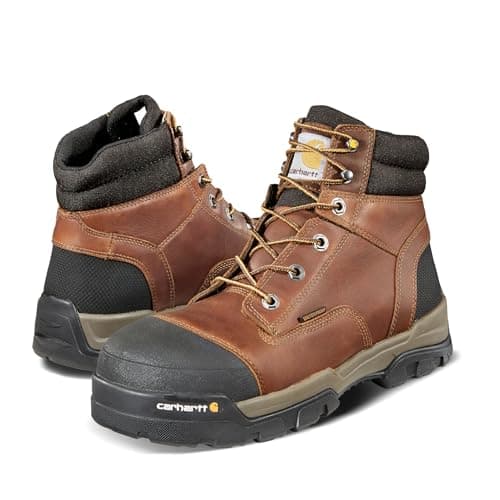
| 1 | Carhartt Ground Force Waterproof 6" Composite Toe Work Boot A waterproof composite toe with a heat-rated outsole and an APMA-accepted footbed — the pick when arch support is the deciding factor. | An APMA-accepted footbed, out of the box | Composite safety toe — lightweight, non-metallic, non-conductiveComposite safety toe meeting ASTM F2413-24 EH; outsole meets ASTM F3445-24 SR | |
| 2 | 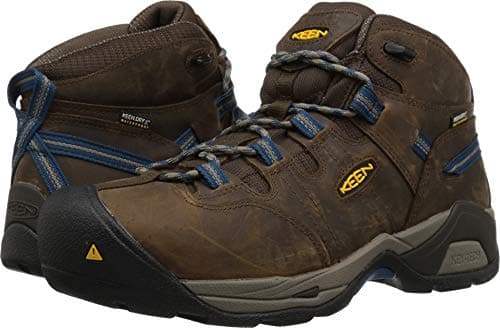 KEEN Utility Detroit XT Mid Steel Toe Waterproof Work Boot A waterproof steel-toe boot built on a hiking-inspired fit, with KEEN's underfoot support plate — the pick for anyone whose feet hate a traditional work-boot last. | A published underfoot support plate | Steel safety toeKEEN Utility safety toe footwear is tested to ASTM F2413-18 M/I/75/C/75 with EH protection on applicable styles | |
| 3 | 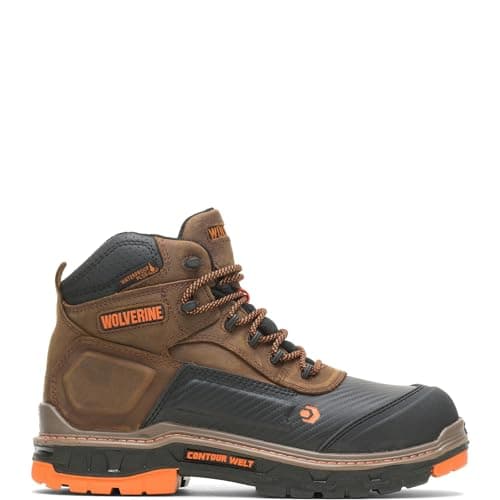 Wolverine Overpass CarbonMAX 6" Composite Toe Waterproof Boot A waterproof CarbonMAX composite toe on a flexible dual-compound outsole — the Overpass is built to move with the foot rather than brace it. | A removable footbed and a nylon shank | CarbonMAX composite safety toe, non-metallicASTM F2413 M/I/C EH rated composite toe | |
| 4 | 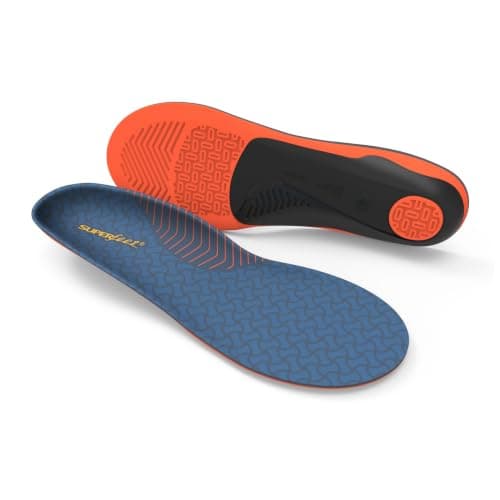 Superfeet Work Cushion Insoles A work-specific insole with a tapered forefoot designed to fit under a safety toe — the detail most aftermarket insoles get wrong. | Adding support to a boot you already own | Not applicable — insoleNot applicable to the Work Cushion; Superfeet's Work PR model is tested to ASTM F2413 and EN ISO 22568-4:2021 Type PS | |
| 5 | 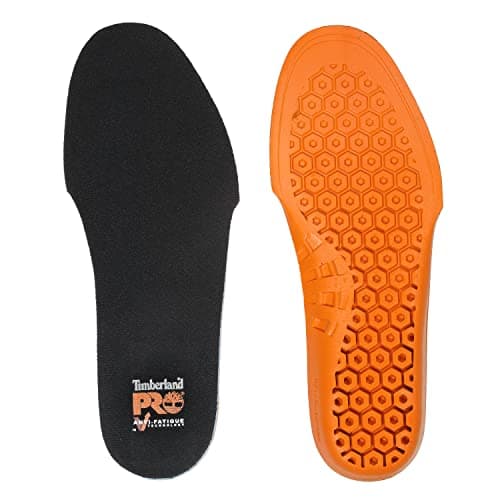 Timberland PRO Anti-Fatigue Technology Replacement Insole (91621) The inverted-cone geometry Timberland puts in its own boots, sold as a drop-in footbed — the cheapest way to get an anti-fatigue platform into a boot that was built without one. | Cushioning rather than correction | Not applicable — insoleThe retailer page claims no ASTM or ESD certification for this insole and states it is not a medical device |
Tap a row to jump to that boot's full write-up. The price column goes straight to Amazon.
What a high arch changes about a boot
A high-arched foot is usually a supinating foot: rigid, with the weight rolling toward the outside edge, and a small contact patch because the midfoot never comes down to the floor. That produces three problems a work boot either solves or makes worse.
The first is pressure concentration. Load that a flatter foot spreads across the whole sole lands on the heel and the ball instead, which is why high-arched workers get forefoot and heel pain long before they get arch ache. The second is instep volume: a high arch sits taller through the middle of the foot, so a boot with a shallow instep laces down onto the top of the foot and causes numbness. The third is shock. A rigid foot does not flatten to absorb impact, so the boot has to.
Note what is not on that list: arch collapse. That is the flat foot problem, it needs a different boot, and the two are routinely confused in product copy — best work boots for flat feet is the other page.
| The problem | What to look for | What it costs you |
|---|---|---|
| Load concentrated at heel and ball | A contoured footbed that reaches the midfoot | Takes internal volume from a snug boot |
| Numbness across the top of the foot | A high-volume instep and a padded tongue | Harder to lock the heel without over-tightening |
| No natural shock absorption | A cushioning midsole, not a rigid shank | Less stable on ladder rungs and broken ground |
| Weight rolling to the outside edge | A wide stable platform and a firm heel counter | Heavier boot, clumsier in tight spaces |
| A factory footbed that packs flat in a month | A removable footbed you can replace | Aftermarket insoles cost money and room |
The removable footbed is the whole trick
Almost no work boot ships with support appropriate to a high arch, because makers build to the middle of the market. What a good boot gives you instead is a footbed that comes out — which means the boot's internal volume, not its original insole, is what you are actually buying. Wolverine publishes a removable OrthoLite footbed on the Overpass; Carhartt's INSITE bed lifts out; KEEN's does too.
Then either replace it with a contoured work insole, or, if your podiatrist has made you an orthotic, use that. The one rule is to pull the factory footbed out first. Stacking an insole on top of the original is the most common way people turn a good-fitting boot into a tight one, and the crowding lands directly on the instep that was already the problem. Best insoles for work boots covers the support-versus-cushion decision in detail.
Cushioning and support are different purchases
This matters more for high arches than for any other foot type, because the two products feel similar in the shop and behave differently at hour nine. A support insole has a rigid or semi-rigid shell that holds the foot in a position. A cushioning footbed is foam geometry that absorbs shock and returns energy. Superfeet's Work Cushion is the former sort of product, built with a tapered forefoot so it fits under a safety cap. Timberland PRO's Anti-Fatigue replacement bed is explicitly the latter — the retailer page states it is not a medical device and claims no ASTM or ESD rating.
A rigid foot that already supinates usually wants cushioning first and correction second, which is the opposite of the usual advice. If your complaint is bruising under the ball and heel, buy the cushion. If your complaint is that your ankle rolls outward, buy the support.
Lacing, because this is a fit problem first
High-arch numbness is almost always a lacing problem wearing a boot problem's clothes. Skip the eyelet pair that sits directly over the highest point of your instep — lace through the one below it, cross over the gap, and pick the row back up above. You keep heel lock and remove the pressure point. A boot with a long eyelet row gives you more places to do this, which is a genuine reason to prefer one.
The other half is width. A high-volume foot often needs an EE in the same length rather than a longer D, and buying length to get volume leaves your foot sliding forward into the cap all day. Which widths a maker actually stocks is a real differentiator — the work boot sizing guide explains the width letters and how to measure for them.
The picks in full
#1 — An APMA-accepted footbed, out of the box
Carhartt Ground Force Waterproof 6" Composite Toe Work Boot
A waterproof composite toe with a heat-rated outsole and an APMA-accepted footbed — the pick when arch support is the deciding factor.
Published specifications
- Toe
- Composite safety toe — lightweight, non-metallic, non-conductive
- Safety rating
- Composite safety toe meeting ASTM F2413-24 EH; outsole meets ASTM F3445-24 SR
- Upper
- Leather upper with Storm Defender waterproof breathable protection and FastDry lining
- Outsole
- Oil- and slip-resistant non-marking rubber lug outsole with a defined heel and ladder-lock grooves; heat-resistant to 300°C / 572°F
- Midsole / shank
- Carhartt LWD midsole with a nylon shank
- Construction
- Not published as a welt construction
- Waterproof
- Waterproof — Storm Defender
- Insulation
- Not insulated in this model
Specifications read from Carhartt product page (Ground Force waterproof 6" composite toe) on 2026-09-27. We have not worn this boot.
What works
- Both an EH and an SR designation, each against a named ASTM standard
- APMA acceptance is third-party, not marketing
- Ladder-lock grooves are a specific feature for a specific job
What doesn't
- Not resoleable
- Lug outsole tracks debris onto finished floors
- No published weight
Who this is wrong for
Finished-floor work. A deep lug outsole carries grit into rooms you are being paid not to damage.
Sizing
Carhartt's Ground Force last is fairly generous. If you plan to use your own orthotic, pull the INSITE footbed out first — the two together will crowd the boot.
#2 — A published underfoot support plate
KEEN Utility Detroit XT Mid Steel Toe Waterproof Work Boot
A waterproof steel-toe boot built on a hiking-inspired fit, with KEEN's underfoot support plate — the pick for anyone whose feet hate a traditional work-boot last.
Published specifications
- Toe
- Steel safety toe
- Safety rating
- KEEN Utility safety toe footwear is tested to ASTM F2413-18 M/I/75/C/75 with EH protection on applicable styles
- Upper
- Leather upper with the KEEN.DRY waterproof breathable membrane
- Outsole
- Oil- and slip-resistant KEEN Utility outsole
- Midsole / shank
- KEEN.KEY-TECH FLEX underfoot support with a dual-density compression-molded EVA midsole
- Construction
- Not published as a welt construction
- Waterproof
- Waterproof — KEEN.DRY membrane
- Insulation
- Not insulated
Specifications read from KEEN Utility product page (Detroit XT Mid steel toe) on 2026-09-27. We have not worn this boot.
What works
- Hiking-derived fit is more forgiving than a traditional work last for most feet
- Breathable membrane rather than a plain waterproof liner
- KEEN publishes its ASTM designation string, which many brands do not
What doesn't
- EVA midsoles compress over time — this is not a decade boot
- Not resoleable
- Steel toe in a boot otherwise designed around low weight is an odd pairing
Who this is wrong for
Anyone who needs a rigid shank for ladder rungs or pole work. The KEY-TECH FLEX plate is built to flex, which is the opposite requirement.
Sizing
KEEN lasts run wide through the forefoot by design. Most owners take their normal size; if you have a narrow foot, expect to need the laces snug to stop heel lift.
#3 — A removable footbed and a nylon shank
Wolverine Overpass CarbonMAX 6" Composite Toe Waterproof Boot
A waterproof CarbonMAX composite toe on a flexible dual-compound outsole — the Overpass is built to move with the foot rather than brace it.
Published specifications
- Toe
- CarbonMAX composite safety toe, non-metallic
- Safety rating
- ASTM F2413 M/I/C EH rated composite toe
- Upper
- Premium waterproof leather with an abrasion-resistant toe
- Outsole
- Dual-compound rubber and PU outsole
- Midsole / shank
- Advanced comfort PU midsole with a nylon shank
- Construction
- Not published as a welt construction
- Waterproof
- Waterproof leather upper
- Insulation
- Not insulated
Specifications read from Wolverine product page (Overpass CarbonMAX 6") on 2026-09-27. We have not worn this boot.
What works
- Genuinely flexible for a safety-toe boot
- Waterproof leather rather than a membrane-only claim
- Removable footbed, so an orthotic actually fits
What doesn't
- A nylon shank is not a climbing shank
- PU midsoles eventually crumble with age and disuse
- Not resoleable
Who this is wrong for
Pole and ladder work. A flexible boot with a nylon shank is the wrong platform for standing on a rung all day.
Sizing
The Overpass runs close to true. Because the footbed is removable, fit it with your orthotic in place if you use one — swapping later changes the fit by a half size in feel.
#4 — Adding support to a boot you already own
Superfeet Work Cushion Insoles
A work-specific insole with a tapered forefoot designed to fit under a safety toe — the detail most aftermarket insoles get wrong.
Published specifications
- Toe
- Not applicable — insole
- Safety rating
- Not applicable to the Work Cushion; Superfeet's Work PR model is tested to ASTM F2413 and EN ISO 22568-4:2021 Type PS
- Upper
- Not applicable
- Outsole
- Not applicable
- Midsole / shank
- Not applicable
- Construction
- Molded work insole with a tapered forefoot
- Waterproof
- Not applicable
- Insulation
- Not applicable
Specifications read from Superfeet product page (Work Cushion) on 2026-09-27. We have not worn this boot.
What works
- The tapered forefoot is the difference between fitting and jamming
- A cheap way to extend a boot whose factory footbed has packed out
- Puncture-resistant and ESD variants exist for specific hazards
What doesn't
- Takes up volume — a snug boot becomes a tight one
- Does not fix a boot that is the wrong shape
- Needs replacing periodically like any insole
Who this is wrong for
A boot that already fits tightly. Pull the factory footbed out before adding this, and if it still crowds, the boot is too small.
Sizing
Trim to the factory footbed, not to the boot. Use the old insole as the template and cut once.
#5 — Cushioning rather than correction
Timberland PRO Anti-Fatigue Technology Replacement Insole (91621)
The inverted-cone geometry Timberland puts in its own boots, sold as a drop-in footbed — the cheapest way to get an anti-fatigue platform into a boot that was built without one.
Published specifications
- Toe
- Not applicable — insole
- Safety rating
- The retailer page claims no ASTM or ESD certification for this insole and states it is not a medical device
- Upper
- Not applicable
- Outsole
- Not applicable
- Midsole / shank
- Geometric anti-fatigue footbed that the page states “returns energy and absorbs shock at the heel and forefoot”, under an anti-microbial top cover
- Construction
- Drop-in replacement footbed, size-banded so it needs little or no trimming
- Waterproof
- Not applicable
- Insulation
- Not applicable
- Widths
- Six size bands: XS (5-6), S (6-7), M (8-9), L (10-11), XL (12-13), 2XL (14-15)
- Weight
- Not published
Specifications read from Authorized safety retailer spec page (WC Safety) — Timberland PRO Anti-Fatigue replacement insoles on 2026-10-04. We have not worn this boot.
What works
- Brings Timberland's own anti-fatigue geometry to any boot with a removable footbed
- Sized in bands rather than one-size-trim-to-fit, so the arch lands in the right place
- Cushioning without the rigid shell of a support insole, which suits people who do not want arch correction
What doesn't
- A cushioning footbed, not a support device — it does not control a collapsing arch
- No published ASTM or ESD rating, so it cannot replace a rated footbed in an ESD boot
- Foam footbeds pack down; expect to replace it once or twice a year in daily use
Who this is wrong for
Anyone who needs arch control rather than cushioning, and anyone whose boot has an ESD or puncture-resistant footbed that this would replace.
Sizing
Pick the band your shoe size falls in and pull the factory footbed out before fitting — stacking an insole on top of the original is the single most common way people make a boot too tight.
Frequently asked questions
What work boots are best for high arches?
A boot with a high-volume instep, a cushioning midsole rather than a rigid shank, and a footbed that lifts out so you can fit real support. Carhartt's Ground Force is the strongest out-of-the-box option here because its INSITE footbed carries APMA acceptance and the boot uses a nylon shank. Any boot with a removable footbed plus a contoured work insole will also work.
Do high arches need arch support in work boots?
They need support that reaches the midfoot, which is not the same as the corrective support a collapsing flat arch needs. A rigid high arch absorbs very little shock on its own, so cushioning is usually the higher priority and arch correction the lower one. If your ankle rolls outward, add the support; if the ball and heel bruise, add the cushion.
Why do my work boots hurt the top of my foot?
Usually a high instep laced down too hard, not a boot that is too small. Skip the eyelet pair directly over the highest point of your instep, cross the lace over that gap, and pick up the row above it. If that does not fix it, you probably need a wider width in the same length rather than a longer boot.
Should I put insoles in work boots for high arches?
Yes, in most cases — and pull the factory footbed out first. Stacking an insole on top of the original crowds the instep that was already the problem. Trim the new insole using the old footbed as the template.
Sources
- ASTM F2413 protective footwear standard — technical summary — Label format, the mandatory I and C designations, and each optional code
- Timberland PRO Anti-Fatigue replacement insole — retailer spec page — What the insole claims and what it does not: energy return and odor control, no ASTM or ESD certification
- NIOSH Science Blog — Prolonged Standing at Work — NIOSH's own summary of the evidence on prolonged standing
Read next
Best Work Boots for Flat Feet
The opposite foot type, and why the advice inverts.
Best Insoles for Work Boots
Support versus cushioning, and how to fit either one.
Work Boot Sizing Guide
Width letters, and why volume is not length.
Why Work Boots Hurt Your Feet
The other four causes, ranked by how common they are.