Brands
Red Wing Alternatives
Work out which part of a Red Wing you actually want, then buy that part.
Disclosure: product links on this page go to Amazon. As an Amazon Associate we earn from qualifying purchases, at no extra cost to you. It does not change which boots we recommend or the order they appear in — here is the full disclosure.
Quick picks
| # | Product | Best for | Toe & rating | Price |
|---|---|---|---|---|
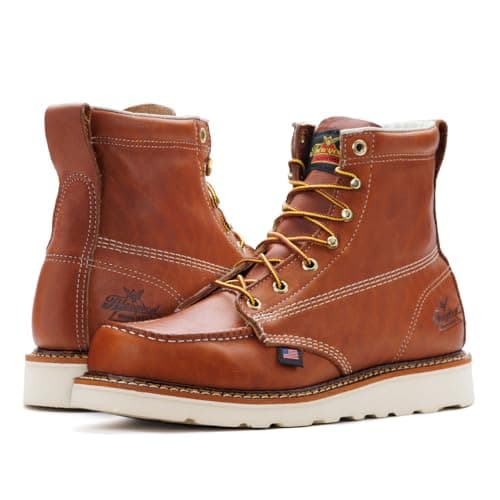
| 1 | Thorogood American Heritage 6" Moc Toe Safety Toe MAXWear Wedge (804-4200) A Goodyear-welted, USA-built wedge with a steel toe and an EH rating — the default answer for anyone who stands on a flat hard floor and wants a boot that can be resoled. | Closest like-for-like, and resoleable | Steel safety toe, moc toe shapeASTM F2413-18, EH | |
| 2 | 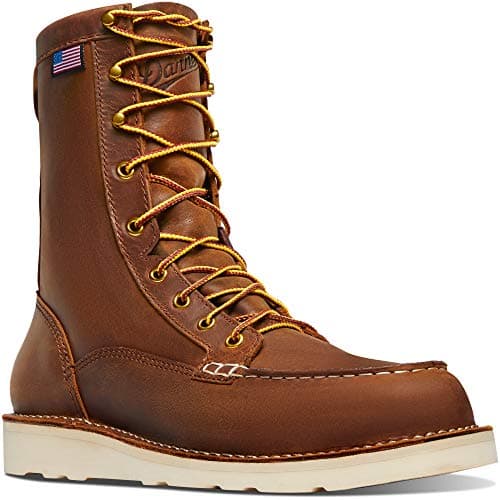 Danner Bull Run Moc Toe 8" Steel Toe Stitchdown construction gives the Bull Run a wider platform than a welted boot of the same size — more stable underfoot, and handcrafted in the USA. | USA-built stitchdown moc toe | Steel safety toe, moc toe shapeSteel safety toe meets ASTM F2413 for impact and compression | |
| 3 | 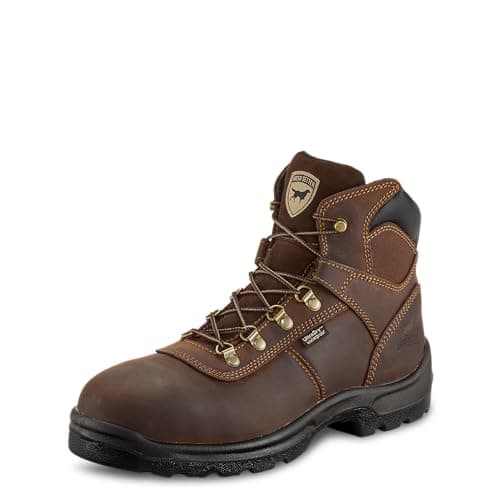 Irish Setter Ely 6-inch Leather Steel Toe Work Boot (83612) A black full-grain steel toe with EH protection and a direct-attach sole — no features to pay for beyond the ones the standard requires. | Red Wing's own lower price band | Steel safety toeSteel toe with electrical hazard protection meeting ASTM safety standards | |
| 4 | 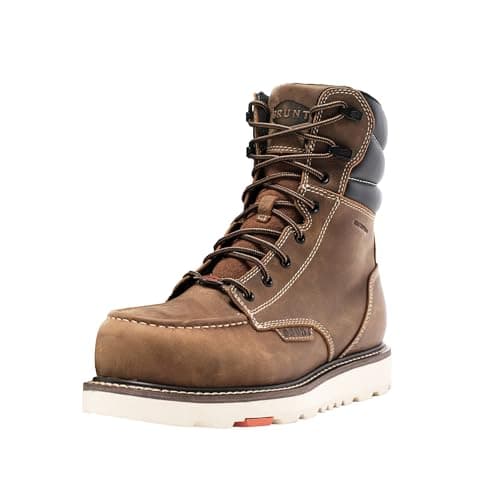 BRUNT The Marin Waterproof Composite Toe Work Boot A waterproof composite toe with an adjustable width system — BRUNT's SWITCH-FIT lets one boot run regular or relaxed, which is a genuinely useful answer for a foot between widths. | Switchable D and EE width | Composite safety toe — non-metallic, 15% lighter than steel per BRUNTComposite safety toe with electrical hazard (EH) protection; outsole and midsole meet ASTM D471-06 903 oil and isooctane chemical resistance | |
| 5 | 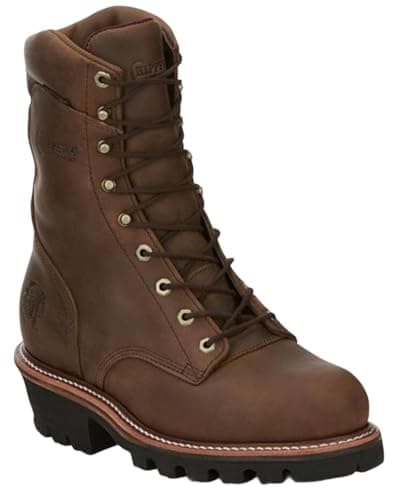 Chippewa Super DNA 9" Waterproof Steel Toe Logger (59407) A Goodyear leather-welted logger on Vibram's Tacoma TC4 Plus — a self-cleaning compound Chippewa specifies for high heat, which is the reason to choose it over a generic lug. | Welted and waterproof | Steel safety toeSteel toe with EH; Chippewa states it meets ASTM F2413 safety footwear standards | |
| 6 |  Nicks Boots Lineman Boot A handmade lineman boot whose stiff shank and tall shaft keep the ankle locked on a narrow rung — and whose maker runs a rebuild program rather than selling you a new pair. | Spending more, and rebuilding forever | Safety-toe and soft-toe builds are offered — specify at orderLineman boots in this class combine a safety toe with an EH rating; confirm the exact designation on your build sheet |
Tap a row to jump to that boot's full write-up. The price column goes straight to Amazon.
What Red Wing is actually known for
Worth stating plainly before listing anything else, because "Red Wing alternative" means four different things depending on which part you are after.
Red Wing Shoe Company has built work boots since 1905 and hunting boots since 1929 — a span almost nobody in this category can match — and the reputation rests on three things. The Heritage lines are welted, American-made lace-ups whose silhouettes other brands have been copying for decades. The company runs its own factory repair and resole service, so a welted pair can be sent back and rebuilt rather than replaced. And in the occupational line, the King Toe last is a genuinely unusual piece of engineering: Red Wing publishes 44% more toe room than a standard work boot and stocks it in four widths, B, D, EE and H, which is a width run almost no maker offers.
It is also the most expensive mainstream option in most of these comparisons, and here is the detail that sends a lot of people looking: the occupational King Toe 2240 is direct-attach construction, and Red Wing's own product page states it is not resoleable. So if you are buying Red Wing for rebuildability, you have to buy a welted Heritage boot, not an occupational safety-toe one. A lot of people discover that after they have decided on a budget.
Four reasons people shop around, and what to buy
You want the resoleable USA welt. Buy the Thorogood 804-4200. Goodyear storm welt, made in USA with USA and globally sourced components, a steel safety toe with EH, and a price band well under Red Wing's. Red Wing vs Thorogood is the head-to-head in full.
You want the toe room and the widths. Nothing on this page matches a four-width run, and it is only honest to say so — if B or H is the width you actually need, the King Toe is still the answer. BRUNT's Switch-Fit system is the closest workaround: one boot that adjusts between regular (D) and relaxed (EE) with swappable inserts. Carolina's welted boots go to 4E if you need genuinely wide rather than adjustable, and the best wide work boots roundup is the full width list.
You want it waterproof. Chippewa's Super DNA pairs a Goodyear leather welt with a breathable waterproof membrane, so you keep the rebuildable construction. Most waterproof work boots do not.
You just want to spend less. Irish Setter is Red Wing Shoe Company's own other brand — Irish Setter's brand history page says it was born out of Red Wing's work and hunting legacy and debuted in 1950 — and it sits a clear price band lower. The Ely 83612 is the plain, compliant end of it.
How these six were chosen
1. Each one answers a specific Red Wing feature. Not "also a brown leather boot." Construction, widths, waterproofing, origin or repair program — a named thing you would otherwise be buying Red Wing for.
2. The maker publishes a safety designation, except where the boot is deliberately a soft-toe or made-to-order build and the page says so.
3. Construction is stated and treated as the main decision. Welted, stitchdown, direct attach or cement decides whether you ever buy this boot twice.
4. Spread across price bands, from the Irish Setter Ely at the bottom to a made-to-order Nicks at the top, because "alternative" usually means a different budget.
5. No stand-ins for the King Toe last. Where Red Wing is simply better at something, the page says so rather than inventing a competitor that matches it.
The six, against the Red Wing they replace
| Construction | Toe | Waterproof | Widths | Origin | |
|---|---|---|---|---|---|
| Red Wing King Toe 2240 | Direct attach — Red Wing states not resoleable | Non-metallic, ASTM F2413-24 I/C EH | Yes | B, D, EE, H | "Globally sourced" |
| Thorogood 804-4200 | Goodyear storm welt — resoleable | Steel, moc toe, with EH | No | D and EE, 7-14 | Made in USA with USA and globally sourced components |
| Danner Bull Run 8" ST | Handcrafted stitchdown — rebuildable | Steel, moc toe | No — a GTX version is listed separately | Not published | Built in the USA |
| Irish Setter Ely 83612 | Direct attach | Steel | No — the 83618 is the waterproof version | Not published | Not published on the model page |
| BRUNT The Marin | Not published as a welt | Composite, non-metallic | Yes | Switch-Fit, adjusts D to EE | Not published |
| Chippewa Super DNA 59407 | Goodyear leather welt — resoleable | Steel | Yes, membrane with Dri-Lex lining | Not published | Not published on the model page |
| Nicks Lineman | Handmade stitchdown — rebuildable | Safety or soft, specified at order | Water-resistant leather, no membrane | Made to order | Handmade in the USA |
Thorogood American Heritage 804-4200 — the default swap
If you were buying Red Wing for the idea of a welted American boot you keep for a decade, this is the boot that delivers it for less. A Goodyear storm welt means the MAXWear wedge can be replaced without disturbing the upper. The leather is unlined tobacco full-grain, the origin wording is published in full, and it comes in D and EE across sizes 7 to 14 — two widths in every size, which is more than most makers here manage.
It is also a flat wedge, which is the right sole for concrete and the wrong one for mud — wedge sole vs lug sole is the decision behind that. If you want the same welt with a non-metallic cap, Thorogood now builds one, covered on best composite toe wedge work boots.
The honest cons. No waterproofing and none claimed. The unlined upper breathes well and soaks through. Thorogood publishes no weight, and a welted boot is not a light one. And a welted wedge needs real break-in before a full shift.
Wrong for: outdoor work on soft or uneven ground, and standing water.
Danner Bull Run — the stitchdown answer
Danner is the other long-running American maker whose boots get rebuilt rather than replaced, and the Bull Run is its moc toe. The construction is handcrafted stitchdown, built in the USA, with a steel safety toe and a wide, stable platform underfoot — stitchdown wraps the upper outward over the midsole, which is why these feel broader at the base than a welted boot of the same size. Red Wing vs Danner is the brand-level comparison, and Goodyear welt vs stitchdown explains what you are choosing between.
The honest cons. Not waterproof in this version — a GORE-TEX Bull Run is listed separately, so check which one is in the cart. No published width run. And stitchdown wants about three weeks of break-in, longer than a welt.
Wrong for: anyone who needs waterproofing out of the box, or a published width.
Irish Setter Ely 83612 — the same company, less money
This is the alternative people miss. Irish Setter is Red Wing Shoe Company's own brand, and Irish Setter's brand history page states it was born out of Red Wing's work and hunting legacy and debuted in 1950, named for the color of its Oro-Russet leather. The Ely 83612 is the plain end of the line: full-grain black leather, a steel safety toe, direct attach, and a list price a clear band below the King Toe's.
You are not getting a welt, but then the King Toe does not give you one either. What you are getting is the same parent company's occupational boot at a lower band. Red Wing vs Irish Setter goes through the overlap properly.
The honest cons. Not waterproof in the 83612 — the 83618 is the waterproof version of the same boot, and the model numbers are one digit apart, which catches people out. Direct attach, so no resole. No published width run and no published origin on the model page.
Wrong for: wet work, unless you buy the 83618 instead.
BRUNT The Marin — the width workaround
The closest anyone gets to Red Wing's width range without stocking four lasts. BRUNT's Switch-Fit system ships the boot with inserts that move it between regular (D) and relaxed (EE), which means you can settle the width question after the boot arrives rather than before. It is waterproof, the composite cap is non-metallic and BRUNT states it is 15% lighter than steel, and it is a direct-to-consumer price rather than a retail one. Red Wing vs BRUNT is the head-to-head.
The honest cons. BRUNT does not publish a welt construction on this model, so treat it as not resoleable. Switch-Fit covers D to EE and nothing outside that — it is not a substitute for a B or an H. And the brand is young, so there is no twenty-year record of how the boots age.
Wrong for: feet that need a narrow or a 4E, and anyone buying for rebuildability.
Chippewa Super DNA 59407 — welted and waterproof
The combination that is genuinely hard to find: a Goodyear leather welt with a breathable waterproof membrane behind a premium full-grain upper, and a Dri-Lex lining. Most waterproof work boots are cemented or direct-attach, because a membrane and a welt are awkward together — so a welted waterproof boot is the one to look at if you want Red Wing Heritage rebuildability with weather protection the Heritage lines do not offer.
The honest cons. It is a 9-inch logger, so the silhouette is nothing like a 6-inch moc toe, and a defined logger heel concentrates load where a wedge spreads it. Best logger boots is the category if that shape is what you want. No published width run, and no origin stated on the model page.
Wrong for: flat indoor floors and warehouse work. This is a boot for broken ground.
Nicks Lineman — if the budget was going up anyway
People shopping Red Wing alternatives sometimes go the other direction, and this is where that ends up. Nicks builds handmade stitchdown boots to order in the USA, offers both safety and soft toes, and runs a rebuild program — the boot is designed around being rebuilt repeatedly rather than resoled once. Best USA-made work boot brands puts the made-to-order makers side by side.
The honest cons. Lead times are measured in weeks or months, not days. There is no membrane — the leather is water-resistant and that is all it claims. The boots are heavy and the break-in is the longest of anything here. And you specify the build at order, which means you need to know what you want before you pay.
Wrong for: anyone who needs boots this week, or who wants to try them on first.
The three lines to read before you swap
Most disappointing substitutions come from comparing brand names rather than spec sheets. Three lines settle it, and all three are on every product card on this page.
The construction line. Goodyear welt and stitchdown can be rebuilt; direct attach and cement cannot. This is the one that decides cost over a decade, and it is the line most people skip — it is also why the King Toe 2240 and the Irish Setter Ely, despite sitting at opposite ends of the price range, are the same proposition in this respect: buy, wear out, replace.
The origin line. "Made in USA with USA and globally sourced components" is a different claim from "built in the USA," which is different again from "globally sourced." None is dishonest; they just say different things, and the table above prints each maker's exact wording rather than a flag.
The width line. If a maker does not publish a width run, assume one width. Three of the seven boots compared here publish nothing, which is useful information in itself — it tells you the fit is take-it-or-leave-it, and on a boot you stand in for ten hours that is the spec most likely to send it back.
What none of these replaces
Two things, and both are worth knowing before you commit.
The four-width run. B through H in one model is not available anywhere else on this list. If your fit problem is a narrow heel with a wide forefoot, or a genuinely narrow foot, the King Toe is doing something no alternative here does.
The in-house factory repair service. Red Wing runs its own; Nicks and Danner run rebuild programs of their own; Thorogood and Chippewa boots are welted and can be resoled by any good cobbler, which is not quite the same as sending them back to the people who built them. Resoling work boots is what that actually costs and how long it takes.
If after all that the answer is still Red Wing, that is a reasonable place to land — just buy a welted Heritage boot rather than an occupational direct-attach one if rebuildability is the reason. Work boot brands ranked is where every brand on this page sits against the rest.
The picks in full
#1 — Closest like-for-like, and resoleable
Thorogood American Heritage 6" Moc Toe Safety Toe MAXWear Wedge (804-4200)
A Goodyear-welted, USA-built wedge with a steel toe and an EH rating — the default answer for anyone who stands on a flat hard floor and wants a boot that can be resoled.
Published specifications
- Toe
- Steel safety toe, moc toe shape
- Safety rating
- ASTM F2413-18, EH
- Upper
- Tobacco full-grain American leather, unlined
- Outsole
- MAXWear Wedge slip-resistant outsole
- Midsole / shank
- Rubber midsole with composite shank
- Construction
- Goodyear storm welt
- Waterproof
- Not waterproof
- Insulation
- Not insulated
- Widths
- D and EE, sizes 7-14 in both widths
- Weight
- Not published on the manufacturer page
- Made in
- Made in USA with USA and globally sourced components
Specifications read from Thorogood product page (804-4200) on 2026-09-27. We have not worn this boot.
What works
- Goodyear storm welt is a resoleable construction, not a disposable one
- Flat wedge spreads load evenly on concrete instead of concentrating it under a heel
- Unlined upper breaks in to the foot rather than around a liner
- EE width is stocked across the whole size run, not just the middle
What doesn't
- Not waterproof and not insulated — the unlined upper soaks
- A flat wedge gives up bite on mud, gravel and ladder rungs
- Manufacturer publishes no weight figure, so weight comparisons are guesswork
Who this is wrong for
Anyone working outdoors on soft or uneven ground, or in standing water. The wedge has no lugs to bite and the unlined upper is not waterproof.
Sizing
Thorogood's moc-toe last is widely reported to run large; owner reviews consistently suggest going a half size down from a measured Brannock length. D and EE are both stocked, so take the width rather than sizing up for room.
#2 — USA-built stitchdown moc toe
Danner Bull Run Moc Toe 8" Steel Toe
Stitchdown construction gives the Bull Run a wider platform than a welted boot of the same size — more stable underfoot, and handcrafted in the USA.
Published specifications
- Toe
- Steel safety toe, moc toe shape
- Safety rating
- Steel safety toe meets ASTM F2413 for impact and compression
- Upper
- Tobacco leather upper
- Outsole
- Danner Wedge outsole — non-marking, oil- and slip-resistant, won't track debris
- Midsole / shank
- Not published on the manufacturer page
- Construction
- Handcrafted stitchdown construction
- Waterproof
- Not waterproof in this version; a GTX version is listed separately
- Insulation
- Not insulated
- Made in
- Built in the USA
Specifications read from Danner product page (Bull Run Moc Toe 8" steel toe) on 2026-09-27. We have not worn this boot.
What works
- Stitchdown is the most stable of the resoleable constructions
- Non-marking wedge works indoors and out
- A US-built moc toe with a safety cap, which is a short list
What doesn't
- Not waterproof — the GTX version costs more
- Stitchdown boots take longer to break in than cemented ones
- No published weight
Who this is wrong for
Anyone who needs the boot comfortable on day one. Stitchdown leather needs real break-in; buy it three weeks before you need it.
Sizing
Stitchdown adds a visible platform edge but not interior room. Size to your measured length; the extra width you see is outside the upper, not inside it.
#3 — Red Wing's own lower price band
Irish Setter Ely 6-inch Leather Steel Toe Work Boot (83612)
A black full-grain steel toe with EH protection and a direct-attach sole — no features to pay for beyond the ones the standard requires.
Published specifications
- Toe
- Steel safety toe
- Safety rating
- Steel toe with electrical hazard protection meeting ASTM safety standards
- Upper
- Full-grain black leather
- Outsole
- Direct attach sole
- Midsole / shank
- Not published on the manufacturer page
- Construction
- Direct attach
- Waterproof
- Not waterproof in the 83612; the 83618 is the waterproof version
- Insulation
- Not insulated
Specifications read from Irish Setter product page (Ely 83612) on 2026-09-27. We have not worn this boot.
What works
- Black leather passes dress codes that brown work boots do not
- Direct attach is flexible from day one
- Simple boot, simple price
What doesn't
- Direct attach is not resoleable
- Not waterproof
- Very little published spec detail
Who this is wrong for
Wet work. Buy the waterproof 83618 instead — the 83612 upper is not sealed.
Sizing
Irish Setter's work lasts run close to true. Because the boot is unlined-feeling and flexible, it will not stretch much to fix a tight fit.
#4 — Switchable D and EE width
BRUNT The Marin Waterproof Composite Toe Work Boot
A waterproof composite toe with an adjustable width system — BRUNT's SWITCH-FIT lets one boot run regular or relaxed, which is a genuinely useful answer for a foot between widths.
Published specifications
- Toe
- Composite safety toe — non-metallic, 15% lighter than steel per BRUNT
- Safety rating
- Composite safety toe with electrical hazard (EH) protection; outsole and midsole meet ASTM D471-06 903 oil and isooctane chemical resistance
- Upper
- Leather upper, waterproof on this version
- Outsole
- BRUNT rubber outsole — oil- and slip-resistant, heat-resistant to 572°F / 300°C
- Midsole / shank
- BRUNT polyurethane (PU) midsole
- Construction
- Not published as a welt construction on this model
- Waterproof
- Waterproof
- Insulation
- Not insulated
- Widths
- SWITCH-FIT adjustable between regular (D) and relaxed (EE)
Specifications read from BRUNT Workwear product page (The Marin waterproof comp toe) on 2026-09-27. We have not worn this boot.
What works
- The width system solves a real fitting problem rather than inventing one
- Chemical resistance cited to a named ASTM test method
- PU midsole outlasts EVA
What doesn't
- BRUNT does not publish a full ASTM F2413 designation string on the page
- Direct-to-consumer only, so trying before buying is harder
- Not a welted construction
Who this is wrong for
Anyone who needs to see the complete ASTM designation before they buy. BRUNT states EH and composite-toe compliance but publishes less of the marking line than KEEN or Red Wing.
Sizing
Use SWITCH-FIT before you change size. Most people who think they need a longer boot actually need the relaxed (EE) setting on the same length.
#5 — Welted and waterproof
Chippewa Super DNA 9" Waterproof Steel Toe Logger (59407)
A Goodyear leather-welted logger on Vibram's Tacoma TC4 Plus — a self-cleaning compound Chippewa specifies for high heat, which is the reason to choose it over a generic lug.
Published specifications
- Toe
- Steel safety toe
- Safety rating
- Steel toe with EH; Chippewa states it meets ASTM F2413 safety footwear standards
- Upper
- Premium waterproof full-grain leather
- Outsole
- Vibram Tacoma TC4 Plus — a technical, self-cleaning sole Chippewa specifies for outdoor terrain and high-heat environments; oil- and slip-resisting
- Midsole / shank
- Steel shank with an orthotic insole
- Construction
- Goodyear leather welt
- Waterproof
- Breathable waterproof membrane with a Dri-Lex lining
- Insulation
- Not published on this version; insulated Super DNA models are listed separately
- Widths
- E and EEE
- Weight
- Not published on the manufacturer page
Specifications read from Chippewa product page (Super DNA 9" waterproof steel toe logger, 59407) on 2026-09-29. We have not worn this boot.
What works
- A named Vibram compound with a stated purpose, not just the logo
- Self-cleaning tread genuinely sheds mud instead of packing it
- A leather welt is the most repairable construction here short of handmade
What doesn't
- No D width — a narrow foot has nothing to buy
- No published weight, and 9-inch loggers are never light
- Heat resistance is irrelevant to most trades and you pay for it anyway
Who this is wrong for
Narrow feet and flat floors. The narrowest width offered is an E, and a logger heel belongs on broken ground, not a slab.
Sizing
Chippewa's logger sizing runs wide by design — an E here is closer to another brand's EE. If you normally wear a D, try a half size down before assuming the width is wrong.
Illustrative category photo — not this model#6 — Spending more, and rebuilding forever
Nicks Boots Lineman Boot
A handmade lineman boot whose stiff shank and tall shaft keep the ankle locked on a narrow rung — and whose maker runs a rebuild program rather than selling you a new pair.
Published specifications
- Toe
- Safety-toe and soft-toe builds are offered — specify at order
- Safety rating
- Lineman boots in this class combine a safety toe with an EH rating; confirm the exact designation on your build sheet
- Upper
- Full-grain leather, tall shaft
- Outsole
- Vibram outsole options with a logger heel
- Midsole / shank
- Stiff steel shank
- Construction
- Handmade stitchdown — resoleable and rebuildable
- Waterproof
- Water-resistant leather; no membrane
- Insulation
- Not insulated as standard
- Made in
- Handmade in the USA
Specifications read from Nicks Boots — lineman boot requirements and rebuild program on 2026-09-27. We have not worn this boot.
What works
- The rebuild price is published, which makes the lifetime maths checkable
- Stiff shank and tall shaft are the two features pole work actually requires
- Built to order, so the safety toe and height are your choice
What doesn't
- Long lead times on made-to-order boots
- Unbearably stiff for flat-floor work
- You must specify the safety toe — it is not automatic
Who this is wrong for
Anyone who is not climbing. A boot engineered not to flex is the wrong boot for walking a warehouse.
Sizing
Made to order from your measurements. Follow the maker's measuring instructions exactly; this is the one boot on the list where guessing your size has no recovery path.
Frequently asked questions
What work boots are comparable to Red Wing?
Thorogood's American Heritage line is the closest like-for-like: USA-built, Goodyear-welted and resoleable at a lower price. Danner is the comparable American stitchdown maker, Chippewa is the welted waterproof option, and Irish Setter is Red Wing Shoe Company's own lower-priced brand.
Why are Red Wing boots so expensive?
Long-running American manufacture on the Heritage lines, an in-house factory repair service, and a width range almost no maker stocks all carry cost. Whether that is worth it depends on which of those you are actually buying — the occupational King Toe 2240, for example, is not resoleable per Red Wing's own page, so paying a premium for rebuildability there buys you nothing.
Is Irish Setter the same as Red Wing?
Same company, different brand and different price band. Irish Setter's own brand history page says the brand was born out of Red Wing Shoe Company's work and hunting legacy and debuted in 1950. It is the closest thing to a cheaper Red Wing because it is, structurally, a cheaper Red Wing.
Which Red Wing alternative can be resoled?
Thorogood's 804-4200 (Goodyear storm welt) and Chippewa's Super DNA 59407 (Goodyear leather welt) can be resoled by a cobbler. Danner's Bull Run and the Nicks Lineman are stitchdown and can be rebuilt by their makers. The Irish Setter Ely and BRUNT Marin cannot.
Is there an alternative with Red Wing's wide toe box?
Not an exact one. BRUNT's Switch-Fit gets you one boot that adjusts between D and EE, and Carolina's welted boots run to 4E, but nobody else stocks a single model in B, D, EE and H the way Red Wing does with the King Toe last.
Sources
- Red Wing Shoes — repairs and resoling — Red Wing's own factory repair service
- Irish Setter — Rooted in Tradition (brand history) — Irish Setter's own page: the brand was born out of Red Wing Shoe Company and debuted in 1950, named for the Oro-Russet leather color
- ASTM F2413 protective footwear standard — technical summary — Label format, the mandatory I and C designations, and each optional code