Comfort & Fit
Best Socks for Work Boots
The cheapest thing you can change, and the one most people get wrong.
Disclosure: product links on this page go to Amazon. As an Amazon Associate we earn from qualifying purchases, at no extra cost to you. It does not change which boots we recommend or the order they appear in — here is the full disclosure.
Quick picks
| # | Product | Best for | Toe & rating | Price |
|---|---|---|---|---|
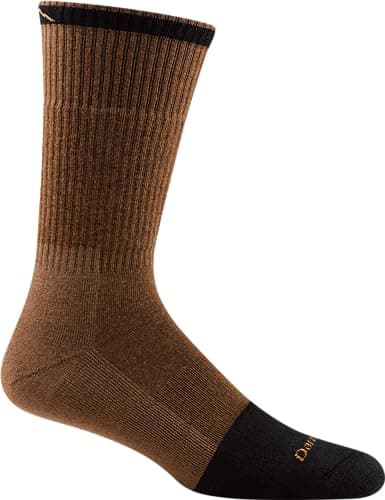
| 1 | Darn Tough Work Steely Boot Midweight Sock with Full Cushion Toe Box A merino-blend work sock with extra padding specifically at the toe box — aimed at the one place a steel cap presses. | Best overall — merino with a cushioned toe box | Not applicable — sockNot applicable | |
| 2 | 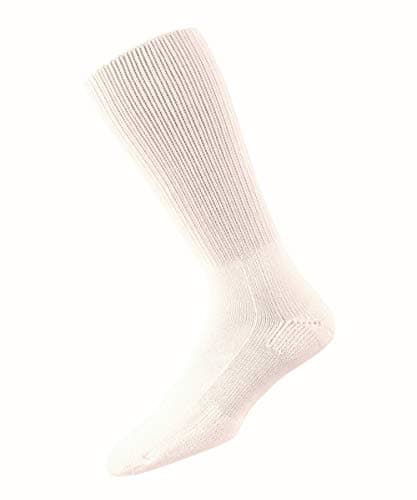 Thorlo Moderate Cushion Mid-Calf Steel Toe Work Sock (WLST) The only widely sold work sock whose padding is positioned specifically against a safety toe plate, knit in the USA and sold one pair at a time. | Padding aimed at the safety cap | Not applicable — sockNot applicable — a sock carries no protective rating | |
| 3 | 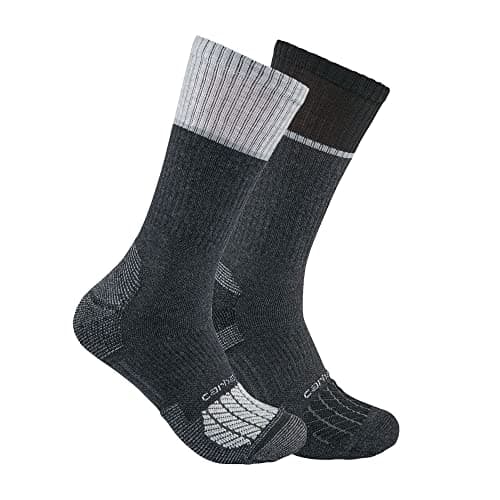 Carhartt Force Midweight Steel Toe Crew Work Sock (2-pack) A synthetic midweight with double cushioning over the toes and a mesh instep — the budget option that still addresses sweat, sold two pairs at a time. | The cheapest honest option | Not applicable — sockNot applicable — a sock carries no protective rating | |
| 4 | 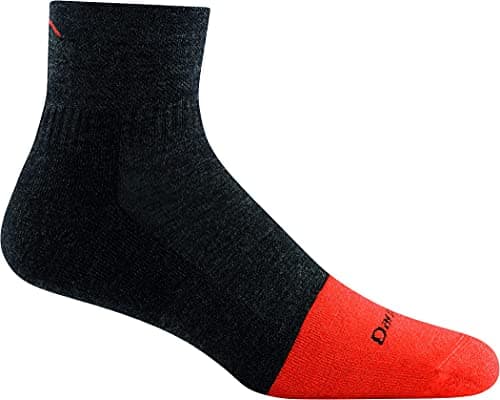 Darn Tough Steely Quarter Midweight Work Sock (style 2017) The merino Steely cut down to a quarter height — the full cushion toe box kept, the calf coverage dropped, which is the right trade in summer. | Summer, and lower-cut boots | Not applicable — sockNot applicable — a sock carries no protective rating |
Tap a row to jump to that boot's full write-up. The price column goes straight to Amazon.
What decided this list
Socks are the one part of a work-boot setup where the marketing is almost entirely unfalsifiable — nobody certifies a work sock, and “moisture management” means whatever the brand wants it to. So these four were chosen on things the makers publish and a buyer can check:
- Published fiber content. Every pick lists its blend by percentage on its own product page. That is the single most predictive spec on a sock, and it is the one some brands bury.
- Padding placed for a safety toe. A cap creates pressure in one specific place. A sock that puts its cushioning under the ball and nowhere near the toes does not help with it.
- Height that matches real boots. A 6-inch boot and a 10-inch logger need different shafts, and the wrong height is a chafing problem rather than a comfort preference.
- Honest cost per shift. A $22 sock that lasts years and a $8 sock that lasts a season can work out the same. What we refuse to do is pretend the expensive one is cheap.
- Currently sold, in stated sizes. Work socks go in and out of stock constantly. Everything here was verified on the maker's or an authorized retailer's own page on the date printed on each card.
The sock is part of the boot's fit
This is the point that reframes everything else. A boot does not have a fit on its own; it has a fit with a specific sock inside it. Swap a thin dress sock for a cushioned midweight and you have changed the effective volume of the boot by roughly half a size — enough to turn a boot that fit into one that crowds your toes, and enough to turn heel slip into a secure heel.
The practical rule is to buy socks first and fit boots in them. If you already own the boots, accept that the sock you choose now is the sock that boot is sized for, and do not alternate between a thin pair and a thick pair in the same week expecting the same fit. The work boot sizing guide covers measuring, and how steel toe boots should fit covers the clearance a cap needs — which is the clearance a thick sock eats first.
Fiber is the whole argument
Merino wool blends move moisture through the fiber rather than holding it, and they keep insulating when slightly damp. They also regulate in both directions, which is why a merino sock is wearable in July as well as January. Work socks are almost never pure merino — nylon carries the abrasion load and elastane holds the shape — and a 60-65% wool blend with 35% nylon is the normal and correct ratio. Darn Tough publishes 62% merino, 36% nylon, 2% elastane on the Steely Quarter, which is representative of the category.
Technical synthetics — polyester, nylon, acrylic — wick well, dry fast and cost less. What they do not do is thermoregulate: a synthetic sock that is comfortable at 60°F is unpleasant at 20°F in a way merino is not. They are the right answer for warm-weather work, for anyone who finds wool itchy, and for anyone who needs six pairs rather than two. Thorlo's work sock is 86% of its own THOR·LON acrylic; Carhartt's Force is 63% polyester and 34% nylon.
Cotton is the failure case, and it is what most people are wearing. Cotton absorbs sweat and holds it against the skin instead of passing it outward, and damp skin loses its resistance to friction. That is the mechanism behind most work-boot blisters — not the boot being new, and not the leather being stiff. It is also why cotton is actively dangerous in cold: a wet cotton sock inside an insulated boot turns the insulation damp, and damp insulation does not insulate. The 400g insulation page has that trade-off in detail.
The four, compared
| Sock | Fiber | Height | List price |
|---|---|---|---|
| Darn Tough Work Steely (midweight) | Merino blend, full cushion toe box | Boot height, mid-calf | Check current price |
| Thorlo WLST steel toe | 86% THOR·LON acrylic, 11% nylon, 3% elastic | Mid-calf | $17.99 per pair |
| Carhartt Force Midweight Steel Toe | 63% polyester, 34% nylon, 3% elastane | Crew | Two pairs per pack |
| Darn Tough Steely Quarter (2017) | 62% merino, 36% nylon, 2% elastane | Quarter, ~5.5 in heel to cuff | $22.00 per pair |
Prices are the list prices published on the pages cited at the bottom of this page on the date we read them, and they are there to show the spread between tiers rather than to tell you what you will pay today. Use the buy links for the current number.
Padding, and where it belongs
Cushioning is not a volume knob. A work sock has a few places it can put padding, and they solve different problems:
- Toe box. The pressure point in a safety-toe boot, where your toes meet a rigid cap that does not flex with them. Darn Tough's Steely line is built around a full cushion toe box and Thorlo states its padding is positioned to protect against the safety toe plate. If one feature justifies a work-specific sock, this is it.
- Ball of the foot. Where the load lands if you stand on a hard floor all shift. Useful, but a good insole does more here than a sock can — best insoles for work boots separates cushioning from support.
- Heel and Achilles. Where a stiff new boot rubs during break-in. A reinforced heel pad is the difference between a hot spot and a blister in week one of a welted boot.
- Shin and calf. Only relevant in tall boots, where the top of the shaft bites. This is a height question more than a padding question.
More padding everywhere is not better, because every millimeter of it comes out of the boot's internal volume. If your boots already feel snug across the toes, a heavily cushioned sock makes the exact problem you are trying to solve worse.
Height: crew, quarter or mid-calf
Match the sock to the boot, not to the season. A 6-inch boot is fine with a crew sock. An 8-inch or taller boot needs a mid-calf, because the collar of the shaft will find the top of a crew sock and rub there all day — the common complaint behind people who say tall boots “bite their calves” is usually a sock that stops too low. 6-inch vs 8-inch work boots covers the height decision on the boot side.
The quarter height is the exception, and it earns its place in summer: it keeps the cushioned toe box where it matters while dropping the fabric that traps heat against your calf. In a low or mid-cut boot in July, that is the right trade. In a logger in January it is the wrong one. Best hot-weather work boots covers the rest of the summer setup.
How many pairs, and when to replace them
Buy enough pairs that every pair gets a full day to dry. A sock that goes back on at 6am still damp from yesterday starts the shift with the problem you bought it to avoid, and a boot dried overnight with a damp sock stuffed in it is not dry either. Five pairs is a working minimum for a five-day week, which is part of why the two-pack synthetics are a sensible entry even if the merino is the better single sock.
Replace a work sock when the cushioning under the ball has flattened or the cuff no longer holds — both happen long before a hole appears, and both are the point at which the sock has stopped doing its job. Wash merino inside out and skip the fabric softener, which coats the fiber and kills the wicking you paid for. Darn Tough's unconditional lifetime guarantee is worth knowing about here: worn-out pairs are replaced, which changes the arithmetic on a $22 sock considerably.
Cheap multipacks, and when they are right
A six-pack of cotton-blend crew socks for the price of one merino pair is a real temptation, and there is one scenario where it is the correct buy: short shifts in a dry, climate-controlled space where your feet never get hot. Outside that, the arithmetic turns. A $22 sock that holds its cushioning for years against a $4 sock that packs flat in a season is close to even on cost, and the cheap pair is losing you the one thing you bought a work sock for by month three.
The middle path is the honest one, and it is what the synthetic two-pack is for: buy one or two good pairs for the days that punish you — long shifts, cold, wet — and a cheaper technical multipack to fill out the rotation, so nothing you own goes back on damp. What does not work is filling the whole drawer with cotton and expecting the boot to make up for it.
What about compression socks?
Graduated compression is a different product with a different purpose: it is aimed at leg swelling and venous pooling from standing, not at blisters or toe pressure. NIOSH's own summary of the prolonged standing evidence puts leg swelling and discomfort squarely among the effects of standing all day, so the question is a fair one — but compression is a circulation intervention, it comes in pressure grades, and the ones that do anything are not the ones sold next to the work socks. If swelling is your complaint rather than friction, that is worth raising with a clinician rather than solving in a boot aisle. Best work boots for standing all day covers what the boot itself can do about it.
What a sock cannot fix
Two specific cases deserve naming. First, sweating that soaks a good sock by lunchtime is usually a boot problem — an unlined upper breathes, a membrane does not, and over-insulation beats any sock. Second, a boot in its break-in window will rub regardless; a padded heel buys you time but how to break in work boots is the actual fix. If the pain pattern does not move at all when you change socks and lacing, why work boots hurt your feet works through the causes in order.
Matching the sock to the season
Winter, insulated boot. Mid-calf merino blend, midweight rather than the thickest option on the shelf. The thickest sock compresses the insulation and loses you more warmth than the extra fabric adds. One sock, not two — doubling up restricts circulation, and cold toes are a circulation problem before they are an insulation problem.
Summer, unlined or breathable boot. Quarter-height merino blend or a mesh-instep synthetic, changed at lunch if your shift allows it. A dry second pair in the truck does more for hot feet than any boot feature.
Wet work. Merino, every time. It is the only fiber here that keeps some insulating value when it is damp, which matters on the day your waterproof boot finally takes water over the collar — best waterproof work boots covers keeping that from happening in the first place.
The picks in full
#1 — Best overall — merino with a cushioned toe box
Darn Tough Work Steely Boot Midweight Sock with Full Cushion Toe Box
A merino-blend work sock with extra padding specifically at the toe box — aimed at the one place a steel cap presses.
Published specifications
- Toe
- Not applicable — sock
- Safety rating
- Not applicable
- Upper
- Not applicable
- Outsole
- Not applicable
- Midsole / shank
- Not applicable
- Construction
- Midweight merino wool blend knit, full cushion toe box
- Waterproof
- Not applicable — merino wicks rather than blocks
- Insulation
- Midweight — moisture-wicking and thermoregulating merino blend
- Made in
- Knit in mills in Vermont, USA
Specifications read from Retail product listing — Darn Tough Work Steely midweight boot sock on 2026-09-27. We have not worn this boot.
What works
- The padding is placed where a steel cap actually causes pain
- Merino manages sweat, which is what causes most work-boot blisters
- Midweight works across more of the year than a heavyweight sock
What doesn't
- Costs several times a cotton work sock
- Extra toe padding takes up room in an already-snug boot
- Merino needs washing care to last
Who this is wrong for
A boot that is already tight at the toes. Fix the boot's fit first — a thicker sock inside a short boot makes the problem worse.
Sizing
Buy socks before you fit boots, then fit the boots wearing them. Changing sock thickness afterwards changes the fit by roughly a half size in feel.
#2 — Padding aimed at the safety cap
Thorlo Moderate Cushion Mid-Calf Steel Toe Work Sock (WLST)
The only widely sold work sock whose padding is positioned specifically against a safety toe plate, knit in the USA and sold one pair at a time.
Published specifications
- Toe
- Not applicable — sock
- Safety rating
- Not applicable — a sock carries no protective rating
- Upper
- Not applicable
- Outsole
- Not applicable
- Midsole / shank
- Not applicable
- Construction
- 86% THOR·LON acrylic, 11% nylon, 3% elastic, with a low-profile toe seam
- Waterproof
- Not applicable — the fiber is specified to wick rather than block
- Insulation
- Moderate cushion, mid-calf height
- Made in
- Made in the USA of domestic and imported yarns, per Thorlo
Specifications read from Thorlo product page (WLST steel toe work sock) on 2026-10-12. We have not worn this boot.
What works
- The only sock here whose marketing claim is specifically about the cap
- Cushioned arch takes some pressure off a long static shift
- Sold as single pairs, so one pair is a cheap test
What doesn't
- Acrylic rather than merino — it wicks, but does not regulate temperature the way wool does
- Thick: it costs real room in a boot that already fits snugly
- Individual sizes and colors go to backorder on the maker's site
Who this is wrong for
A boot that is already tight across the toes, and anyone who wants wool. Fix the boot's fit first — a thicker sock inside a short boot makes the crowding worse.
Sizing
Fit your boots wearing the sock you intend to work in. A mid-calf cushioned sock changes the feel of a boot by roughly half a size against a thin liner.
#3 — The cheapest honest option
Carhartt Force Midweight Steel Toe Crew Work Sock (2-pack)
A synthetic midweight with double cushioning over the toes and a mesh instep — the budget option that still addresses sweat, sold two pairs at a time.
Published specifications
- Toe
- Not applicable — sock
- Safety rating
- Not applicable — a sock carries no protective rating
- Upper
- Not applicable
- Outsole
- Not applicable
- Midsole / shank
- Not applicable
- Construction
- 63% polyester, 34% nylon, 3% elastane; reinforced heel and toe
- Waterproof
- Not applicable — FastDry wicking construction, per Carhartt
- Insulation
- Midweight, crew height
Specifications read from Authorized retailer spec page (Sportsman's Warehouse) — Carhartt Force Midweight Steel Toe 2-pack on 2026-10-12. We have not worn this boot.
What works
- The cheapest per-pair option here by a wide margin
- Mesh instep makes it the most breathable sock on this list
- Synthetic blend dries fast after a wash, so two packs covers a week
What doesn't
- No wool content — nothing here regulates temperature in cold
- Thinner cushioning than the Thorlo or either Darn Tough
- Sized L and XL in most stock, which leaves smaller feet out
Who this is wrong for
Cold-weather work. In an insulated boot in winter, a merino blend manages moisture far better, and damp insulation stops insulating.
Sizing
Carhartt sizes L as US men's 9-11.5 and XL as 12-14.5. Size the sock to your foot, not to your boot size.
#4 — Summer, and lower-cut boots
Darn Tough Steely Quarter Midweight Work Sock (style 2017)
The merino Steely cut down to a quarter height — the full cushion toe box kept, the calf coverage dropped, which is the right trade in summer.
Published specifications
- Toe
- Not applicable — sock
- Safety rating
- Not applicable — a sock carries no protective rating
- Upper
- Not applicable
- Outsole
- Not applicable
- Midsole / shank
- Not applicable
- Construction
- 62% merino wool, 36% nylon, 2% elastane; True Seamless toe and a reinforced Achilles cushion
- Waterproof
- Not applicable — merino wicks rather than blocks
- Insulation
- Midweight merino blend, quarter height (around 5.5 inches heel to cuff)
- Made in
- Knit in Vermont, USA, at company-owned mills
Specifications read from Darn Tough product page (Steely Quarter, style 2017) on 2026-10-12. We have not worn this boot.
What works
- Keeps the toe-box padding that matters under a cap while dropping the shaft heat
- Merino manages the sweat that causes most work-boot blisters
- The lifetime guarantee is genuinely unconditional — worn-out pairs are replaced
What doesn't
- Quarter height leaves the shin unprotected against a tall boot's collar
- Costs several times a cotton work sock
- Merino needs washing care to reach its lifespan
Who this is wrong for
A tall boot with a stiff shaft, where a mid-calf sock is doing real work against chafing. Also wrong for deep cold — go mid-calf for winter.
Sizing
Buy socks before you fit boots, then fit the boots in them. Changing sock thickness afterwards shifts the effective fit by about half a size.
Frequently asked questions
What socks are best for steel toe boots?
A midweight merino blend with extra padding at the toe box. The cap in a safety-toe boot is rigid and creates pressure in one place, so cushioning positioned at the toes does more than general thickness does. Darn Tough's Work Steely and Thorlo's steel toe work sock both build around that feature; the important part is getting cotton out of the boot.
Should work socks be wool or synthetic?
Merino blends thermoregulate and keep working when damp, which makes them the better single sock across the whole year and in wet conditions. Technical synthetics wick well, dry faster and cost much less, which makes them the better buy for warm-weather work or for anyone who needs six pairs rather than two. Cotton is the one to avoid in either case.
Why do cotton socks cause blisters in work boots?
Cotton absorbs sweat and holds it against the skin rather than passing it outward. Damp skin loses its resistance to friction, so the same amount of rubbing that would be harmless on dry skin lifts a blister. It is the most common cause of work-boot blisters and the cheapest one to fix.
Do thicker socks make work boots more comfortable?
Only up to the point where the boot still has room. A cushioned sock changes the effective fit of a boot by around half a size, so in a boot that already feels snug across the toes a thicker sock crowds the foot and makes things worse. Fit the boot in the sock you intend to work in, and solve crowding with the boot rather than the sock.
How many pairs of work socks do I need?
Enough that every pair dries fully between wears — five pairs for a five-day week is a sensible floor. Pulling on a sock that is still damp from the previous shift starts the day with the moisture problem you bought the sock to solve, and it keeps the boot damp too.
Should I wear two pairs of socks in cold weather?
No. Doubling up usually restricts circulation and compresses the boot's insulation, and both make your feet colder rather than warmer. One correctly sized midweight merino sock in a boot with room to loft is warmer than two thin pairs crammed into the same space.
Sources
- Thorlo — Moderate Cushion Mid-Calf Steel Toe Work Sock (WLST) — The maker's own fiber content (86% THOR·LON acrylic, 11% nylon, 3% elastic), the padding-against-the-safety-toe-plate claim, and a $17.99 list price
- Darn Tough — Steely Quarter Midweight Work Sock (style 2017) — 62% merino / 36% nylon / 2% elastane, knit in Vermont, full cushion toe box and an unconditional lifetime guarantee, at a $22.00 list price
- NIOSH Science Blog — Prolonged Standing at Work — NIOSH's own summary of the evidence on prolonged standing
Read next
Best Insoles for Work Boots
The other cheap change, and the one that fixes support.
Work Boot Sizing Guide
Why the sock has to be chosen before the boot is sized.
Best Work Boots for Sweaty Feet
When the sock is not the problem — the boot is.
400g Insulation Temperature Rating
Why a damp sock undoes an insulated boot.