Safety Toes
Are Steel Toe Boots Waterproof?
Two completely unrelated specifications, bought in one boot.
Disclosure: product links on this page go to Amazon. As an Amazon Associate we earn from qualifying purchases, at no extra cost to you. It does not change which boots we recommend or the order they appear in — here is the full disclosure.
Quick picks
| # | Product | Best for | Toe & rating | Price |
|---|---|---|---|---|
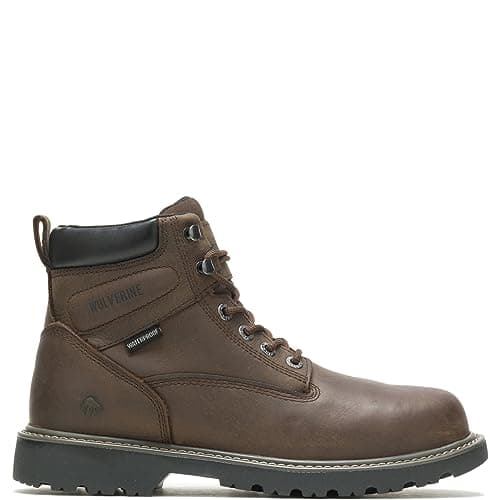
| 1 | Wolverine Floorhand Waterproof Steel Toe 6" Work Boot Waterproof full-grain leather, a steel toe and an EH rating in a light cemented build — the value pick when the job is wet and the budget is fixed. | Both specs, at the lowest price | Steel safety toeASTM F2413 M/I/C EH rated steel toe | |
| 2 | 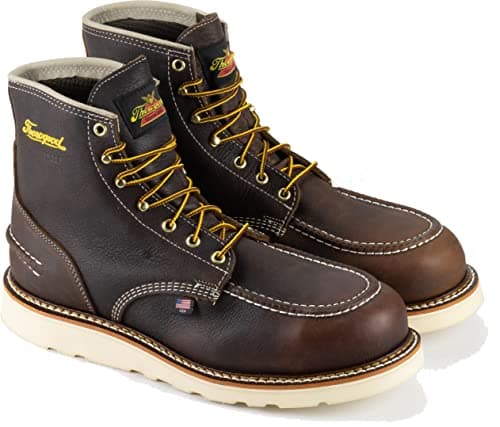 Thorogood 1957 Series Waterproof 6" Steel Toe Moc Toe MAXWear Wedge, Briar Pitstop Thorogood's waterproof 1957 platform in a steel-toe moc toe — the answer when you want the American Heritage shape but work in water. | Waterproof and still resoleable | Steel safety toe, moc toe shapeSafety toe per ASTM F2413; see the product page for the model's full designation line | |
| 3 | 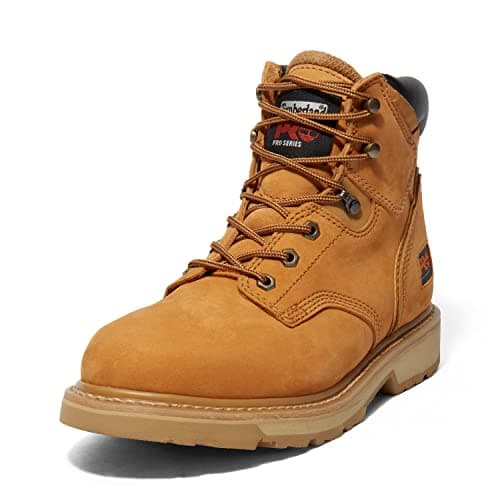 Timberland PRO Pit Boss 6" Steel Toe Work Boot The volume-seller steel toe: asymmetrical cap, EH rating, and a slip- and oil-resistant outsole, in a cement-built boot you replace rather than resole. | The counterexample: rated, not sealed | Asymmetrical steel safety toeElectrical hazard protection; all Timberland PRO safety toes meet ASTM F2413 impact (I) and compression (C) when tested to ASTM F2412 | |
| 4 | 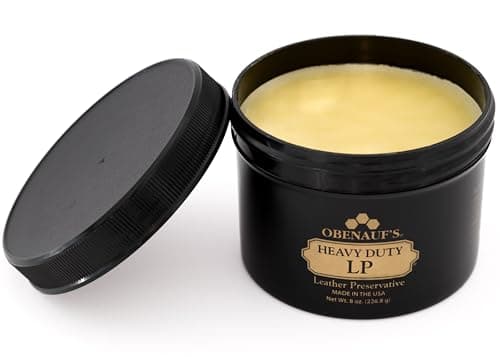 Obenauf's Heavy Duty LP Leather Preservative A thick beeswax-and-oil paste whose oils seep into the fiber while the wax shields the surface — the heavy option for boots that get genuinely wet, with the caveat that it darkens leather. | Treating a boot that has no membrane | Not applicable — leather care productNot applicable |
Tap a row to jump to that boot's full write-up. The price column goes straight to Amazon.
Why people assume otherwise
The cap itself is metal and obviously does not absorb water, so it feels as though the wettest part of the boot is covered. It is — over about the first inch and a half, on the outside of the leather. Water does not get in through the toe of a boot. It gets in through the seams, the tongue gusset, the eyelets, the leather itself once it is saturated, and over the top of the shaft. The cap is nowhere near any of those paths.
The second reason is marketing adjacency: safety-toe and waterproof features are sold to the same buyer and appear side by side on the same hangtag. Two features in one list are still two features.
How to tell if a boot is actually waterproof
| What the page says | What it means | Trust it for |
|---|---|---|
| Named membrane (GORE-TEX, KEEN.DRY, Storm Defender, SCUBALINER) | A sealed barrier inside the boot | Standing water and sustained rain |
| Waterproof leather, seam-sealed | Treated upper plus sealed stitching, no membrane | Rain and wet ground; less reliable over years |
| Water resistant | Nothing is sealed — the leather sheds for a while | A shower, a hose-down, morning dew |
| Oil-tanned or waxed leather | A finish that sheds water and takes treatment well | Whatever your re-treatment schedule supports |
| Nothing about water at all | It is not waterproof | Dry work only |
The last row matters more than it should. A page that does not claim waterproofing is telling you the boot is not waterproof — makers do not leave that feature off a spec sheet by accident. Waterproof vs water-resistant goes through the vocabulary in full.
What the cap does change about a wet boot
Two things, and both are worth knowing.
Condensation. Steel is thermally conductive, so in cold wet conditions the inside face of the cap runs colder than the air in the boot and your own moisture condenses on it. People report this as the boot leaking at the toes when it is doing the opposite — the water came from inside. A composite or carbon cap does not do this nearly as much, which is one of the stronger arguments for non-metallic in cold wet work.
Corrosion. A repeatedly soaked steel cap in a boot with no membrane sits against damp leather and lining for years. Makers paint and coat caps for exactly this reason, but a boot you soak daily and never dry is a boot whose cap is working in poor conditions. Work boot care and cleaning covers drying properly, which is the whole answer.
So what do you buy?
Decide the two specifications separately, in this order. First, does your site require a cap, and of what material? Second, do you stand in water, get rained on, or neither? Then buy a boot that satisfies both answers rather than assuming one implies the other.
If the answer is “cap yes, water yes, budget fixed,” the Wolverine Floorhand is the cheapest honest version: waterproof full-grain leather, a steel cap and an ASTM F2413 M/I/C EH designation in a light cemented build you replace rather than resole. If you want the same two properties in a boot that can be rebuilt, Thorogood's waterproof 1957 steel-toe moc toe is Goodyear welted.
If the answer is “cap yes, water occasionally,” an unsealed leather boot plus a wax treatment is more comfortable for most of the year and sheds a shower perfectly well. Re-treat it on a schedule rather than when it leaks — how to waterproof work boots covers what actually works on a work upper.
The picks in full
#1 — Both specs, at the lowest price
Wolverine Floorhand Waterproof Steel Toe 6" Work Boot
Waterproof full-grain leather, a steel toe and an EH rating in a light cemented build — the value pick when the job is wet and the budget is fixed.
Published specifications
- Toe
- Steel safety toe
- Safety rating
- ASTM F2413 M/I/C EH rated steel toe
- Upper
- Waterproof full-grain leather with a moisture-wicking mesh lining
- Outsole
- Rubber outsole
- Midsole / shank
- Rubber midsole with a nylon shank
- Construction
- Lightweight cement construction
- Waterproof
- Waterproof full-grain leather upper
- Insulation
- Not insulated
Specifications read from Wolverine product page (Floorhand waterproof steel toe 6") on 2026-09-27. We have not worn this boot.
What works
- Waterproof and EH-rated at the bottom of the price range
- Light for a waterproof steel toe
- Removable footbed
What doesn't
- Cement construction — not resoleable
- Thin outsole wears quickly on abrasive surfaces
- No published weight
Who this is wrong for
Anyone on abrasive ground — roofing grit, concrete rubble, scrap. A light cemented outsole will not survive it long.
Sizing
Runs true to size for most owners. The mesh lining means no stretch, so anything tight on day one stays tight.
#2 — Waterproof and still resoleable
Thorogood 1957 Series Waterproof 6" Steel Toe Moc Toe MAXWear Wedge, Briar Pitstop
Thorogood's waterproof 1957 platform in a steel-toe moc toe — the answer when you want the American Heritage shape but work in water.
Published specifications
- Toe
- Steel safety toe, moc toe shape
- Safety rating
- Safety toe per ASTM F2413; see the product page for the model's full designation line
- Upper
- Briar Pitstop leather
- Outsole
- Thorogood wedge outsole
- Midsole / shank
- Not published on the manufacturer page
- Construction
- Goodyear welt
- Waterproof
- Waterproof
- Insulation
- Not insulated
- Made in
- Not published on this model's page
Specifications read from Thorogood product page (1957 Series, 804-4940) on 2026-09-27. We have not worn this boot.
What works
- Waterproofing on the shape most moc-toe buyers actually want
- Goodyear welt keeps the resole path open
- Steel toe meets a standard site PPE requirement
What doesn't
- A waterproof membrane cuts breathability — this is a poor hot-weather boot
- Heavier than the unlined 814 and 804 versions
- Thorogood does not publish a weight figure for this model
Who this is wrong for
Hot-weather outdoor work. A membrane traps heat, and an unlined Thorogood on the same last will be far more comfortable in summer.
Sizing
Same moc-toe last family as the American Heritage line. Try your normal size with a thick work sock first; the waterproof lining takes up a little more volume than the unlined models.
#3 — The counterexample: rated, not sealed
Timberland PRO Pit Boss 6" Steel Toe Work Boot
The volume-seller steel toe: asymmetrical cap, EH rating, and a slip- and oil-resistant outsole, in a cement-built boot you replace rather than resole.
Published specifications
- Toe
- Asymmetrical steel safety toe
- Safety rating
- Electrical hazard protection; all Timberland PRO safety toes meet ASTM F2413 impact (I) and compression (C) when tested to ASTM F2412
- Upper
- Premium Timberland nubuck leather with a padded top collar
- Outsole
- Heat-, oil-, slip- and abrasion-resistant non-marking rubber outsole
- Midsole / shank
- Timberland PRO 24/7 Comfort Suspension with arch support
- Construction
- Not published as a welt construction — treat as non-resoleable
- Waterproof
- Not waterproof
- Insulation
- Not insulated
- Weight
- Not published on the manufacturer page
Specifications read from Timberland PRO product page (Pit Boss 6" steel toe) on 2026-09-27. We have not worn this boot.
What works
- Cheapest honest path to an ASTM-compliant steel toe on this list
- Asymmetrical cap gives more usable toe room than a symmetrical one
- Non-marking outsole matters on finished floors
What doesn't
- Not a welted boot — when the sole goes, the boot goes
- No waterproofing
- Nubuck scuffs and stains faster than oil-tanned leather
Who this is wrong for
Anyone who wants a boot to last several years and be resoled. This is a replace-it boot, and it is priced like one.
Sizing
Owner reports on the Pit Boss last skew toward roomy; if you are between sizes, the smaller one is usually the safer bet. Try it with the sock you actually wear.
#4 — Treating a boot that has no membrane
Obenauf's Heavy Duty LP Leather Preservative
A thick beeswax-and-oil paste whose oils seep into the fiber while the wax shields the surface — the heavy option for boots that get genuinely wet, with the caveat that it darkens leather.
Published specifications
- Toe
- Not applicable — leather care product
- Safety rating
- Not applicable
- Upper
- Not applicable
- Outsole
- Not applicable
- Midsole / shank
- Not applicable
- Construction
- All-natural beeswax and oil paste
- Waterproof
- Heavy on beeswax, which is why it is one of the stronger boot waterproofing options
- Insulation
- Not applicable
- Made in
- Made in Idaho, USA, per the maker's product page
Specifications read from Obenauf's own Heavy Duty LP product page on 2026-10-05. We have not worn this boot.
What works
- The strongest waterproofing of the common conditioners
- Time-release oils keep feeding the fiber and will not seal the leather
- A tin lasts a very long time
What doesn't
- Darkens leather, permanently and noticeably
- Not for suede
- Messier and slower to apply than a liquid conditioner
Who this is wrong for
Suede, and any boot whose color you care about keeping. Use Bick 4 instead for color-safe upkeep.
Sizing
Not a sizing product. Apply thin and warm — a hair dryer on low helps it absorb — and never bake leather to speed it up.
Frequently asked questions
Are steel toe boots waterproof?
No. A steel toe is a protective cap certified for impact and compression under ASTM F2413, and it says nothing about water. Waterproofing comes from the upper leather, the lining or membrane, and the seam sealing — all decided separately. Many steel-toe boots are waterproof and many are not, including several of the best-selling models.
Does a steel toe make a boot more waterproof?
No, and it can make the inside of the boot wetter. Steel is thermally conductive, so in cold wet conditions the cap runs colder than the air inside the boot and your own sweat condenses on it. People often read that as a leak at the toe when the moisture came from inside.
How do I know if my work boots are waterproof?
Look for a named membrane — GORE-TEX, KEEN.DRY, Storm Defender, SCUBALINER — or an explicit 'waterproof, seam-sealed' claim. 'Water resistant' means nothing is sealed. If the product page says nothing about water at all, the boot is not waterproof; makers do not omit that feature by accident.
Can you waterproof steel toe boots yourself?
You can substantially improve an unlined or unsealed leather boot with a beeswax-and-oil preservative, reapplied every six to eight weeks. You cannot convert a non-waterproof boot into a membrane boot, and treatments do not seal stitching, eyelets or a tongue gusset. Expect to shed rain, not to stand in water.
Sources
- ASTM F2413 protective footwear standard — technical summary — Label format, the mandatory I and C designations, and each optional code
- ASTM F2413 safety footwear ratings explained — The 18,000-volt / 60 Hz / one-minute EH test condition, stated in full
Read next
Waterproof vs Water-Resistant
What each phrase on a spec page actually commits the maker to.
How to Waterproof Work Boots
What you can and cannot achieve with a treatment.
Best Waterproof Composite Toe Boots
Both specs, without the cold conduction of a steel cap.
Best Waterproof Work Boots
The full shortlist, capped and uncapped.