Safety Toes
Best Alloy Toe Work Boots
The lightest metal cap made — and a category with surprisingly few boots in it.
Disclosure: product links on this page go to Amazon. As an Amazon Associate we earn from qualifying purchases, at no extra cost to you. It does not change which boots we recommend or the order they appear in — here is the full disclosure.
Quick picks
| # | Product | Best for | Toe & rating | Price |
|---|---|---|---|---|
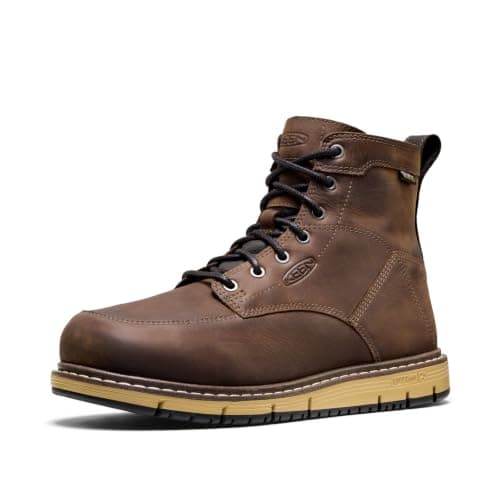
| 1 | KEEN Utility San Jose 6" Aluminum Toe Wedge Work Boot A wedge-sole boot with an asymmetrical aluminum toe that KEEN states weighs 35% less than steel — the lightweight answer for flat-floor trades. | The lightest metal cap, on a wedge | Asymmetrical aluminum safety toeASTM F2413-18 M/I/75/C/75 with EH (KEEN Utility safety-toe standard); KEEN states aluminum toes weigh 35% less than steel | |
| 2 | 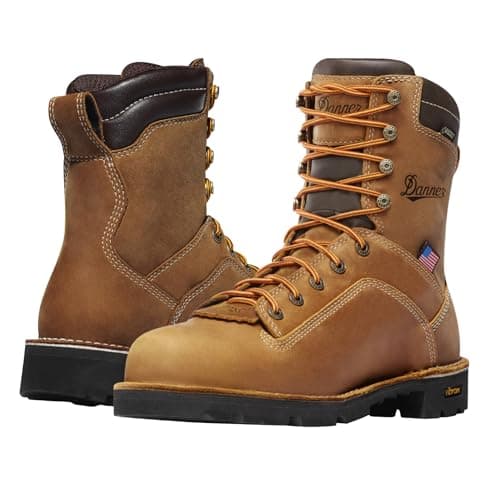 Danner Quarry USA 8" Alloy Toe Work Boot A USA-built 8-inch boot with an alloy toe, a 90-degree heel and a non-linear lug pattern designed to shed debris rather than pack it. | Alloy on a recraftable USA boot | Alloy safety toe — a lighter alternative to steelAlloy safety toe meets or exceeds ASTM F2413-11 I/75 C/75 EH for impact, compression and electrical hazard resistance | |
| 3 | 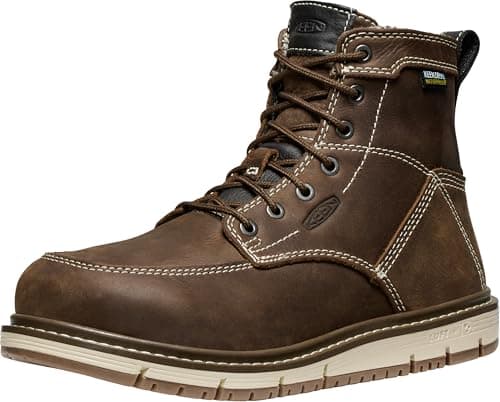 KEEN Utility Women's San Jose 6" Waterproof Aluminum Toe Boot KEEN's women's work fit — snugger in the heel, roomier in the toe box — under an asymmetrical aluminum cap the brand states is 35% lighter than steel, with its own waterproof membrane. | Alloy on a women's last | Left and right asymmetrical aluminum toes, which KEEN states weigh 35% less than steelKEEN's aluminum-toe collection page publishes ASTM F2413-18 M/I/75/C/75 with EH; this individual product page does not restate the codes | |
| 4 | 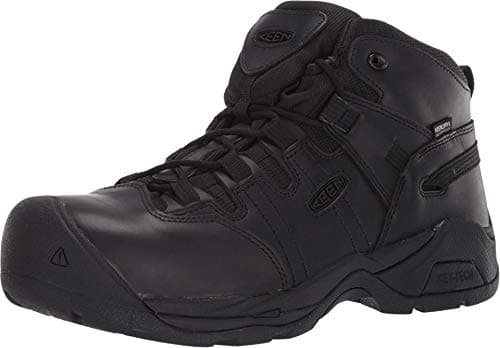 KEEN Utility Detroit XT Carbon-Fiber Toe Work Boot Carbon-fiber toe on the Detroit XT platform: the same impact and compression rating with a lighter, non-conductive cap. | The alternative: carbon, non-metallic | Carbon-fiber safety toe, non-metallicMeets ASTM F2412-17 and F2413-17 M I/75 C/75, EH; carbon safety toes save about 15% weight over steel, per KEEN | |
| 5 | 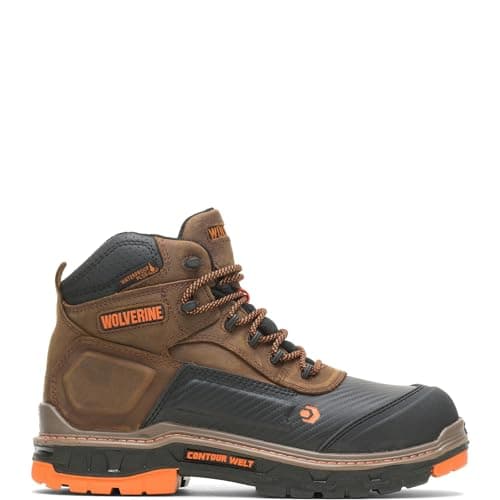 Wolverine Overpass CarbonMAX 6" Composite Toe Waterproof Boot A waterproof CarbonMAX composite toe on a flexible dual-compound outsole — the Overpass is built to move with the foot rather than brace it. | The alternative: composite, flexible | CarbonMAX composite safety toe, non-metallicASTM F2413 M/I/C EH rated composite toe |
Tap a row to jump to that boot's full write-up. The price column goes straight to Amazon.
What an alloy toe actually is
An alloy safety toe is a metal cap made from aluminum or titanium instead of steel. It is still metal, and it is still certified against the same requirement every other cap type has to meet: under ASTM F2413 a protective toe must withstand a 75 foot-pound impact and 2,500 pounds of compression while preserving a specified clearance above the toes.
The standard sets a threshold, not a scale, so no cap material is “safer” than another at the certified level. What changes is everything around it: weight, how thick the cap has to be to pass, how it behaves in cold, and whether it trips a detector. Alloy's whole pitch is the first of those, and the number is published rather than implied — KEEN states its aluminum toes weigh 35% less than steel, and about 15% for its carbon-fiber caps. That makes aluminum the lightest metal cap you can buy, and the lightest cap of any kind apart from carbon fiber.
How these were chosen
Four filters, applied in this order, and they are the reason this list is three boots long rather than ten.
1. The cap is genuinely alloy, and the maker says so. Not “lightweight safety toe” and not “non-steel.” Aluminum or titanium, named on the manufacturer's own page.
2. A published ASTM designation. KEEN publishes F2413-18 M/I/75/C/75 with EH for its aluminum-toe collection. Danner publishes that the Quarry's alloy toe meets or exceeds ASTM F2413-11 I/75 C/75 EH. A cap material claim with no designation line behind it did not make the list.
3. Currently sold. Alloy ranges get quietly retired as makers move to composite, so every boot here is one we confirmed is still being listed, not one that was popular three years ago.
4. The rest of the boot has to earn its place too. A light cap on a boot with a dead midsole is a bad purchase. Each pick below is here for its platform as much as its toe.
The three alloy boots, compared
| KEEN San Jose AT | Danner Quarry USA AT | KEEN women's San Jose AT | |
|---|---|---|---|
| Cap | Asymmetrical aluminum, 35% lighter than steel per KEEN | Alloy, stated as a lighter alternative to steel | Left/right asymmetrical aluminum, 35% lighter per KEEN |
| Published rating | ASTM F2413-18 M/I/75/C/75 with EH | Meets or exceeds ASTM F2413-11 I/75 C/75 EH | Collection page publishes F2413-18 M/I/75/C/75 EH; the product page does not restate it |
| Height | 6 inch | 8 inch | 6 inch |
| Outsole | Oil- and slip-resistant wedge | Vibram Quarry, 90° heel, non-linear lugs for debris release | Not published on the product page |
| Waterproof | Both waterproof and non-waterproof San Jose variants are listed | GORE-TEX, breathable | KEEN.DRY membrane |
| Construction | Not published as a welt | Recraftable stitchdown | Not published as a welt |
| Midsole | Air-infused KEEN Luftcell | Quarry midsole with removable OrthoLite triple-density footbed | KEEN Luftcell, nearly 100,000 micro air bubbles per cubic centimeter per KEEN |
| Made in | Not published | Portland, Oregon | Not published |
KEEN San Jose aluminum toe — the default
This is the boot most people searching for an alloy toe actually want. A 6-inch wedge-sole boot with the lightest cap on the market, a published designation line including EH, and an air-infused midsole underneath. The wedge matters as much as the cap: a flat outsole with no heel breast spreads load across the whole footprint, which is what you want if you stand on sealed concrete rather than walking terrain.
The honest cons. KEEN does not publish a welt construction, so treat it as a boot you replace rather than rebuild. It is sold in both waterproof and non-waterproof versions under names that look nearly identical, so check the specific variant before you buy. And the wedge that makes it good indoors is the wrong sole for mud or broken ground — no lugs to bite.
The one it is wrong for: cold outdoor work. A metal cap of any kind pulls heat out of the toes continuously, and an uninsulated aluminum cap in January is no kinder than steel.
Danner Quarry USA — alloy you can rebuild
The Quarry is the alloy boot for people who buy boots for a decade. It is a recraftable stitchdown build made in Portland, Oregon, with a GORE-TEX lining, a Vibram Quarry outsole with a 90-degree heel, and a non-linear lug pattern Danner designed to release debris rather than pack it. The 90-degree heel breast is the detail worth paying for if you spend time on ladder rungs.
The honest cons. It is an 8-inch boot, which is more shaft than many trades want, and the designation Danner publishes cites the older ASTM F2413-11 revision rather than F2413-18. Stitchdown also needs real break-in: the platform edge you can see is outside the upper, not interior room, so size to your measured length. How to break in work boots fast is worth reading before the first shift.
The one it is wrong for: flat-floor indoor trades. Lugs on polished concrete are wasted, and they carry grit onto finished surfaces.
KEEN women's San Jose — alloy on a women's last
The women's San Jose is the only alloy boot here built on a genuine women's work fit — KEEN describes it as snugger through the heel and roomier in the toe box — and it adds a KEEN.DRY waterproof membrane. For a woman who wants the lightest cap available without wearing a men's boot in a small size, this is the answer, and there is very little competition for it.
The honest cons. KEEN publishes the ASTM codes on its aluminum-toe collection page but does not restate them on this product's own page, which is a weaker paper trail than the men's version. The outsole specification is not published either, and KEEN lists a $190 list price, which is near the top of this group. Best steel toe work boots for women covers the wider women's field.
The metal-detector trap
That is why two non-alloy boots are on this list. KEEN's Detroit XT with a carbon-fiber cap is the closest thing to alloy's weight without the metal — KEEN publishes about 15% lighter than steel, with a waterproof membrane and a siped outsole for wet grip. Wolverine's Overpass is the flexible composite alternative, with a full ASTM F2413 M/I/C EH designation on a dual-compound outsole. What composite toe means explains the material properly.
Alloy against the other three cap types
| Weight | Cold | Detectors | Repeat impact | |
|---|---|---|---|---|
| Steel | Heaviest | Conducts heat out of the toes | Triggers | Best — deforms and keeps structure |
| Alloy (aluminum / titanium) | 35% lighter than steel per KEEN | Still conducts | Still triggers | Good — it is metal |
| Composite | Lighter than steel; BRUNT publishes 15% for its cap | Does not conduct | Passes | Treat as a one-serious-hit component |
| Carbon fiber | Lightest; about 15% under steel per KEEN | Does not conduct | Passes | Same caveat as composite |
Read that table and alloy's position is clear. It wins on one axis — weight among metals — and it is beaten on two others by composite and carbon, which are lighter still in carbon's case and pass detectors and do not conduct cold. Alloy's advantage over them is that metal handles repeated impact better, which matters in scrap, demolition and heavy materials handling.
That narrow window is exactly why the category is small. A decade ago alloy was the obvious step down in weight from steel; composite and carbon have since taken most of that ground. The boots that remain are the ones where a maker had a specific reason to keep a metal cap. Composite toe vs alloy toe is the head-to-head, and carbon fiber toe vs composite toe separates the two non-metallic tiers.
Who should buy an alloy toe
You want the weight saving and you do not pass a detector. This is the core case. Alloy is a proven, long-established metal cap with a published weight advantage, and if detectors are irrelevant to your working day there is no reason to avoid it.
You cover distance on a hard floor. Weight at the far end of the leg is paid for with every step, and the cap is the worst place to carry it. Best work boots for walking all day goes further into that arithmetic.
Your work involves repeat strikes. Metal is the better material when something lands on your toes more than once in a career, and alloy gives you that with less mass than steel.
Do not buy alloy if you work in real cold, need to pass a detector, or want the absolute lightest cap made — those are composite and carbon cases, in that order. Steel toe vs composite toe frames the whole decision, and ASTM F2413 explained decodes every designation quoted on this page.
Fitting a light cap
One practical note that applies to all three boots. An asymmetrical cap — which both KEEN models use, shaped left and right rather than symmetrically — follows the natural line of the toes and gives more room on the little-toe side than a symmetrical cap does. It fits differently enough that you should not assume your size from a symmetrical steel-toe boot carries over.
Fit at the end of the day in the sock you actually work in, leave roughly a thumb's width in front of the longest toe, and never fix heel slip by sizing down: the cap does not move, so a short boot drives your toes into an immovable wall. How safety-toe boots should fit has the full method.
If you have not settled the material question yet, steel toe vs alloy toe runs the head-to-head: identical ASTM thresholds, a published 35% weight saving, and two things alloy does not fix.
The picks in full
#1 — The lightest metal cap, on a wedge
KEEN Utility San Jose 6" Aluminum Toe Wedge Work Boot
A wedge-sole boot with an asymmetrical aluminum toe that KEEN states weighs 35% less than steel — the lightweight answer for flat-floor trades.
Published specifications
- Toe
- Asymmetrical aluminum safety toe
- Safety rating
- ASTM F2413-18 M/I/75/C/75 with EH (KEEN Utility safety-toe standard); KEEN states aluminum toes weigh 35% less than steel
- Upper
- Leather upper
- Outsole
- Oil- and slip-resistant wedge outsole
- Midsole / shank
- Air-infused KEEN Luftcell midsole
- Construction
- Not published as a welt construction
- Waterproof
- Both a non-waterproof and a waterproof San Jose are listed; check the specific variant
- Insulation
- Not insulated
Specifications read from KEEN Utility product page (San Jose 6" aluminum toe) on 2026-09-27. We have not worn this boot.
What works
- Lightest metal safety toe on this list, with a published figure
- Wedge sole suits concrete and finished floors
- Luftcell midsole is softer underfoot than a plain rubber wedge
What doesn't
- Aluminum is still metal — it conducts cold and trips detectors
- A wedge gives up traction on mud and gravel
- Not resoleable
Who this is wrong for
Cold outdoor work. A metal cap of any kind pulls heat out of the toes; take a composite or carbon toe into the cold.
Sizing
KEEN's roomy forefoot plus a wedge platform means the boot feels wide immediately. Do not read that as too big — check heel hold before you size down.
#2 — Alloy on a recraftable USA boot
Danner Quarry USA 8" Alloy Toe Work Boot
A USA-built 8-inch boot with an alloy toe, a 90-degree heel and a non-linear lug pattern designed to shed debris rather than pack it.
Published specifications
- Toe
- Alloy safety toe — a lighter alternative to steel
- Safety rating
- Alloy safety toe meets or exceeds ASTM F2413-11 I/75 C/75 EH for impact, compression and electrical hazard resistance
- Upper
- Full-grain leather upper, triple-stitched with hyper-strong thread
- Outsole
- Oil- and slip-resistant Vibram Quarry rubber outsole with a 90° heel and a non-linear lug pattern for traction and debris release
- Midsole / shank
- Danner Quarry midsole with a removable OrthoLite triple-density footbed
- Construction
- Recraftable stitchdown construction
- Waterproof
- Waterproof — breathable GORE-TEX lining
- Insulation
- Not insulated
- Made in
- Made in Portland, Oregon
Specifications read from Danner product page (Quarry USA 8" alloy toe) on 2026-09-27. We have not worn this boot.
What works
- The debris-release claim is a real design choice, and you feel it in mud
- 90° heel breast is what you want on a rung or a roof edge
- US-built at a price below the handmade makers
What doesn't
- Alloy is metal: it conducts cold and trips detectors
- A GORE-TEX membrane keeps water out but also slows the boot drying through
- 8-inch shaft is slow to get on and off
Who this is wrong for
Flat-floor indoor trades. Lugs on a polished concrete floor are wasted, and they carry grit onto finished surfaces.
Sizing
Danner's work lasts are fairly true to size but firm through the midfoot. If you have a high instep, lace the lower eyelets loosely for the first week.
#3 — Alloy on a women's last
KEEN Utility Women's San Jose 6" Waterproof Aluminum Toe Boot
KEEN's women's work fit — snugger in the heel, roomier in the toe box — under an asymmetrical aluminum cap the brand states is 35% lighter than steel, with its own waterproof membrane.
Published specifications
- Toe
- Left and right asymmetrical aluminum toes, which KEEN states weigh 35% less than steel
- Safety rating
- KEEN's aluminum-toe collection page publishes ASTM F2413-18 M/I/75/C/75 with EH; this individual product page does not restate the codes
- Upper
- All-leather upper
- Outsole
- Not published on this product page
- Midsole / shank
- KEEN Luftcell midsole, which KEEN states is infused with nearly 100,000 micro air bubbles per cubic centimeter
- Construction
- Not published as a welt construction
- Waterproof
- KEEN.DRY waterproof, breathable membrane
- Insulation
- Not published
- Weight
- Not published on the manufacturer page
Specifications read from KEEN Utility product page (women's San Jose 6" aluminum toe) on 2026-09-29. We have not worn this boot.
What works
- A genuinely women's-shaped last, not a scaled men's boot
- Lightest cap type available, with a published weight claim behind it
- Waterproof membrane at a normal work-boot price
- Roomy toe box suits a foot that splays under load
What doesn't
- Aluminum is metal: it conducts cold and trips detectors
- The product page publishes no outsole detail and no ASTM codes
- Not resoleable
Who this is wrong for
Cold outdoor shifts. A metal cap of any kind pulls heat out of the toes — take a composite toe into the cold.
Sizing
KEEN's work fit holds the heel tighter than most brands, so a boot that feels roomy at the toes is often still the right length. Check heel lift before you size down.
#4 — The alternative: carbon, non-metallic
KEEN Utility Detroit XT Carbon-Fiber Toe Work Boot
Carbon-fiber toe on the Detroit XT platform: the same impact and compression rating with a lighter, non-conductive cap.
Published specifications
- Toe
- Carbon-fiber safety toe, non-metallic
- Safety rating
- Meets ASTM F2412-17 and F2413-17 M I/75 C/75, EH; carbon safety toes save about 15% weight over steel, per KEEN
- Upper
- Leather upper with the KEEN.DRY waterproof breathable membrane
- Outsole
- Oil- and slip-resistant outsole with siping for wet grip
- Midsole / shank
- KEEN.ReGEN cushioning midsole
- Construction
- Not published as a welt construction
- Waterproof
- Waterproof — KEEN.DRY membrane
- Insulation
- Not insulated
Specifications read from KEEN Utility Detroit XT collection specifications on 2026-09-27. We have not worn this boot.
What works
- Same 75 ft-lb impact rating as steel at lower weight
- Non-metallic cap does not conduct cold or set off detectors
- KEEN states the weight saving as a figure rather than a vibe
What doesn't
- Costs more than the steel-toe version of the same boot
- A composite or carbon cap that takes a heavy hit must be retired, not just inspected
- Not resoleable
Who this is wrong for
Jobs with repeated heavy impact on the toe box. Steel handles repeat strikes better; a non-metallic cap is a one-serious-hit component.
Sizing
Same Detroit XT last as the steel-toe version, so size the same. If you are moving from a steel toe, expect the cap to feel slightly higher-volume.
#5 — The alternative: composite, flexible
Wolverine Overpass CarbonMAX 6" Composite Toe Waterproof Boot
A waterproof CarbonMAX composite toe on a flexible dual-compound outsole — the Overpass is built to move with the foot rather than brace it.
Published specifications
- Toe
- CarbonMAX composite safety toe, non-metallic
- Safety rating
- ASTM F2413 M/I/C EH rated composite toe
- Upper
- Premium waterproof leather with an abrasion-resistant toe
- Outsole
- Dual-compound rubber and PU outsole
- Midsole / shank
- Advanced comfort PU midsole with a nylon shank
- Construction
- Not published as a welt construction
- Waterproof
- Waterproof leather upper
- Insulation
- Not insulated
Specifications read from Wolverine product page (Overpass CarbonMAX 6") on 2026-09-27. We have not worn this boot.
What works
- Genuinely flexible for a safety-toe boot
- Waterproof leather rather than a membrane-only claim
- Removable footbed, so an orthotic actually fits
What doesn't
- A nylon shank is not a climbing shank
- PU midsoles eventually crumble with age and disuse
- Not resoleable
Who this is wrong for
Pole and ladder work. A flexible boot with a nylon shank is the wrong platform for standing on a rung all day.
Sizing
The Overpass runs close to true. Because the footbed is removable, fit it with your orthotic in place if you use one — swapping later changes the fit by a half size in feel.
Frequently asked questions
Are alloy toe boots as safe as steel toe boots?
At the certified level, yes. Both have to withstand a 75 foot-pound impact and 2,500 pounds of compression to carry an ASTM F2413 marking, and the standard is a threshold rather than a scale. Steel handles repeated heavy strikes better above that threshold, which is why it survives in scrap and demolition work.
How much lighter is an alloy toe than steel?
KEEN publishes 35% less weight than steel for its aluminum toes, which is the clearest figure any maker in this registry states. That makes aluminum the lightest metal cap available — carbon fiber is lighter still, at about 15% under steel per KEEN, but it is not metal.
Will alloy toe boots set off a metal detector?
Yes. Aluminum and titanium are both metals and both trigger detectors. If screening is the reason you are avoiding steel, you need a composite or carbon cap and a non-metallic shank — a composite cap over a steel shank still sets a detector off.
Are alloy toe boots cold in winter?
They conduct heat out of the toes much as steel does, so an uninsulated alloy cap is no warmer in January. For cold work the cap material that matters is a non-metallic one, and changing the cap does more for toe temperature than stepping up an insulation tier.
Why are there so few alloy toe work boots?
Composite and carbon caps took most of alloy's market. They are lighter or similar in weight, they pass metal detectors and they do not conduct cold, so makers moved their lightweight ranges across. The alloy boots still sold are the ones where a maker wanted metal's tolerance of repeated impact at less weight than steel.
Sources
- KEEN Utility — aluminum toe collection and ASTM compliance — KEEN's published ASTM F2413-18 M/I/75/C/75 EH designation and the 35%-lighter aluminum claim
- ASTM F2413 protective footwear standard — technical summary — Label format, the mandatory I and C designations, and each optional code
- What changed in ASTM F2413-18 — Why the Class 50 tier and the numeric suffix disappeared from the marking
- OSHA 29 CFR 1910.136 — Foot protection — The federal rule itself: when protective footwear is required, and which consensus standards it accepts
Read next
Composite Toe vs Alloy Toe
The head-to-head on weight, detectors and cold.
Carbon Fiber Toe vs Composite Toe
If weight is the only thing you care about.
Best Composite Toe Work Boots
The non-metallic roundup, if a detector is your problem.
ASTM F2413 Explained
Every designation quoted on this page, decoded.