Comfort & Fit
How to Break In Steel Toe Boots
The one part of the boot that will never give is the part that hurts.
Disclosure: product links on this page go to Amazon. As an Amazon Associate we earn from qualifying purchases, at no extra cost to you. It does not change which boots we recommend or the order they appear in — here is the full disclosure.
Quick picks
| # | Product | Best for | Toe & rating | Price |
|---|---|---|---|---|
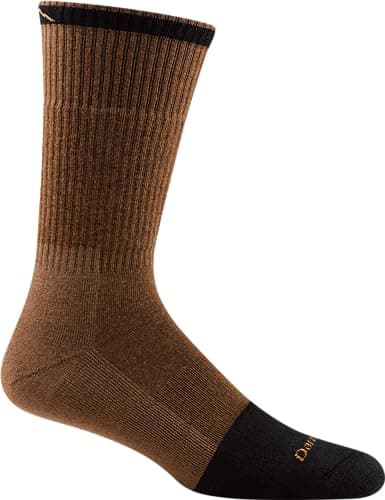
| 1 | Darn Tough Work Steely Boot Midweight Sock with Full Cushion Toe Box A merino-blend work sock with extra padding specifically at the toe box — aimed at the one place a steel cap presses. | Padding exactly where the cap presses | Not applicable — sockNot applicable | |
| 2 | 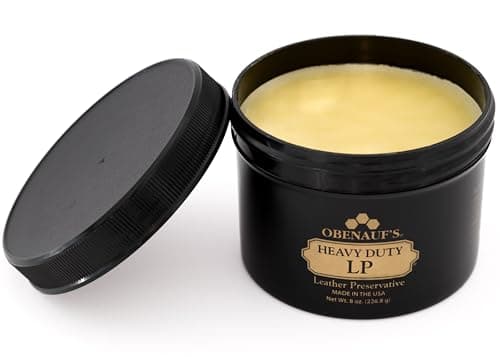 Obenauf's Heavy Duty LP Leather Preservative A thick beeswax-and-oil paste whose oils seep into the fiber while the wax shields the surface — the heavy option for boots that get genuinely wet, with the caveat that it darkens leather. | Softening the flex point, not the cap | Not applicable — leather care productNot applicable | |
| 3 | 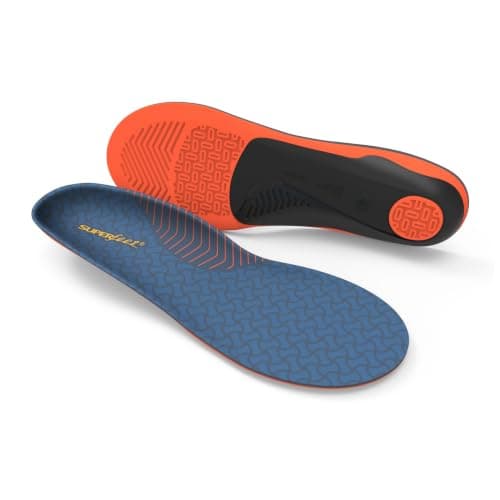 Superfeet Work Cushion Insoles A work-specific insole with a tapered forefoot designed to fit under a safety toe — the detail most aftermarket insoles get wrong. | A tapered bed that fits under a cap | Not applicable — insoleNot applicable to the Work Cushion; Superfeet's Work PR model is tested to ASTM F2413 and EN ISO 22568-4:2021 Type PS |
Tap a row to jump to that boot's full write-up. The price column goes straight to Amazon.
Check this before you start
Stand up, laced, and push your foot forward deliberately. If any toe contacts the inside of the cap, stop — return the boot. A cap that is touching your toes is touching them permanently, and the standard result is a bruised or lost toenail within a month. This is the single most common steel-toe complaint and it is a sizing failure, not a break-in failure. How steel toe boots should fit has the full fit test, and do work boots run big covers why sizing down is what causes this in the first place.
The seven steps, in order
- Fit the boots in the socks you will actually work in — midweight, and merino if you can. Sock thickness is worth about half a size in feel.
- Wear them indoors for an hour a day for the first three days, laced properly. Flat floors only. You are shaping the flex point, not testing the boot.
- Condition the leather at the flex point and around the ankle on day three — thin, and only there. A beeswax-and-oil preservative softens the fibers that need to bend.
- Take them out for a half shift on day four or five. Pack your old boots in the truck. If anything starts rubbing, change out of them rather than finishing the day.
- Replace the factory footbed around day five if it is thin foam. A tapered work insole that clears the cap is the upgrade; pull the original out rather than stacking on top of it.
- Re-lace for the hot spots you have found. Skip the eyelet over a high instep; tighten the top two to lock the heel if your foot is sliding forward into the cap.
- Full shifts from about day seven, and reassess at two weeks. A welted boot with a rubber midsole takes most of that fortnight to pack down.
Where a steel toe boot actually hurts
| Where it hurts | Cause | What to do |
|---|---|---|
| Across the tops of the toes | The cap is sitting on them — the boot is too short or too shallow | Return it. This does not improve |
| A line across the forefoot | The back edge of the cap, where the rigid shell ends | Thicker sock, better footbed, lace looser over the forefoot |
| Under the ball of the foot | The sole has not developed its flex point yet | Short wears plus conditioner at the crease |
| Behind the heel | Heel lift rubbing a stiff counter | Heel-lock lacing, or a heel-grip insole |
The second row is the one people misdiagnose. Pain in a band across the forefoot is the edge of the cap, not the cap itself, and it is a cushioning and lacing problem rather than a size problem. A sock with deliberate padding at the toe box — the reason that specific product exists — plus a footbed with a tapered forefoot usually resolves it.
Three things never to do
Do not soak the boots. The wet-and-wear method circulating online strips the oils out of the leather, and it does nothing at all to the cap. You get a boot that dries hard and cracks early in exchange for no change in the dimension that was hurting.
Do not apply heat. No ovens, no space heaters, no hairdryer held on one spot. Heat shrinks leather and softens the adhesive holding a direct-attach or cemented sole together, and on a safety boot you may be degrading the bond between the sole and the rest of your PPE.
Do not try to stretch the toe box. A boot stretcher works on leather. There is a steel, composite or carbon shell in the way, and the only thing that will move is the leather over the top of it — which is not where the problem is. Stretching the forefoot behind the cap is legitimate; stretching the cap is not possible.
How long it should take
Expect about two weeks for a welted leather boot and a few days for a cemented or direct-attach one, which is flexible from the first wear because there is no welt or rubber midsole to pack down. Neither timeline includes the cap, which never changes. If you are past three weeks and still in pain, the boot is wrong for your foot rather than under-broken-in — how to break in work boots covers the non-safety-toe version of this process, and best work boots with no break-in lists the constructions that skip it entirely.
The general version of this, including what a conditioner actually does to the timeline, is in how to break in work boots fast.
The picks in full
#1 — Padding exactly where the cap presses
Darn Tough Work Steely Boot Midweight Sock with Full Cushion Toe Box
A merino-blend work sock with extra padding specifically at the toe box — aimed at the one place a steel cap presses.
Published specifications
- Toe
- Not applicable — sock
- Safety rating
- Not applicable
- Upper
- Not applicable
- Outsole
- Not applicable
- Midsole / shank
- Not applicable
- Construction
- Midweight merino wool blend knit, full cushion toe box
- Waterproof
- Not applicable — merino wicks rather than blocks
- Insulation
- Midweight — moisture-wicking and thermoregulating merino blend
- Made in
- Knit in mills in Vermont, USA
Specifications read from Retail product listing — Darn Tough Work Steely midweight boot sock on 2026-09-27. We have not worn this boot.
What works
- The padding is placed where a steel cap actually causes pain
- Merino manages sweat, which is what causes most work-boot blisters
- Midweight works across more of the year than a heavyweight sock
What doesn't
- Costs several times a cotton work sock
- Extra toe padding takes up room in an already-snug boot
- Merino needs washing care to last
Who this is wrong for
A boot that is already tight at the toes. Fix the boot's fit first — a thicker sock inside a short boot makes the problem worse.
Sizing
Buy socks before you fit boots, then fit the boots wearing them. Changing sock thickness afterwards changes the fit by roughly a half size in feel.
#2 — Softening the flex point, not the cap
Obenauf's Heavy Duty LP Leather Preservative
A thick beeswax-and-oil paste whose oils seep into the fiber while the wax shields the surface — the heavy option for boots that get genuinely wet, with the caveat that it darkens leather.
Published specifications
- Toe
- Not applicable — leather care product
- Safety rating
- Not applicable
- Upper
- Not applicable
- Outsole
- Not applicable
- Midsole / shank
- Not applicable
- Construction
- All-natural beeswax and oil paste
- Waterproof
- Heavy on beeswax, which is why it is one of the stronger boot waterproofing options
- Insulation
- Not applicable
- Made in
- Made in Idaho, USA, per the maker's product page
Specifications read from Obenauf's own Heavy Duty LP product page on 2026-10-05. We have not worn this boot.
What works
- The strongest waterproofing of the common conditioners
- Time-release oils keep feeding the fiber and will not seal the leather
- A tin lasts a very long time
What doesn't
- Darkens leather, permanently and noticeably
- Not for suede
- Messier and slower to apply than a liquid conditioner
Who this is wrong for
Suede, and any boot whose color you care about keeping. Use Bick 4 instead for color-safe upkeep.
Sizing
Not a sizing product. Apply thin and warm — a hair dryer on low helps it absorb — and never bake leather to speed it up.
#3 — A tapered bed that fits under a cap
Superfeet Work Cushion Insoles
A work-specific insole with a tapered forefoot designed to fit under a safety toe — the detail most aftermarket insoles get wrong.
Published specifications
- Toe
- Not applicable — insole
- Safety rating
- Not applicable to the Work Cushion; Superfeet's Work PR model is tested to ASTM F2413 and EN ISO 22568-4:2021 Type PS
- Upper
- Not applicable
- Outsole
- Not applicable
- Midsole / shank
- Not applicable
- Construction
- Molded work insole with a tapered forefoot
- Waterproof
- Not applicable
- Insulation
- Not applicable
Specifications read from Superfeet product page (Work Cushion) on 2026-09-27. We have not worn this boot.
What works
- The tapered forefoot is the difference between fitting and jamming
- A cheap way to extend a boot whose factory footbed has packed out
- Puncture-resistant and ESD variants exist for specific hazards
What doesn't
- Takes up volume — a snug boot becomes a tight one
- Does not fix a boot that is the wrong shape
- Needs replacing periodically like any insole
Who this is wrong for
A boot that already fits tightly. Pull the factory footbed out before adding this, and if it still crowds, the boot is too small.
Sizing
Trim to the factory footbed, not to the boot. Use the old insole as the template and cut once.
Frequently asked questions
How long does it take to break in steel toe boots?
About two weeks for a welted leather boot, and a few days for a cemented or direct-attach one. Neither figure applies to the cap, which is a rigid shell and never changes shape. What breaks in is the leather behind the cap, the flex point under the ball of the foot and the footbed.
Do steel toe boots break in?
The boot does; the toe does not. The cap's internal dimensions on day one are its dimensions for the life of the boot. If your toes are touching it at the start, that will not improve with wear — the boot is too short and should go back.
How do you break in steel toe boots fast?
Short wears, conditioner at the flex point only, the right sock, and a better footbed around day five. There is no legitimate overnight method. Soaking the boots strips the leather's oils, and heat shrinks leather and attacks the sole adhesive — neither changes the cap, which is usually what hurts.
Why do steel toe boots hurt across the top of my foot?
Most often it is the back edge of the cap, where the rigid shell ends, pressing into the forefoot — a cushioning and lacing problem rather than a size problem. Try a sock padded at the toe box, a footbed with a tapered forefoot, and looser lacing over the forefoot with the top two eyelets snug.
Sources
- ASTM F2413 protective footwear standard — technical summary — Label format, the mandatory I and C designations, and each optional code
Read next
How to Break In Work Boots
The general sequence, without the safety-cap constraints.
How Should Steel Toe Boots Fit
The fit test to run before you start breaking anything in.
Do Work Boots Run Big?
Why sizing down is what causes most steel-toe pain.
Best Work Boots With No Break-In
The constructions that are comfortable from the first shift.