Weatherproof
400 Gram Insulation Boots: Temperature Rating
No maker rates it to a temperature. Here is the tier it is genuinely built for.
Disclosure: product links on this page go to Amazon. As an Amazon Associate we earn from qualifying purchases, at no extra cost to you. It does not change which boots we recommend or the order they appear in — here is the full disclosure.
Quick picks
| # | Product | Best for | Toe & rating | Price |
|---|---|---|---|---|
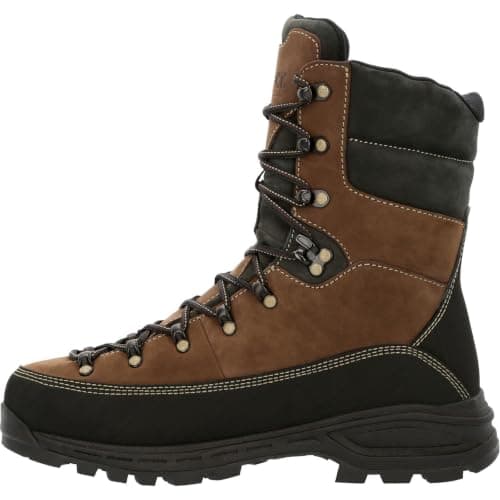
| 1 | Rocky Mountain Stalker Pro Waterproof 400G Insulated Boot A 10-inch waterproof boot with 400g Thinsulate Ultra — the tier that keeps working when you are active rather than standing still. | The published 400g benchmark here | Non-safety toe in this model — check the variant before buying for a job siteNo protective toe designation published for this model | |
| 2 | 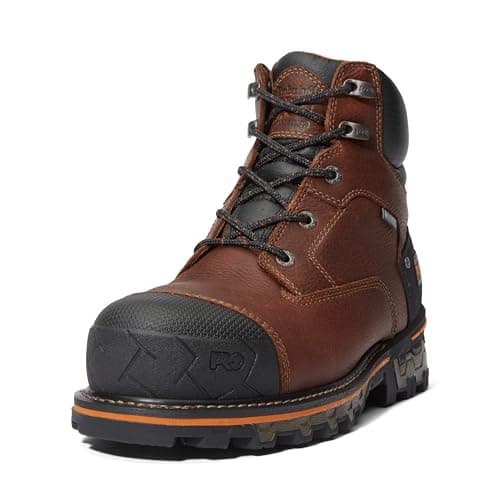 Timberland PRO Boondock 6" Composite Toe Insulated Waterproof Work Boot The Boondock platform with insulation added — the right tier for a full winter shift outdoors where you are moving but not sprinting, on the same waterproof membrane and all-weather outsole as the uninsulated version. | 600g with a certified safety toe | Composite safety toe, non-metallicComposite safety toe with electrical hazard protection per ASTM F2413 | |
| 3 | 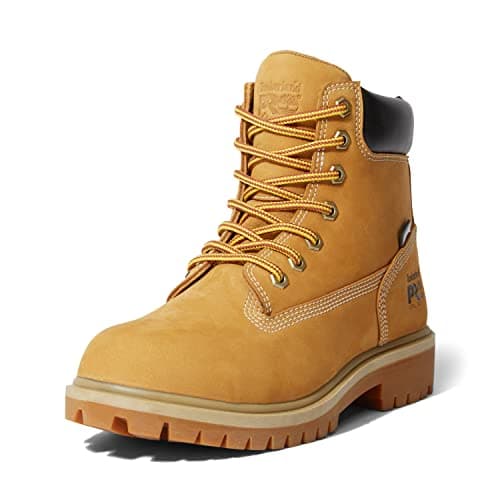 Timberland PRO Women's Direct Attach 6" Steel Toe Waterproof Insulated Work Boot A seam-sealed waterproof boot with 200 grams of insulation on a women's last — the warm, wet-weather option in a category where most women's boots are neither. | 200g — the tier down, sealed | Asymmetrical steel safety toeMeets or exceeds ASTM F2412 and ASTM F2413 I/75 and C/75; electrical hazard rated | |
| 4 | 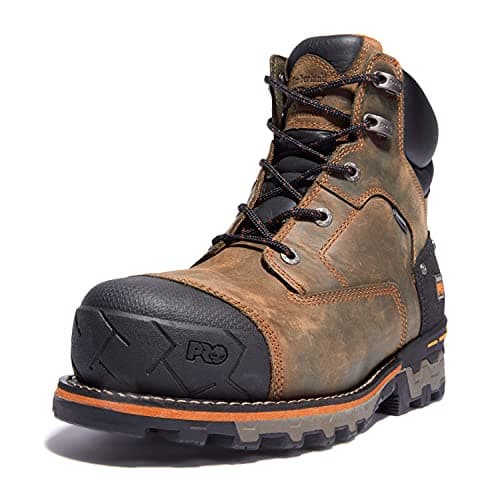 Timberland PRO Boondock 6" Composite Toe Waterproof Work Boot A waterproof composite-toe boot whose all-weather TPU outsole is specifically formulated to stay flexible when it gets cold — which is when most rubber compounds stop gripping. | Uninsulated, if you never stop moving | Asymmetrical composite safety toe, non-metallicMeets ASTM F2412-18a and ASTM F2413-18 for impact (I) and compression (C); EH protection meets ASTM F2413-18 and ASTM F2892-18; waterproof membrane meets ASTM F1671-07 |
Tap a row to jump to that boot's full write-up. The price column goes straight to Amazon.
Where the 400 comes from
400 grams means 400 grams of insulating material per square meter of fabric. It is a density figure for the insulation layer, not the weight of insulation in the boot, and not a temperature. 3M's Thinsulate is the most commonly specified version of it, and Thermolite, PrimaLoft and in-house equivalents are quoted on the same scale, so 400g from one brand is broadly comparable to 400g from another.
That scale is linear in material and not in warmth. A 400g boot carries twice the insulation weight of a 200g boot in the same area, but it does not keep you twice as warm, and past a point extra loft costs you more in toe room and sweat than it returns in heat. The full ladder, tier by tier, is in boot insulation ratings explained.
Why no temperature rating exists
Look at the manufacturer pages in the sources below and you will find the gram figure printed plainly and no temperature anywhere. Rocky publishes “400g 3M Thinsulate Ultra” on the Mountain Stalker Pro and stops there, exactly as it does on its 1,000-gram and 1,200-gram models.
The reason is that warmth at your foot is the output of at least five inputs, and the maker controls one of them. How hard you are working, how much blood is reaching your toes, whether the inside of the boot is dry, what sock is in there, and how long you stand still all move the answer more than the grams do. A published “good to 0°F” would be a guess about your shift, not a measurement of the boot.
So when a retailer listing or a forum reply tells you 400 gram boots are “rated to 20°F,” that number did not come from the manufacturer. The same argument at the heavy end of the ladder is in the 1000 gram Thinsulate question, and at the light end in what 200g insulation means.
What 400 grams is actually built for
The useful way to place 400g is by the shape of your shift — how much of it you spend moving, and how often you get indoors.
| Tier | Shift it suits | What goes wrong if you buy it anyway |
|---|---|---|
| 200g | Cool rather than cold, or cold work you never stop moving through | Cold toes at a fixed post, and nothing fixes it but a warmer boot |
| 400g | Real cold with real movement — framing, loading, service calls, yard work with walking in it | Sweat, if the day is mild or most of it is spent in a heated cab |
| 600g | Sustained cold at a moderate pace, or long spells outdoors between warm-ups | Too warm for an active trade, and the loft eats toe room |
| 1000g and up | Standing still in severe cold — gates, stands, static yard posts | Overheating within two hours of any real exertion |
Most tradespeople who work outdoors through a northern winter and keep moving are in the 400g row, which is why it is the most widely stocked insulated tier in work footwear. It is also the tier most likely to be right if you genuinely do not know which one you are.
Five checks that decide your tier
1. How much of the shift are you still? Static work is the hardest case in cold-weather footwear, and it is what the heavy tiers exist for. If you stand at a post for hours, step up from 400g. If you are carrying, climbing or walking continuously, step down.
2. What is your toe cap made of? A steel cap conducts heat out of the toes all shift, and 400 grams is a modest amount of insulation to fight it with. Moving from steel to composite or carbon does more for cold toes than adding 200 grams does — steel toe vs composite toe has the conduction detail.
3. Is the boot sealed? Wet insulation of any weight is close to useless, so a waterproof 400g boot beats an unsealed 600g boot in slush every time. If you are in snow that melts on contact, the membrane matters more than the grams — waterproof vs water-resistant explains which claims actually mean sealed.
4. How much room is left inside? Insulation works by holding still air, and compressed insulation holds none. A 400g boot that fits like a 200g boot is a 200g boot. If the toe box is already tight, fix the fit before you add grams — how steel toe boots should fit covers the clearance a cap needs.
5. What is on your foot? A merino or merino-blend sock moves moisture out of the boot; a cotton sock holds it against your skin and leaves the insulation damp by mid-afternoon. The sock is the cheapest variable on this list and the one most people ignore — best socks for work boots covers which ones are built to go under a safety cap.
When 400g is too much
You are mostly in a cab or a building. Delivery routes with a heated cab, mechanics in a shop, anyone whose cold is a twenty-minute stretch between warm spaces. A 400g boot in a heated environment is a sweat problem, and damp feet at 2pm are colder than dry feet in a lighter boot would have been all day.
Your winter is mild. If freezing is the exception rather than the baseline, 200g covers the cold mornings without punishing you at noon.
You already sweat in your current pair. This is the clearest signal in the category and the most under-reported. Sweating by mid-morning means the boot is over-insulated for your output, and the fix is one tier down plus a better sock, not a thicker boot.
When 400g is not enough
You stand still outdoors in deep cold. No sock, insole or lacing trick rescues an under-insulated boot at a fixed post. Step up to 600g or beyond and accept the bulk.
Your feet run cold generally. Circulation varies enough between people that two workers on the same crew can need different tiers, and the one who is always cold indoors is usually a tier up outdoors too.
You are on frozen ground in a steel-toe boot. The cap and the ground pull heat out of the same part of the foot. If the job requires steel, treat 400g as the floor rather than the answer and look at the insulated roundup for the warmer rated models.
Insulation is one part of a cold setup
Most of the heat you lose at work goes out through the bottom of the boot, not the sides, because that is the part in continuous contact with frozen ground, cold concrete or a steel deck. Insulation in the upper does nothing about conduction underfoot. What helps there is a thicker outsole, a midsole that is not compressed flat, and a footbed with some loft left in it — a packed-out factory insole is a cold insole, and replacing it is the cheapest winter upgrade most people never make.
The rest of the setup is the sock, a shaft tall enough that snow does not come over the collar, and the discipline of not lacing the boot so tight that you restrict circulation to the toes. A 400g boot run well beats a 600g boot run badly, which is the thread through this whole page: the grams are the easiest variable to buy and the least decisive one.
Fitting and running an insulated boot
Fit a 400g boot in the sock you will actually wear in January, not a thin liner, and leave the sock room to loft. If you are between sizes in an insulated boot, go up rather than down — the opposite of the advice for an uninsulated one, because here the dead air is doing the work. The work boot sizing guide has the measuring method.
Then pull the insoles out at the end of every shift. The footbed is where the day's moisture collects, and a boot that feels dry on the outside can start the next morning damp underneath — which is how a correctly specified 400g boot ends up performing like a 200g one. Forced air at room temperature does this overnight without the heat that hardens leather and softens sole adhesives, as covered in work boot care and cleaning.
Buying 400g for a job that requires PPE
The practical consequence is that cold-weather PPE buying is a two-filter job: filter for the rating your site requires, then filter for the tier your shift needs, in that order. ASTM F2413 explained decodes the designation line, and the EH-rated roundup covers the electrical-hazard marking most outdoor utility work also needs.
If 400 grams leaves you cold through the stops rather than on the move, the next step is 600 gram insulation, which assumes steady movement rather than continuous exertion.
The picks in full
#1 — The published 400g benchmark here
Rocky Mountain Stalker Pro Waterproof 400G Insulated Boot
A 10-inch waterproof boot with 400g Thinsulate Ultra — the tier that keeps working when you are active rather than standing still.
Published specifications
- Toe
- Non-safety toe in this model — check the variant before buying for a job site
- Safety rating
- No protective toe designation published for this model
- Upper
- 10" waterproof full-grain leather
- Outsole
- Rocky outdoor outsole
- Midsole / shank
- Not published on the manufacturer page
- Construction
- Not published as a welt construction
- Waterproof
- Waterproof with Rocky Vapor Pass technology
- Insulation
- 400g 3M Thinsulate Ultra Insulation
Specifications read from Authorized retailer spec page (WorkBoots.com) — Rocky Mountain Stalker Pro 400G on 2026-09-27. We have not worn this boot.
What works
- 400g is the right tier if you are moving — 600g overheats an active worker
- Tall waterproof shaft
- Breathability is addressed, not ignored
What doesn't
- No protective toe — this is not a PPE boot
- Too warm for mild weather
- Retailer page, not a manufacturer page
Who this is wrong for
Any site requiring protective footwear. There is no safety toe here.
Sizing
A 10-inch shaft needs lacing discipline: snug at the ankle, looser at the top, or the shaft will bite behind the knee of the calf.
#2 — 600g with a certified safety toe
Timberland PRO Boondock 6" Composite Toe Insulated Waterproof Work Boot
The Boondock platform with insulation added — the right tier for a full winter shift outdoors where you are moving but not sprinting, on the same waterproof membrane and all-weather outsole as the uninsulated version.
Published specifications
- Toe
- Composite safety toe, non-metallic
- Safety rating
- Composite safety toe with electrical hazard protection per ASTM F2413
- Upper
- Waterproof leather upper
- Outsole
- All-weather TPU outsole
- Midsole / shank
- Not published as a shank specification
- Construction
- Not published as a welt construction
- Waterproof
- Waterproof — membrane meets ASTM F1671-07
- Insulation
- Insulated; the listing states insulated protection without publishing a gram weight
- Weight
- Not published on the retailer page
Specifications read from Authorized retailer spec page (Lehigh Safety Shoes) — Boondock 600G insulated on 2026-09-27. We have not worn this boot.
What works
- A moderate insulated tier, which is what a moving winter worker actually wants
- Composite toe avoids the cold-conduction problem steel has
- Same outsole logic as the uninsulated Boondock
What doesn't
- Too warm for anything much above freezing
- Heavy
- Insulation cannot be removed when the weather turns, and no gram weight is published to judge it by
Who this is wrong for
Indoor work, or any shift where you will be inside part of the day. Insulation you cannot take out is a liability in a heated building.
Sizing
Insulation eats volume. If you are buying an insulated boot to wear over a heavy wool sock, try a half size up from your uninsulated size — but try it, don't assume it.
#3 — 200g — the tier down, sealed
Timberland PRO Women's Direct Attach 6" Steel Toe Waterproof Insulated Work Boot
A seam-sealed waterproof boot with 200 grams of insulation on a women's last — the warm, wet-weather option in a category where most women's boots are neither.
Published specifications
- Toe
- Asymmetrical steel safety toe
- Safety rating
- Meets or exceeds ASTM F2412 and ASTM F2413 I/75 and C/75; electrical hazard rated
- Upper
- Premium full-grain nubuck leather
- Outsole
- Non-marking Timberland PRO rubber outsole — heat-, oil-, slip- and abrasion-resistant
- Midsole / shank
- Fiberglass diffusion plate over a lightweight midsole, with a composite shank
- Construction
- Direct attach, seam-sealed waterproof construction
- Waterproof
- Breathable waterproof membrane, seam-sealed
- Insulation
- 200 grams of Thermolite insulation
- Widths
- M only, women's sizes 5 to 11
- Weight
- 1 lb 9 oz per boot
Specifications read from Authorized retailer spec page (Boot World) — Timberland PRO women's Direct Attach 6" steel toe on 2026-09-29. We have not worn this boot.
What works
- One of the few women's work boots that is both waterproof and insulated
- Fiberglass diffusion plate spreads load instead of a bare midsole
- Non-marking outsole, so it is allowed on finished floors
What doesn't
- 200g insulation is too warm for indoor work most of the year
- A steel cap plus cold is the worst toe-temperature pairing, insulation notwithstanding
- Direct-attach construction cannot be resoled
Who this is wrong for
Indoor or warm-weather work. Insulation you do not need is just a sweaty boot, and there is an uninsulated Direct Attach if you want the same fit without it.
Sizing
Insulated boots need room for a thicker sock — fit this one in the sock you will actually wear in the cold, not a thin liner.
#4 — Uninsulated, if you never stop moving
Timberland PRO Boondock 6" Composite Toe Waterproof Work Boot
A waterproof composite-toe boot whose all-weather TPU outsole is specifically formulated to stay flexible when it gets cold — which is when most rubber compounds stop gripping.
Published specifications
- Toe
- Asymmetrical composite safety toe, non-metallic
- Safety rating
- Meets ASTM F2412-18a and ASTM F2413-18 for impact (I) and compression (C); EH protection meets ASTM F2413-18 and ASTM F2892-18; waterproof membrane meets ASTM F1671-07
- Upper
- Leather upper with a waterproof membrane
- Outsole
- All-weather TPU outsole, formulated to stay flexible in variable weather; slip-, oil- and abrasion-resistant
- Midsole / shank
- Not published as a shank specification
- Construction
- Not published as a welt construction
- Waterproof
- Waterproof, membrane meets ASTM F1671-07
- Insulation
- Not insulated in this version; Timberland PRO also lists a 600g insulated Boondock
- Weight
- Not published on the manufacturer page
Specifications read from Timberland PRO Boondock composite toe specifications (Timberland PRO product listing) on 2026-09-27. We have not worn this boot.
What works
- The cold-weather outsole claim is specific and testable, not marketing mush
- Composite toe does not conduct cold into the toes
- Waterproofing is stated against a named ASTM test method
What doesn't
- Well known among owners as a heavy boot for its class
- A membrane plus a thick outsole is a warm combination in summer
- Not a resoleable construction
Who this is wrong for
Anyone counting grams. If weight is your first criterion, a composite-toe work hiker will be noticeably lighter.
Sizing
The Boondock's toe box is generous but the instep is snug; owners with a high instep frequently report needing a wide. Fit it with the insole you intend to use.
Frequently asked questions
What temperature is 400g insulation good for?
No manufacturer publishes a temperature rating for it, and any number you see attached to a gram figure came from a retailer or a forum rather than the maker. The honest framing is activity: 400 grams suits genuinely cold weather when you are moving through most of the shift, and it is too much insulation for anyone who spends the day in a heated cab or building.
Is 400g insulation enough for winter?
For an active outdoor trade in a normal northern winter, usually yes — it is the most widely stocked insulated tier for exactly that reason. For static outdoor work in deep cold, no: standing still is the case the 600g and 1000g tiers exist for, and no sock or insole makes up the difference.
Is 400g insulation twice as warm as 200g?
No. The scale is linear in material, not in warmth. 400g carries twice the insulation weight per square meter, but warmth at your foot also depends on activity, dryness, circulation, sock choice and whether the insulation is compressed by a tight fit. Doubling the grams does not double anything you feel.
400g or 600g insulated boots — which should I buy?
Choose on how much of your shift is spent moving. If you are walking, carrying or climbing most of the day, 400g; if you are outdoors at a moderate pace with long static spells, 600g. The error is not symmetrical either: over-buying makes you sweat, and damp insulation stops insulating, while under-buying can often be improved with a better sock.
Does a steel toe make an insulated boot colder?
Yes. A steel cap conducts heat out of the toes continuously, which is why the same insulation weight feels colder in a steel-toe boot than in a composite or carbon one. If the site allows a non-metallic cap and you are buying for cold, changing cap material does more than adding 200 grams of insulation.
Sources
- 3M Thinsulate insulation — What the gram figure on an insulated boot actually measures
- Rocky Sport Utility 1000G — manufacturer spec page — A maker publishing a 1,000-gram 3M Thinsulate Ultra figure and no temperature rating anywhere on the page
- ASTM F2413 protective footwear standard — technical summary — Label format, the mandatory I and C designations, and each optional code