Safety Toes
What Does Composite Toe Mean?
Same protection standard, different material — and four consequences that follow.
Disclosure: product links on this page go to Amazon. As an Amazon Associate we earn from qualifying purchases, at no extra cost to you. It does not change which boots we recommend or the order they appear in — here is the full disclosure.
Quick picks
| # | Product | Best for | Toe & rating | Price |
|---|---|---|---|---|
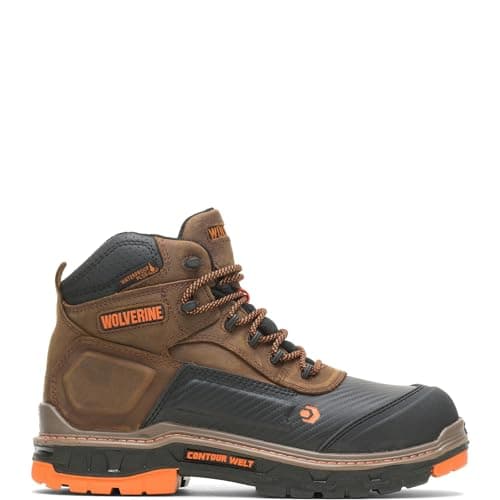
| 1 | Wolverine Overpass CarbonMAX 6" Composite Toe Waterproof Boot A waterproof CarbonMAX composite toe on a flexible dual-compound outsole — the Overpass is built to move with the foot rather than brace it. | Full M/I/C EH composite designation | CarbonMAX composite safety toe, non-metallicASTM F2413 M/I/C EH rated composite toe | |
| 2 | 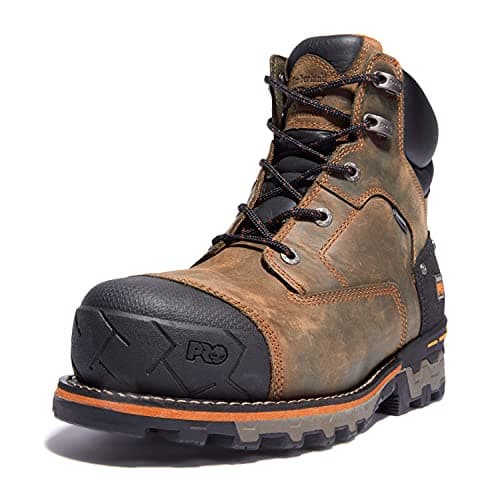 Timberland PRO Boondock 6" Composite Toe Waterproof Work Boot A waterproof composite-toe boot whose all-weather TPU outsole is specifically formulated to stay flexible when it gets cold — which is when most rubber compounds stop gripping. | Composite plus a named membrane standard | Asymmetrical composite safety toe, non-metallicMeets ASTM F2412-18a and ASTM F2413-18 for impact (I) and compression (C); EH protection meets ASTM F2413-18 and ASTM F2892-18; waterproof membrane meets ASTM F1671-07 | |
| 3 | 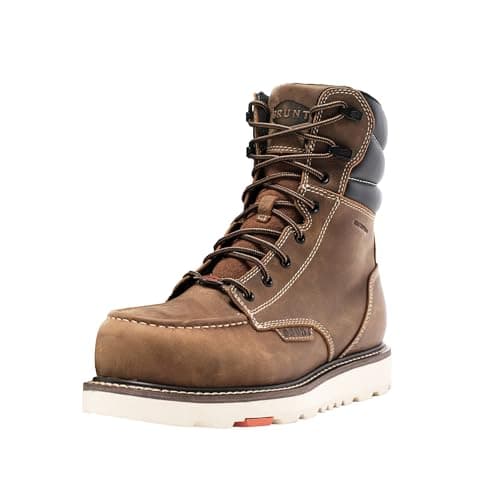 BRUNT The Marin Waterproof Composite Toe Work Boot A waterproof composite toe with an adjustable width system — BRUNT's SWITCH-FIT lets one boot run regular or relaxed, which is a genuinely useful answer for a foot between widths. | Composite with adjustable width | Composite safety toe — non-metallic, 15% lighter than steel per BRUNTComposite safety toe with electrical hazard (EH) protection; outsole and midsole meet ASTM D471-06 903 oil and isooctane chemical resistance | |
| 4 | 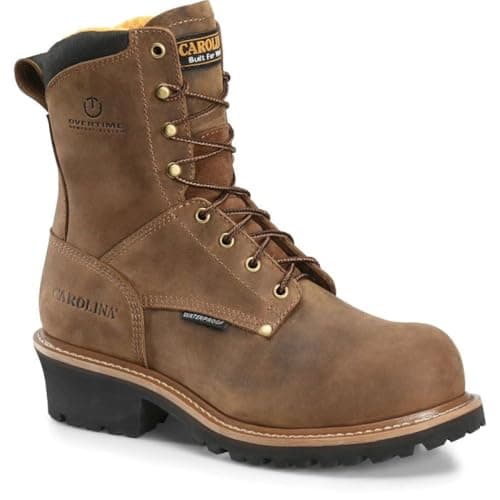 Carolina Poplar 8" Composite Toe Waterproof Logger The Carolina logger platform with a composite cap — same stiff climbing base, no metal at the toe. | Composite cap on a climbing platform | Composite safety toe, non-metallicMeets or exceeds ASTM F2413-18 for compression and impact; electrical hazard protection per Carolina's published EH test |
Tap a row to jump to that boot's full write-up. The price column goes straight to Amazon.
The standard does not care what the cap is made of
This is the part most buying guides get wrong. ASTM F2413 sets performance thresholds, not materials. A cap passes if it withstands a 75 foot-pound impact and 2,500 pounds of compression while leaving a specified clearance above the toes. Steel, composite, alloy and carbon fiber caps that carry the marking have all passed the same test to the same numbers.
So “is composite as safe as steel?” has a precise answer under the standard: yes, at the certified thresholds. Where they differ is above the threshold and over time, which is a real difference and a narrower one than the marketing on either side suggests.
The four things the material actually changes
| Property | Composite | Steel |
|---|---|---|
| Weight | Lighter — BRUNT publishes 15% lighter than steel for its composite cap | The heaviest common cap material |
| Cold conduction | Does not conduct — the main reason to choose it for winter work | Pulls heat out of the toes continuously |
| Metal detectors | Non-metallic; passes detectors and screening areas | Triggers detectors |
| Bulk | Thicker cap to reach the same rating, so a slightly larger toe box | Thinner profile for the same protection |
| Repeated heavy impact | Treat as a one-serious-hit component — inspect and replace after a strike | Deforms rather than failing; tolerates repeat strikes better |
What “composite” is actually made of
The word is a category rather than a single material. Makers use fiberglass, Kevlar, carbon fiber, hard plastics and combinations of them, and most do not publish the exact composition. Wolverine brands its version CarbonMAX, KEEN sells a distinct carbon-fiber cap it states saves about 15% of steel's weight, and Georgia Boot calls its carbon cap Ergo-Fit. Carbon fiber is usually treated as its own tier because it is the lightest of the non-metallic options — carbon fiber toe vs composite toe separates the two properly.
Alloy is a third thing again: a metal cap in aluminum or titanium, lighter than steel but still metal, so it still conducts and still triggers a detector. Composite toe vs alloy toe is the comparison if those are your two options.
Who should buy a composite cap
Anyone working in cold. This is the strongest argument and the least discussed. A metal cap conducts heat away from the toes all shift, and no gram figure of insulation fully compensates for it. If you work outdoors in winter, the cap material matters more than the insulation tier.
Anyone passing through screening. Airports, secure facilities, courthouses, some food and pharmaceutical plants. A non-metallic cap removes a daily friction point, though note that a composite cap does not make the whole boot non-metallic: Carolina's Poplar logger has a composite cap and a steel shank.
Anyone covering distance. Weight at the end of the leg is paid for with every step, and the cap is the worst place to carry it.
Anyone near energised equipment. A non-metallic cap is not what earns an EH rating — that is the sole and heel assembly — but it removes metal from the boot, which is one fewer path. What EH rated means covers the rating itself.
Who should stay with steel
Jobs with repeated heavy impact on the toe box. Steel deforms under a hit and keeps most of its structure; a non-metallic cap is better treated as a component you inspect and replace after a serious strike. Scrap handling, demolition, heavy materials — the trades where something lands on your feet more than once a career.
Budget is the other honest reason. A steel cap is cheaper to make, so at the bottom of the market the steel version of the same boot usually costs less. Steel toe vs composite toe is the full head-to-head, and best composite toe work boots is the roundup once you have decided.
One fitting note
A composite cap is thicker than a steel one for the same rating, which shows up as a slightly deeper and blunter toe box. That is usually comfortable, but it does mean a composite version of a boot you already own may not fit identically to the steel version. Fit it on its own terms — how safety-toe boots should fit applies the same way to both.
The picks in full
#1 — Full M/I/C EH composite designation
Wolverine Overpass CarbonMAX 6" Composite Toe Waterproof Boot
A waterproof CarbonMAX composite toe on a flexible dual-compound outsole — the Overpass is built to move with the foot rather than brace it.
Published specifications
- Toe
- CarbonMAX composite safety toe, non-metallic
- Safety rating
- ASTM F2413 M/I/C EH rated composite toe
- Upper
- Premium waterproof leather with an abrasion-resistant toe
- Outsole
- Dual-compound rubber and PU outsole
- Midsole / shank
- Advanced comfort PU midsole with a nylon shank
- Construction
- Not published as a welt construction
- Waterproof
- Waterproof leather upper
- Insulation
- Not insulated
Specifications read from Wolverine product page (Overpass CarbonMAX 6") on 2026-09-27. We have not worn this boot.
What works
- Genuinely flexible for a safety-toe boot
- Waterproof leather rather than a membrane-only claim
- Removable footbed, so an orthotic actually fits
What doesn't
- A nylon shank is not a climbing shank
- PU midsoles eventually crumble with age and disuse
- Not resoleable
Who this is wrong for
Pole and ladder work. A flexible boot with a nylon shank is the wrong platform for standing on a rung all day.
Sizing
The Overpass runs close to true. Because the footbed is removable, fit it with your orthotic in place if you use one — swapping later changes the fit by a half size in feel.
#2 — Composite plus a named membrane standard
Timberland PRO Boondock 6" Composite Toe Waterproof Work Boot
A waterproof composite-toe boot whose all-weather TPU outsole is specifically formulated to stay flexible when it gets cold — which is when most rubber compounds stop gripping.
Published specifications
- Toe
- Asymmetrical composite safety toe, non-metallic
- Safety rating
- Meets ASTM F2412-18a and ASTM F2413-18 for impact (I) and compression (C); EH protection meets ASTM F2413-18 and ASTM F2892-18; waterproof membrane meets ASTM F1671-07
- Upper
- Leather upper with a waterproof membrane
- Outsole
- All-weather TPU outsole, formulated to stay flexible in variable weather; slip-, oil- and abrasion-resistant
- Midsole / shank
- Not published as a shank specification
- Construction
- Not published as a welt construction
- Waterproof
- Waterproof, membrane meets ASTM F1671-07
- Insulation
- Not insulated in this version; Timberland PRO also lists a 600g insulated Boondock
- Weight
- Not published on the manufacturer page
Specifications read from Timberland PRO Boondock composite toe specifications (Timberland PRO product listing) on 2026-09-27. We have not worn this boot.
What works
- The cold-weather outsole claim is specific and testable, not marketing mush
- Composite toe does not conduct cold into the toes
- Waterproofing is stated against a named ASTM test method
What doesn't
- Well known among owners as a heavy boot for its class
- A membrane plus a thick outsole is a warm combination in summer
- Not a resoleable construction
Who this is wrong for
Anyone counting grams. If weight is your first criterion, a composite-toe work hiker will be noticeably lighter.
Sizing
The Boondock's toe box is generous but the instep is snug; owners with a high instep frequently report needing a wide. Fit it with the insole you intend to use.
#3 — Composite with adjustable width
BRUNT The Marin Waterproof Composite Toe Work Boot
A waterproof composite toe with an adjustable width system — BRUNT's SWITCH-FIT lets one boot run regular or relaxed, which is a genuinely useful answer for a foot between widths.
Published specifications
- Toe
- Composite safety toe — non-metallic, 15% lighter than steel per BRUNT
- Safety rating
- Composite safety toe with electrical hazard (EH) protection; outsole and midsole meet ASTM D471-06 903 oil and isooctane chemical resistance
- Upper
- Leather upper, waterproof on this version
- Outsole
- BRUNT rubber outsole — oil- and slip-resistant, heat-resistant to 572°F / 300°C
- Midsole / shank
- BRUNT polyurethane (PU) midsole
- Construction
- Not published as a welt construction on this model
- Waterproof
- Waterproof
- Insulation
- Not insulated
- Widths
- SWITCH-FIT adjustable between regular (D) and relaxed (EE)
Specifications read from BRUNT Workwear product page (The Marin waterproof comp toe) on 2026-09-27. We have not worn this boot.
What works
- The width system solves a real fitting problem rather than inventing one
- Chemical resistance cited to a named ASTM test method
- PU midsole outlasts EVA
What doesn't
- BRUNT does not publish a full ASTM F2413 designation string on the page
- Direct-to-consumer only, so trying before buying is harder
- Not a welted construction
Who this is wrong for
Anyone who needs to see the complete ASTM designation before they buy. BRUNT states EH and composite-toe compliance but publishes less of the marking line than KEEN or Red Wing.
Sizing
Use SWITCH-FIT before you change size. Most people who think they need a longer boot actually need the relaxed (EE) setting on the same length.
#4 — Composite cap on a climbing platform
Carolina Poplar 8" Composite Toe Waterproof Logger
The Carolina logger platform with a composite cap — same stiff climbing base, no metal at the toe.
Published specifications
- Toe
- Composite safety toe, non-metallic
- Safety rating
- Meets or exceeds ASTM F2413-18 for compression and impact; electrical hazard protection per Carolina's published EH test
- Upper
- Leather upper with a waterproof lining
- Outsole
- Oil- and slip-resisting rubber logger outsole
- Midsole / shank
- Steel shank with a cushioned footbed
- Construction
- Welt construction
- Waterproof
- Waterproof
- Insulation
- Not insulated in this model
- Widths
- D, 2E and 4E
Specifications read from Carolina Shoe product page (Poplar 8" comp toe waterproof logger, CA9852) on 2026-10-01. We have not worn this boot.
What works
- 4E width in a logger is genuinely hard to find
- Composite cap avoids cold conduction at the toes
- Same rigid logger platform as the Spruce
What doesn't
- Still has a steel shank, so not metal-free underfoot
- Heavy and stiff
- Composite caps must be retired after a serious impact
Who this is wrong for
Anyone who needs a fully non-metallic boot for a detector. The cap is composite but the shank is steel.
Sizing
Same logger fit note as the Spruce: the arch will not flex to accommodate you, so get the length right and use the width range.
Frequently asked questions
What does composite toe mean on a work boot?
It means the protective toe cap is made from non-metallic material — fiberglass, Kevlar, carbon fiber or reinforced plastic — rather than steel. To carry the ASTM F2413 marking it must pass the same 75 foot-pound impact and 2,500 pound compression requirement a steel cap does.
Is a composite toe as safe as a steel toe?
At the certified thresholds, yes — both pass the same ASTM F2413 test. The difference appears above those thresholds and under repeated impact, where steel deforms and keeps structure while a non-metallic cap is better treated as a one-serious-hit component to inspect and replace after a strike.
Does a composite toe set off a metal detector?
No. The cap itself is non-metallic. Be aware that the rest of the boot may not be — some composite-toe boots still use a steel shank — so check the shank specification if you need the whole boot to pass a detector.
Is a composite toe warmer than a steel toe?
Yes, and it is the most practical reason to choose one. Steel conducts heat away from the toes continuously, so a steel cap makes cold feel worse regardless of the insulation tier. A non-metallic cap removes that path entirely.
Why are composite toe boots more expensive?
The cap materials cost more to produce and the caps are thicker and more complex to mold than a stamped steel one. At the bottom of the market the steel version of the same model is usually the cheaper purchase.
Sources
- ASTM F2413 protective footwear standard — technical summary — Label format, the mandatory I and C designations, and each optional code
- What changed in ASTM F2413-18 — Why the Class 50 tier and the numeric suffix disappeared from the marking
- KEEN Utility — aluminum toe collection and ASTM compliance — KEEN's published ASTM F2413-18 M/I/75/C/75 EH designation and the 35%-lighter aluminum claim