Soles
Why Are Work Boots Brown?
Nobody chose the colour. The tannery did.
Disclosure: product links on this page go to Amazon. As an Amazon Associate we earn from qualifying purchases, at no extra cost to you. It does not change which boots we recommend or the order they appear in — here is the full disclosure.
Quick picks
| # | Product | Best for | Toe & rating | Price |
|---|---|---|---|---|
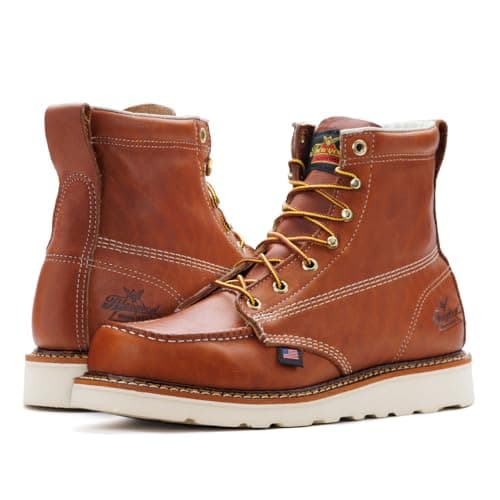
| 1 | Thorogood American Heritage 6" Moc Toe Safety Toe MAXWear Wedge (804-4200) A Goodyear-welted, USA-built wedge with a steel toe and an EH rating — the default answer for anyone who stands on a flat hard floor and wants a boot that can be resoled. | Tobacco oil-tanned, unlined | Steel safety toe, moc toe shapeASTM F2413-18, EH | |
| 2 | 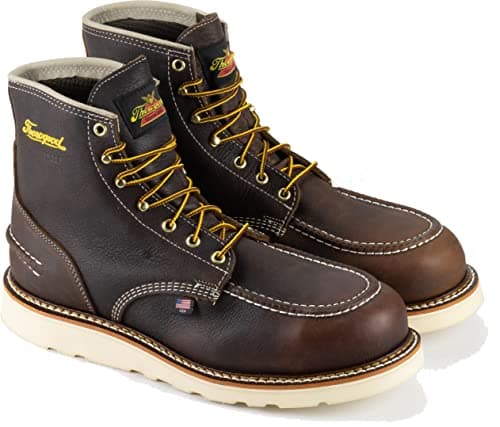 Thorogood 1957 Series Waterproof 6" Steel Toe Moc Toe MAXWear Wedge, Briar Pitstop Thorogood's waterproof 1957 platform in a steel-toe moc toe — the answer when you want the American Heritage shape but work in water. | The same shape in Briar Pitstop | Steel safety toe, moc toe shapeSafety toe per ASTM F2413; see the product page for the model's full designation line | |
| 3 | 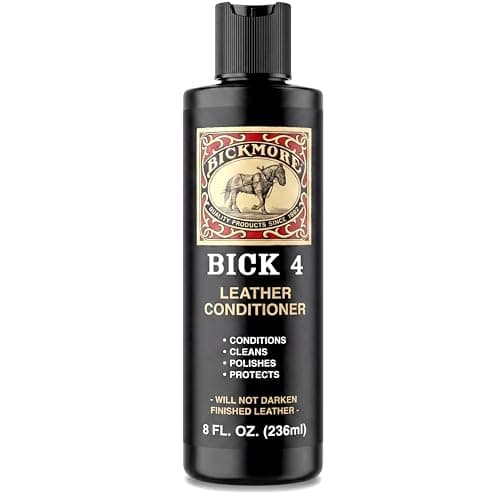 Bickmore Bick 4 Leather Conditioner A one-step liquid cleaner-conditioner that does not darken leather — the right product for regular maintenance and the wrong one for waterproofing. | Upkeep that does not darken leather | Not applicable — leather care productNot applicable | |
| 4 | 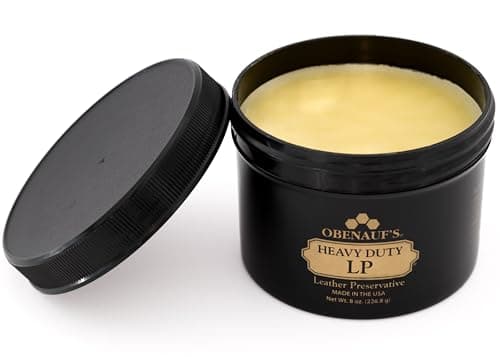 Obenauf's Heavy Duty LP Leather Preservative A thick beeswax-and-oil paste whose oils seep into the fiber while the wax shields the surface — the heavy option for boots that get genuinely wet, with the caveat that it darkens leather. | Waterproofing that will darken it | Not applicable — leather care productNot applicable |
Tap a row to jump to that boot's full write-up. The price column goes straight to Amazon.
The colour comes out of the tannery
Leather for work boots is built for abrasion resistance, flex life and water shedding, and the tanning processes that deliver those properties produce leather in a warm brown range before any dye is involved. Oil-tanned hides — the standard for work uppers, and what Thorogood calls tobacco or Briar Pitstop — are heavily charged with oils and waxes. Those oils are the reason the leather survives being soaked and dried repeatedly, and they also darken it.
You can see the logic run the other way in the names makers use. Irish Setter was named after the colour of its Oro-Russet leather, which was the colour of the dog. The hide came first and the brand followed it.
Four practical reasons it stuck
| Reason | What it means in use |
|---|---|
| It is the natural result of oil tanning | Dyeing to a different shade adds cost and can sit on top of the finish rather than in it |
| Dirt does not show | Mud, concrete dust and sawdust are all in the same colour family |
| Conditioners darken leather | A boot that starts pale goes blotchy; a boot that starts brown goes richer |
| Scuffs read as patina, not damage | Abrasion on brown leather lightens slightly and blends; on black it goes grey and shows |
| Hide variation is forgiving | Natural grain differences disappear in a mid-brown and stand out in a pale finish |
The third row is the one that matters if you look after your boots. Any oil or wax preservative darkens leather — Obenauf's Heavy Duty LP says so on its own product page and recommends spot-testing first. A liquid conditioner like Bick 4 is formulated not to darken, which is why it is the right product for a boot whose colour you care about and the wrong one for waterproofing. Work boot care and cleaning sets out which product to use when.
So why are some work boots black?
Three reasons, all of them specific.
Dress codes. Plenty of workplaces require black footwear — utilities with a uniform standard, hospital and plant maintenance, security, anything with a public-facing uniform. The Irish Setter Ely is a black full-grain steel toe for exactly this reason: it passes a dress code that a brown work boot does not.
Polishability. Tactical, EMS and uniform boots are built with a polishable black toe because the boot has to look inspected. Thorogood publishes a polishable toe on its side-zip models for that market.
Oil and grease. On a boot that lives in hydraulic fluid and motor oil, black hides what brown advertises. It is the one environment where the dirt-concealment argument flips.
What this means for keeping them
Accept that the boot will get darker. A brown oil-tanned upper that is cleaned and conditioned on a schedule ends up a deeper, more even colour than it started, and that is the leather being fed rather than the boot wearing out. The failure mode to avoid is the opposite: a boot that is soaked, dried hot and never oiled goes pale, stiff and cracks at the flex point.
If you want to keep the colour close to new, use a non-darkening liquid conditioner every few weeks and accept less water resistance. If you want the boot to shed water, use a beeswax preservative every six to eight weeks and accept that it will go several shades darker. How to waterproof work boots covers the trade in detail. You cannot have both from one product.
The picks in full
#1 — Tobacco oil-tanned, unlined
Thorogood American Heritage 6" Moc Toe Safety Toe MAXWear Wedge (804-4200)
A Goodyear-welted, USA-built wedge with a steel toe and an EH rating — the default answer for anyone who stands on a flat hard floor and wants a boot that can be resoled.
Published specifications
- Toe
- Steel safety toe, moc toe shape
- Safety rating
- ASTM F2413-18, EH
- Upper
- Tobacco full-grain American leather, unlined
- Outsole
- MAXWear Wedge slip-resistant outsole
- Midsole / shank
- Rubber midsole with composite shank
- Construction
- Goodyear storm welt
- Waterproof
- Not waterproof
- Insulation
- Not insulated
- Widths
- D and EE, sizes 7-14 in both widths
- Weight
- Not published on the manufacturer page
- Made in
- Made in USA with USA and globally sourced components
Specifications read from Thorogood product page (804-4200) on 2026-09-27. We have not worn this boot.
What works
- Goodyear storm welt is a resoleable construction, not a disposable one
- Flat wedge spreads load evenly on concrete instead of concentrating it under a heel
- Unlined upper breaks in to the foot rather than around a liner
- EE width is stocked across the whole size run, not just the middle
What doesn't
- Not waterproof and not insulated — the unlined upper soaks
- A flat wedge gives up bite on mud, gravel and ladder rungs
- Manufacturer publishes no weight figure, so weight comparisons are guesswork
Who this is wrong for
Anyone working outdoors on soft or uneven ground, or in standing water. The wedge has no lugs to bite and the unlined upper is not waterproof.
Sizing
Thorogood's moc-toe last is widely reported to run large; owner reviews consistently suggest going a half size down from a measured Brannock length. D and EE are both stocked, so take the width rather than sizing up for room.
#2 — The same shape in Briar Pitstop
Thorogood 1957 Series Waterproof 6" Steel Toe Moc Toe MAXWear Wedge, Briar Pitstop
Thorogood's waterproof 1957 platform in a steel-toe moc toe — the answer when you want the American Heritage shape but work in water.
Published specifications
- Toe
- Steel safety toe, moc toe shape
- Safety rating
- Safety toe per ASTM F2413; see the product page for the model's full designation line
- Upper
- Briar Pitstop leather
- Outsole
- Thorogood wedge outsole
- Midsole / shank
- Not published on the manufacturer page
- Construction
- Goodyear welt
- Waterproof
- Waterproof
- Insulation
- Not insulated
- Made in
- Not published on this model's page
Specifications read from Thorogood product page (1957 Series, 804-4940) on 2026-09-27. We have not worn this boot.
What works
- Waterproofing on the shape most moc-toe buyers actually want
- Goodyear welt keeps the resole path open
- Steel toe meets a standard site PPE requirement
What doesn't
- A waterproof membrane cuts breathability — this is a poor hot-weather boot
- Heavier than the unlined 814 and 804 versions
- Thorogood does not publish a weight figure for this model
Who this is wrong for
Hot-weather outdoor work. A membrane traps heat, and an unlined Thorogood on the same last will be far more comfortable in summer.
Sizing
Same moc-toe last family as the American Heritage line. Try your normal size with a thick work sock first; the waterproof lining takes up a little more volume than the unlined models.
#3 — Upkeep that does not darken leather
Bickmore Bick 4 Leather Conditioner
A one-step liquid cleaner-conditioner that does not darken leather — the right product for regular maintenance and the wrong one for waterproofing.
Published specifications
- Toe
- Not applicable — leather care product
- Safety rating
- Not applicable
- Upper
- Not applicable
- Outsole
- Not applicable
- Midsole / shank
- Not applicable
- Construction
- Liquid one-step cleaner and conditioner
- Waterproof
- Not a waterproofing product — built for upkeep and color preservation
- Insulation
- Not applicable
Specifications read from Bickmore Bick 4 product listing (authorized retailer) on 2026-09-27. We have not worn this boot.
What works
- Color-safe, which Obenauf's is not
- Fast enough to actually do every few weeks
- Works on smooth leather of every finish
What doesn't
- Provides little waterproofing
- Needs doing more often than a wax
- Does nothing for a boot that is already soaked through
Who this is wrong for
Wet-service field boots. If your boots are wet most days, you need a wax, not a liquid conditioner.
Sizing
Not a sizing product. Clean the boot first — conditioner over grit grinds the grit into the leather.
#4 — Waterproofing that will darken it
Obenauf's Heavy Duty LP Leather Preservative
A thick beeswax-and-oil paste whose oils seep into the fiber while the wax shields the surface — the heavy option for boots that get genuinely wet, with the caveat that it darkens leather.
Published specifications
- Toe
- Not applicable — leather care product
- Safety rating
- Not applicable
- Upper
- Not applicable
- Outsole
- Not applicable
- Midsole / shank
- Not applicable
- Construction
- All-natural beeswax and oil paste
- Waterproof
- Heavy on beeswax, which is why it is one of the stronger boot waterproofing options
- Insulation
- Not applicable
- Made in
- Made in Idaho, USA, per the maker's product page
Specifications read from Obenauf's own Heavy Duty LP product page on 2026-10-05. We have not worn this boot.
What works
- The strongest waterproofing of the common conditioners
- Time-release oils keep feeding the fiber and will not seal the leather
- A tin lasts a very long time
What doesn't
- Darkens leather, permanently and noticeably
- Not for suede
- Messier and slower to apply than a liquid conditioner
Who this is wrong for
Suede, and any boot whose color you care about keeping. Use Bick 4 instead for color-safe upkeep.
Sizing
Not a sizing product. Apply thin and warm — a hair dryer on low helps it absorb — and never bake leather to speed it up.
Frequently asked questions
Why are work boots brown?
Because that is the colour work leather comes out of the tannery. The oil- and chrome-tanning processes used for durable, water-shedding work uppers produce leather in the tan-to-russet range, and the oils and waxes that give the leather its flex life and water resistance darken it further. Brown is the material, not a styling choice.
Why are work boots tan?
Tan is the lighter end of the same oil-tanned range, before heavy oiling or years of conditioning deepen it. A tan boot and a dark brown boot are often the same leather at different stages; most tan uppers go several shades darker over their first year of care.
Why are some work boots black?
Three reasons: workplace dress codes that require black footwear, polishable uniform and EMS boots that have to look inspected, and shops full of oil and grease where black conceals what brown shows. Outside those cases brown remains the default because it is what the tanning produces.
Do leather conditioners darken work boots?
Oil and wax preservatives do, noticeably and permanently — Obenauf's own page recommends spot-testing first. Liquid one-step conditioners such as Bick 4 are formulated not to darken, which makes them right for colour-safe upkeep and wrong for waterproofing. You cannot get both properties from one product.
Sources
- Irish Setter — Rooted in Tradition (brand history) — Irish Setter's own page: the brand was born out of Red Wing Shoe Company and debuted in 1950, named for the Oro-Russet leather color
Read next
Why Work Boots Have White Soles
The same question at the other end of the boot.
Work Boot Care & Cleaning
Which product to use, and what each one does to the colour.
How to Waterproof Work Boots
The darkening-versus-water-shedding trade, in full.
Best Moc Toe Work Boots
Where most of the oil-tanned brown leather lives.