Soles
Best 6-Inch Work Boots
The height that covers the ankle and still lets it move.
Disclosure: product links on this page go to Amazon. As an Amazon Associate we earn from qualifying purchases, at no extra cost to you. It does not change which boots we recommend or the order they appear in — here is the full disclosure.
Quick picks
| # | Product | Best for | Toe & rating | Price |
|---|---|---|---|---|
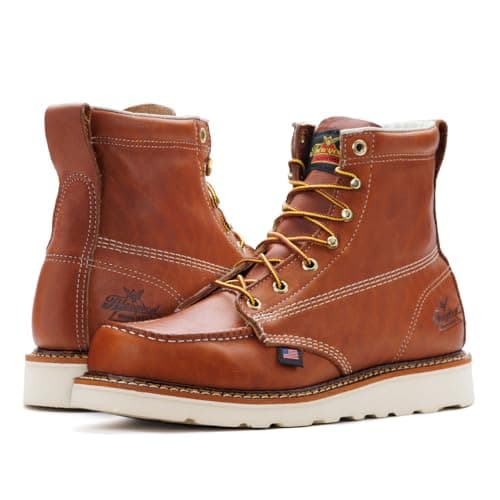
| 1 | Thorogood American Heritage 6" Moc Toe Safety Toe MAXWear Wedge (804-4200) A Goodyear-welted, USA-built wedge with a steel toe and an EH rating — the default answer for anyone who stands on a flat hard floor and wants a boot that can be resoled. | A 6-inch boot you can have rebuilt | Steel safety toe, moc toe shapeASTM F2413-18, EH | |
| 2 | 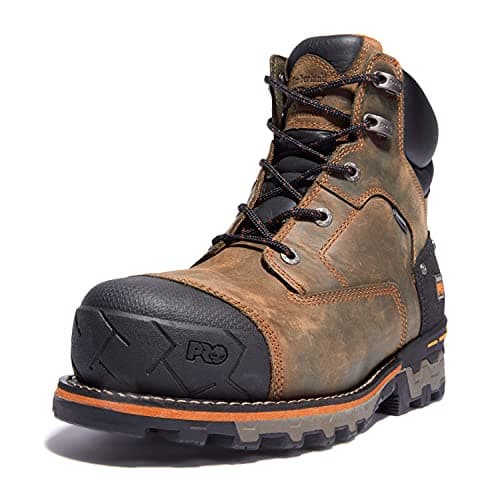 Timberland PRO Boondock 6" Composite Toe Waterproof Work Boot A waterproof composite-toe boot whose all-weather TPU outsole is specifically formulated to stay flexible when it gets cold — which is when most rubber compounds stop gripping. | Wet and cold ground | Asymmetrical composite safety toe, non-metallicMeets ASTM F2412-18a and ASTM F2413-18 for impact (I) and compression (C); EH protection meets ASTM F2413-18 and ASTM F2892-18; waterproof membrane meets ASTM F1671-07 | |
| 3 | 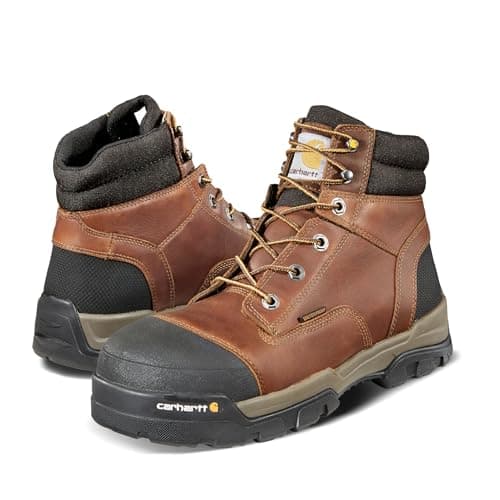 Carhartt Ground Force Waterproof 6" Composite Toe Work Boot A waterproof composite toe with a heat-rated outsole and an APMA-accepted footbed — the pick when arch support is the deciding factor. | Arch support as the deciding factor | Composite safety toe — lightweight, non-metallic, non-conductiveComposite safety toe meeting ASTM F2413-24 EH; outsole meets ASTM F3445-24 SR | |
| 4 | 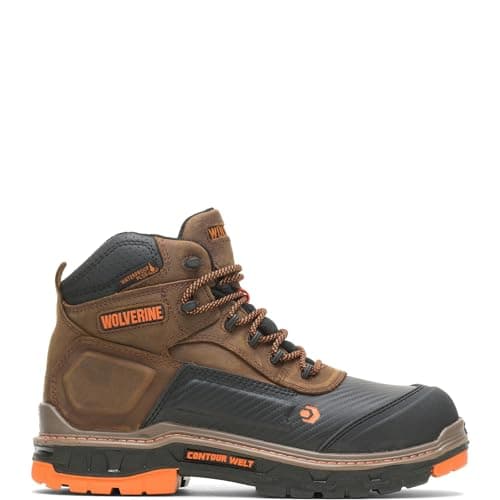 Wolverine Overpass CarbonMAX 6" Composite Toe Waterproof Boot A waterproof CarbonMAX composite toe on a flexible dual-compound outsole — the Overpass is built to move with the foot rather than brace it. | Flex rather than bracing | CarbonMAX composite safety toe, non-metallicASTM F2413 M/I/C EH rated composite toe | |
| 5 | 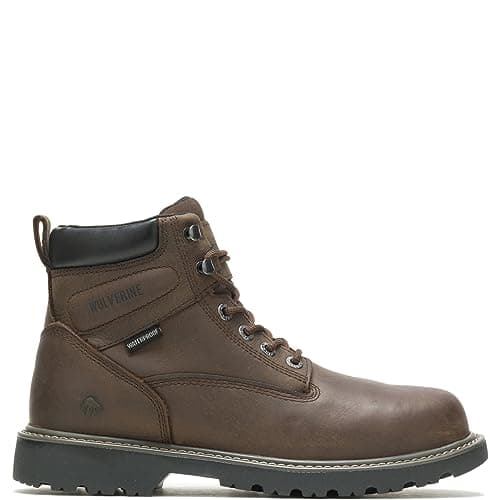 Wolverine Floorhand Waterproof Steel Toe 6" Work Boot Waterproof full-grain leather, a steel toe and an EH rating in a light cemented build — the value pick when the job is wet and the budget is fixed. | Budget pick — cheapest waterproof steel toe here | Steel safety toeASTM F2413 M/I/C EH rated steel toe |
Tap a row to jump to that boot's full write-up. The price column goes straight to Amazon.
Why six inches is the default
Boot height is a trade-off between coverage and ankle movement. A six-inch shaft reaches just above the ankle bone, which is enough to keep debris, sparks and splashes out of the boot and enough leather to support the joint laterally, while still letting the ankle dorsiflex through a normal stride. That is why it is the height most work boots are built in and the height most trades default to.
Going taller buys you coverage and rigidity and costs you mobility, heat and weight. Going shorter buys you mobility and costs you everything else. 6-inch vs 8-inch work boots is the full comparison; this page assumes you have made that decision and want the shortlist.
How these five were chosen
1. A published safety toe designation. Every pick names its cap material and an ASTM F2413 classification.
2. Five different reasons to buy. There is no point in five versions of the same boot — this list is deliberately one welted boot, one cold-weather boot, one support-first boot, one flexible boot and one budget boot.
3. Construction stated. Whether a boot can be resoled changes what it costs over five years more than anything else on the spec sheet.
4. A live price at the last refresh.
The five, side by side
| Toe | Waterproof | Construction | Widths | |
|---|---|---|---|---|
| Thorogood 804-4200 | Steel, ASTM F2413-18 + EH | No, and none claimed | Goodyear storm welt — resoleable | D and EE, 7-14 |
| Timberland PRO Boondock | Composite, F2412-18a / F2413-18 I/C, EH | Membrane meets ASTM F1671-07 | Not published as a welt | Not published |
| Carhartt Ground Force | Composite, ASTM F2413-24 EH | Storm Defender membrane | Not published as a welt | Not published |
| Wolverine Overpass | CarbonMAX composite, ASTM F2413 M/I/C EH | Waterproof leather upper | Not published as a welt | Not published |
| Wolverine Floorhand | Steel, ASTM F2413 M/I/C EH | Waterproof full-grain leather | Lightweight cement | Not published |
Thorogood 804-4200 — the one that lasts
A Goodyear storm welt, a MAXWear wedge, a composite shank, a removable shock-absorbing footbed, ASTM F2413-18 with EH, and D and EE widths in every size from 7 to 14. It is made in the USA with USA and globally sourced components, and the sole can be replaced, which no other boot on this page can claim.
The honest cons. Not waterproof. The flat wedge is the wrong sole outdoors. It needs a genuine break-in period, and the unlined upper has to be conditioned or it will crack at the flex point.
Wrong for: wet or broken ground.
Timberland PRO Boondock — the cold-weather six
The specification worth paying for here is the outsole compound: Timberland PRO publishes the all-weather TPU unit as formulated to stay flexible in variable weather, which matters because most rubber compounds stiffen as the temperature drops and a stiff sole grips worse. On top of that there is a waterproof membrane meeting ASTM F1671-07, a composite cap tested to F2412-18a and F2413-18 for impact and compression, and EH protection under F2413-18 and F2892-18.
The honest cons. It is a heavy boot for a six-inch — if weight is your first criterion, a work hiker will be noticeably lighter — and Timberland does not publish a weight or a width run for it.
Wrong for: anyone counting grams.
Carhartt Ground Force — the support-first six
A waterproof composite toe with an APMA-accepted footbed, a lug outsole with ladder-lock grooves, an outsole compound rated heat-resistant to 300°C / 572°F, a cap meeting ASTM F2413-24 EH and an outsole meeting ASTM F3445-24 SR. If arch support is the reason you are shopping, this is the boot on this page built around it.
The honest cons. Not published as welted. The deep lug outsole carries grit onto finished floors, which is a real problem in some trades.
Wrong for: finished-floor work.
Wolverine Overpass — the one that bends
A waterproof CarbonMAX composite toe on a dual-compound rubber and PU outsole with a nylon shank, rated ASTM F2413 M/I/C EH. Wolverine builds this boot to move with the foot rather than brace it, which is the right call for trades that squat, kneel and climb in and out of things all day.
The honest cons. Flexibility is the opposite of what pole and ladder work needs — a nylon shank will fold over a rung. Not published as welted.
Wrong for: anyone standing on a rung for hours.
The budget pick
Wolverine's Floorhand is a waterproof full-grain leather upper, a steel toe, an EH rating and a moisture-wicking lining in a light cemented build, and it was the cheapest waterproof safety boot in this registry at the last price refresh. For a wet job with a fixed budget it is the honest answer.
What you give up is durability on abrasive ground. A light cemented outsole does not survive roofing grit, concrete rubble or scrap for long, and when it goes the boot goes with it. If your ground is abrasive, spend the money on the Thorogood instead and have the sole replaced twice.
Fitting a six-inch boot
Heel hold is the test. Six inches of shaft is not enough leverage to hold a heel down on its own, so if the boot slips at the heel it will keep slipping, and heel slip is what makes blisters. Lace through the top eyelet, stand up, and walk — if your heel lifts more than a fraction, the boot is wrong, and sizing down is not the fix because it just pushes your toes into the cap.
Fit at the end of the day in the socks you actually work in, and leave about a thumb's width in front of the longest toe. The work boot sizing guide has the measuring method; do work boots run big covers the sizing pattern across these brands.
When six inches is not enough
Three situations call for a taller boot: standing in water or mud deeper than the shaft, welding or grinding where sparks fall into the boot opening, and pole or ladder work where you want the shaft to immobilise the ankle on purpose. Best 8-inch work boots covers that end of the range, and best logger boots covers the climbing specialists.
The picks in full
#1 — A 6-inch boot you can have rebuilt
Thorogood American Heritage 6" Moc Toe Safety Toe MAXWear Wedge (804-4200)
A Goodyear-welted, USA-built wedge with a steel toe and an EH rating — the default answer for anyone who stands on a flat hard floor and wants a boot that can be resoled.
Published specifications
- Toe
- Steel safety toe, moc toe shape
- Safety rating
- ASTM F2413-18, EH
- Upper
- Tobacco full-grain American leather, unlined
- Outsole
- MAXWear Wedge slip-resistant outsole
- Midsole / shank
- Rubber midsole with composite shank
- Construction
- Goodyear storm welt
- Waterproof
- Not waterproof
- Insulation
- Not insulated
- Widths
- D and EE, sizes 7-14 in both widths
- Weight
- Not published on the manufacturer page
- Made in
- Made in USA with USA and globally sourced components
Specifications read from Thorogood product page (804-4200) on 2026-09-27. We have not worn this boot.
What works
- Goodyear storm welt is a resoleable construction, not a disposable one
- Flat wedge spreads load evenly on concrete instead of concentrating it under a heel
- Unlined upper breaks in to the foot rather than around a liner
- EE width is stocked across the whole size run, not just the middle
What doesn't
- Not waterproof and not insulated — the unlined upper soaks
- A flat wedge gives up bite on mud, gravel and ladder rungs
- Manufacturer publishes no weight figure, so weight comparisons are guesswork
Who this is wrong for
Anyone working outdoors on soft or uneven ground, or in standing water. The wedge has no lugs to bite and the unlined upper is not waterproof.
Sizing
Thorogood's moc-toe last is widely reported to run large; owner reviews consistently suggest going a half size down from a measured Brannock length. D and EE are both stocked, so take the width rather than sizing up for room.
#2 — Wet and cold ground
Timberland PRO Boondock 6" Composite Toe Waterproof Work Boot
A waterproof composite-toe boot whose all-weather TPU outsole is specifically formulated to stay flexible when it gets cold — which is when most rubber compounds stop gripping.
Published specifications
- Toe
- Asymmetrical composite safety toe, non-metallic
- Safety rating
- Meets ASTM F2412-18a and ASTM F2413-18 for impact (I) and compression (C); EH protection meets ASTM F2413-18 and ASTM F2892-18; waterproof membrane meets ASTM F1671-07
- Upper
- Leather upper with a waterproof membrane
- Outsole
- All-weather TPU outsole, formulated to stay flexible in variable weather; slip-, oil- and abrasion-resistant
- Midsole / shank
- Not published as a shank specification
- Construction
- Not published as a welt construction
- Waterproof
- Waterproof, membrane meets ASTM F1671-07
- Insulation
- Not insulated in this version; Timberland PRO also lists a 600g insulated Boondock
- Weight
- Not published on the manufacturer page
Specifications read from Timberland PRO Boondock composite toe specifications (Timberland PRO product listing) on 2026-09-27. We have not worn this boot.
What works
- The cold-weather outsole claim is specific and testable, not marketing mush
- Composite toe does not conduct cold into the toes
- Waterproofing is stated against a named ASTM test method
What doesn't
- Well known among owners as a heavy boot for its class
- A membrane plus a thick outsole is a warm combination in summer
- Not a resoleable construction
Who this is wrong for
Anyone counting grams. If weight is your first criterion, a composite-toe work hiker will be noticeably lighter.
Sizing
The Boondock's toe box is generous but the instep is snug; owners with a high instep frequently report needing a wide. Fit it with the insole you intend to use.
#3 — Arch support as the deciding factor
Carhartt Ground Force Waterproof 6" Composite Toe Work Boot
A waterproof composite toe with a heat-rated outsole and an APMA-accepted footbed — the pick when arch support is the deciding factor.
Published specifications
- Toe
- Composite safety toe — lightweight, non-metallic, non-conductive
- Safety rating
- Composite safety toe meeting ASTM F2413-24 EH; outsole meets ASTM F3445-24 SR
- Upper
- Leather upper with Storm Defender waterproof breathable protection and FastDry lining
- Outsole
- Oil- and slip-resistant non-marking rubber lug outsole with a defined heel and ladder-lock grooves; heat-resistant to 300°C / 572°F
- Midsole / shank
- Carhartt LWD midsole with a nylon shank
- Construction
- Not published as a welt construction
- Waterproof
- Waterproof — Storm Defender
- Insulation
- Not insulated in this model
Specifications read from Carhartt product page (Ground Force waterproof 6" composite toe) on 2026-09-27. We have not worn this boot.
What works
- Both an EH and an SR designation, each against a named ASTM standard
- APMA acceptance is third-party, not marketing
- Ladder-lock grooves are a specific feature for a specific job
What doesn't
- Not resoleable
- Lug outsole tracks debris onto finished floors
- No published weight
Who this is wrong for
Finished-floor work. A deep lug outsole carries grit into rooms you are being paid not to damage.
Sizing
Carhartt's Ground Force last is fairly generous. If you plan to use your own orthotic, pull the INSITE footbed out first — the two together will crowd the boot.
#4 — Flex rather than bracing
Wolverine Overpass CarbonMAX 6" Composite Toe Waterproof Boot
A waterproof CarbonMAX composite toe on a flexible dual-compound outsole — the Overpass is built to move with the foot rather than brace it.
Published specifications
- Toe
- CarbonMAX composite safety toe, non-metallic
- Safety rating
- ASTM F2413 M/I/C EH rated composite toe
- Upper
- Premium waterproof leather with an abrasion-resistant toe
- Outsole
- Dual-compound rubber and PU outsole
- Midsole / shank
- Advanced comfort PU midsole with a nylon shank
- Construction
- Not published as a welt construction
- Waterproof
- Waterproof leather upper
- Insulation
- Not insulated
Specifications read from Wolverine product page (Overpass CarbonMAX 6") on 2026-09-27. We have not worn this boot.
What works
- Genuinely flexible for a safety-toe boot
- Waterproof leather rather than a membrane-only claim
- Removable footbed, so an orthotic actually fits
What doesn't
- A nylon shank is not a climbing shank
- PU midsoles eventually crumble with age and disuse
- Not resoleable
Who this is wrong for
Pole and ladder work. A flexible boot with a nylon shank is the wrong platform for standing on a rung all day.
Sizing
The Overpass runs close to true. Because the footbed is removable, fit it with your orthotic in place if you use one — swapping later changes the fit by a half size in feel.
#5 — Budget pick — cheapest waterproof steel toe here
Wolverine Floorhand Waterproof Steel Toe 6" Work Boot
Waterproof full-grain leather, a steel toe and an EH rating in a light cemented build — the value pick when the job is wet and the budget is fixed.
Published specifications
- Toe
- Steel safety toe
- Safety rating
- ASTM F2413 M/I/C EH rated steel toe
- Upper
- Waterproof full-grain leather with a moisture-wicking mesh lining
- Outsole
- Rubber outsole
- Midsole / shank
- Rubber midsole with a nylon shank
- Construction
- Lightweight cement construction
- Waterproof
- Waterproof full-grain leather upper
- Insulation
- Not insulated
Specifications read from Wolverine product page (Floorhand waterproof steel toe 6") on 2026-09-27. We have not worn this boot.
What works
- Waterproof and EH-rated at the bottom of the price range
- Light for a waterproof steel toe
- Removable footbed
What doesn't
- Cement construction — not resoleable
- Thin outsole wears quickly on abrasive surfaces
- No published weight
Who this is wrong for
Anyone on abrasive ground — roofing grit, concrete rubble, scrap. A light cemented outsole will not survive it long.
Sizing
Runs true to size for most owners. The mesh lining means no stretch, so anything tight on day one stays tight.
Frequently asked questions
Is a 6-inch work boot enough ankle support?
For most trades, yes — six inches reaches above the ankle bone and supports the joint laterally while still letting it flex. What a taller shaft adds is rigidity and coverage, which helps on rungs, in deep mud and around falling sparks, and costs mobility and heat everywhere else.
How is boot height measured?
From the bottom of the heel to the top of the shaft at the back, so a six-inch boot sits roughly at or just above the ankle bone on most people. Makers measure on a sample size, usually a men's 9 or 10, so a size 13 of the same model will read slightly taller and a size 7 slightly shorter.
Are 6-inch boots cooler than 8-inch boots?
Yes, meaningfully. Less upper means less insulation and a larger opening for moist air to leave, and the shaft is the part of a boot that traps heat. If your problem is heat rather than debris, going shorter helps more than any lining claim.
Which 6-inch work boot can be resoled?
Of the five here, only the Thorogood 804-4200, which is built on a Goodyear storm welt. The two Wolverines, the Carhartt and the Timberland PRO are all replace-rather-than-rebuild constructions.
Is a 6-inch boot OK for construction?
It is the most common height on a construction site. The exceptions are concrete pours and anywhere you stand in slurry, where a taller waterproof boot keeps the mix out, and welding, where sparks drop into a six-inch opening. The construction work boots guide covers the trade-specific picks.
Sources
- ASTM F2413 protective footwear standard — technical summary — Label format, the mandatory I and C designations, and each optional code
- OSHA 29 CFR 1910.136 — Foot protection — The federal rule itself: when protective footwear is required, and which consensus standards it accepts
- CCOHS — Safety Footwear (CSA protective footwear markings) — Canada's own reading of the CSA marks: the green triangle means sole puncture protection with a Grade 1 protective toecap, the blue rectangle means a Grade 1 toecap with no puncture-resistant sole
Read next
6-Inch vs 8-Inch Work Boots
Settle the height question before you shop the list.
Best 8-Inch Work Boots
When coverage and rigidity matter more than mobility.
Best Work Boots for Construction
The trade where six inches is the default.
Best Work Boots for the Money
The same field, ranked on cost per year instead of height.