Brands
Red Wing vs BRUNT
A century-old width run against a fit system you can change your mind about.
Disclosure: product links on this page go to Amazon. As an Amazon Associate we earn from qualifying purchases, at no extra cost to you. It does not change which boots we recommend or the order they appear in — here is the full disclosure.
Quick picks
| # | Product | Best for | Toe & rating | Price |
|---|---|---|---|---|
| 1 |  Red Wing King Toe 6-inch Waterproof Safety Toe Boot (#2240) Red Wing publishes 44% more toe room than a standard work boot and stocks four widths — the clearest answer on this list for a foot that fights every other last. | Red Wing: four widths, most toe room | Non-metallic safety toeASTM F2413-24, I/C, EH | |
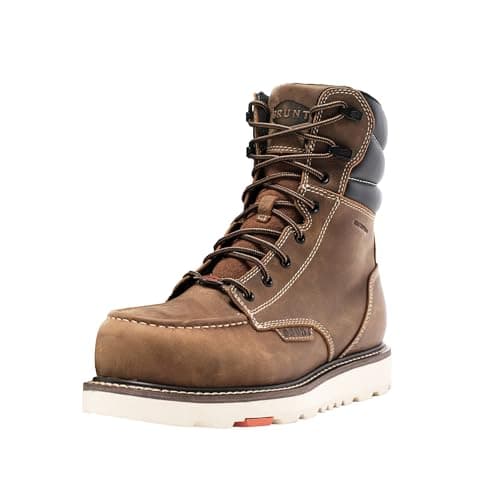
| 2 | BRUNT The Marin Waterproof Composite Toe Work Boot A waterproof composite toe with an adjustable width system — BRUNT's SWITCH-FIT lets one boot run regular or relaxed, which is a genuinely useful answer for a foot between widths. | BRUNT: change the width after you buy | Composite safety toe — non-metallic, 15% lighter than steel per BRUNTComposite safety toe with electrical hazard (EH) protection; outsole and midsole meet ASTM D471-06 903 oil and isooctane chemical resistance | |
| 3 | 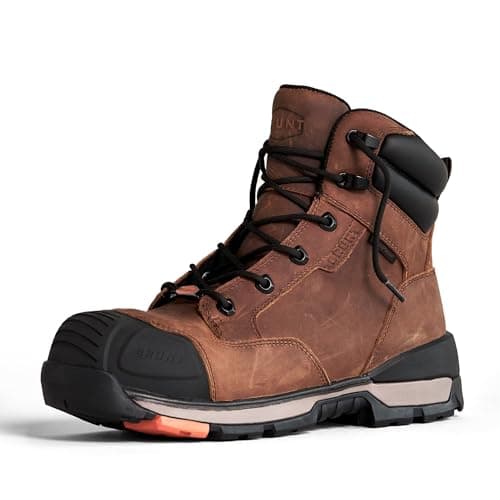 BRUNT The Perkins Waterproof Composite Toe Work Boot The Perkins swaps the Marin's profile for a defined 90-degree heel — the version to buy if you spend the day on ladders, scaffolding or roof edges. | BRUNT: a 90° heel for climbing | Composite safety toe, non-metallicComposite safety toe with electrical hazard (EH) protection; slip- and oil-resistant |
Tap a row to jump to that boot's full write-up. The price column goes straight to Amazon.
The comparison
| Red Wing King Toe 2240 | BRUNT The Marin | |
|---|---|---|
| Fit | Four stocked widths: Narrow (B), Regular (D), Wide (EE), Wide (H) | One boot, SWITCH-FIT adjustable between D and EE |
| Toe room | 44% more than a standard work boot, per Red Wing | Not published as a figure |
| Safety designation | ASTM F2413-24, I/C, EH — published in full | Composite toe with EH; the full designation line is not published |
| Toe and shank | Non-metallic toe and non-metallic shank | Composite toe, 15% lighter than steel per BRUNT; PU midsole |
| Outsole | TPU-PU Galaxy | Rubber, heat-resistant to 572°F / 300°C |
| Chemical resistance | Not published | Outsole and midsole meet ASTM D471-06 903 oil and isooctane resistance |
| Construction | Direct attach — Red Wing states this model is not resoleable | Not published as a welt — treat as non-resoleable |
| Weight | 3 lb 7 oz, published | Not published |
| Where you buy it | Dealer network and company stores, with in-person fitting | Direct to consumer |
Two answers to the fit problem, and when each wins
Red Wing's answer is inventory. Carrying four widths in a work boot is expensive and almost nobody else does it — a narrow B at one end and an H at the other covers feet the rest of the category simply ignores. If you have a genuinely narrow foot, or a genuinely wide one, this is not a close contest: BRUNT's adjustment runs D to EE and stops there.
BRUNT's answer is adjustability, and it wins a different case. If you are between widths, or your feet swell through the shift, or you simply do not know which width you are, SWITCH-FIT removes the guess — and removes the return. BRUNT's own fitting advice is to use the system before changing size, which is the right instruction: most people who think they need a longer boot need the relaxed setting on the same length.
There is a buying-channel consequence here too. Red Wing has stores with people who measure feet; BRUNT is direct-to-consumer, so your fitting happens at home with a return label as the backstop.
What each brand publishes
Red Wing publishes more, and on a safety product that matters. The 2240 page carries a complete ASTM F2413-24 I/C EH designation, a stated weight, the width run and the toe-room figure. Red Wing also states plainly that the boot is direct-attach and not resoleable, which is a brand choosing to publish an inconvenient fact.
BRUNT publishes less of the marking line — it states composite-toe and EH compliance without the full designation string — but it publishes things Red Wing does not: an outsole heat rating of 572°F, and chemical resistance cited against the named ASTM D471-06 903 method. If your floor has hot slag or caustics on it, that is specific information you cannot get from the Red Wing page.
Price and what it buys
Red Wing lists the 2240 at $254.99. BRUNT's model is to cut the retail layer out, which is most of the price gap. Neither boot is resoleable, so in both cases you are buying a replace-it boot and the question is how many shifts it lasts rather than how many rebuilds it takes.
That is worth sitting with, because the Red Wing name carries an expectation of a boot for life. Resoling work boots explains which constructions can be rebuilt, and Red Wing's own welted Heritage lines are the ones that qualify — the King Toe 2240 is not among them.
Buy Red Wing if…
Your foot is outside D or EE and always has been. You want to be measured in person before spending $250. You need the full ASTM designation line in writing for a site submission. Or you need a genuinely wide toe box — nobody else in this registry publishes a number for it.
Buy BRUNT if…
You are between D and EE and tired of guessing. You work around heat or chemical splash and want those properties specified rather than implied. Or the price difference matters more than the retail experience, which for a boot you will replace rather than rebuild is a reasonable position.
Where both lose
Neither can be resoled, and that is the real limitation of both these boots at their price points. If you want a boot you keep for a decade, the welted and stitchdown makers are the comparison to run instead — Red Wing vs Thorogood and BRUNT vs Thorogood both put each brand against a Goodyear welt, and why work boots are so expensive explains what construction actually costs.
The picks in full
Illustrative category photo — not this model#1 — Red Wing: four widths, most toe room
Red Wing King Toe 6-inch Waterproof Safety Toe Boot (#2240)
Red Wing publishes 44% more toe room than a standard work boot and stocks four widths — the clearest answer on this list for a foot that fights every other last.
Published specifications
- Toe
- Non-metallic safety toe
- Safety rating
- ASTM F2413-24, I/C, EH
- Upper
- Waterproof waxed nubuck leather
- Outsole
- TPU-PU Galaxy outsole
- Midsole / shank
- Non-metallic shank
- Construction
- Direct attach — Red Wing states this model is not resoleable
- Waterproof
- Yes — Red Wing waterproofing system
- Insulation
- Not stated on the product page
- Widths
- Narrow (B), Regular (D), Wide (EE), Wide (H)
- Weight
- 3 lb 7 oz
- Made in
- Globally sourced
Specifications read from Red Wing Shoes product page (#2240) on 2026-09-27. We have not worn this boot.
What works
- Genuinely the widest toe box on this list, and Red Wing publishes the figure
- Four widths including an H, which almost nobody stocks
- Fully non-metallic underfoot — relevant for metal detectors
- Red Wing publishes an actual weight, which most brands do not
What doesn't
- Direct-attach construction: Red Wing states it is not resoleable
- Expensive for a boot you cannot rebuild
- The square King Toe silhouette is divisive
Who this is wrong for
Anyone buying for longevity through resoling. Red Wing's own page says no on this model — look at their welted Heritage lines instead.
Sizing
The King Toe last adds room at the toes, not at the heel. If you have a narrow heel, take the B width before you size down; sizing down to fix heel slip will crowd the toes the boot was built to free.
#2 — BRUNT: change the width after you buy
BRUNT The Marin Waterproof Composite Toe Work Boot
A waterproof composite toe with an adjustable width system — BRUNT's SWITCH-FIT lets one boot run regular or relaxed, which is a genuinely useful answer for a foot between widths.
Published specifications
- Toe
- Composite safety toe — non-metallic, 15% lighter than steel per BRUNT
- Safety rating
- Composite safety toe with electrical hazard (EH) protection; outsole and midsole meet ASTM D471-06 903 oil and isooctane chemical resistance
- Upper
- Leather upper, waterproof on this version
- Outsole
- BRUNT rubber outsole — oil- and slip-resistant, heat-resistant to 572°F / 300°C
- Midsole / shank
- BRUNT polyurethane (PU) midsole
- Construction
- Not published as a welt construction on this model
- Waterproof
- Waterproof
- Insulation
- Not insulated
- Widths
- SWITCH-FIT adjustable between regular (D) and relaxed (EE)
Specifications read from BRUNT Workwear product page (The Marin waterproof comp toe) on 2026-09-27. We have not worn this boot.
What works
- The width system solves a real fitting problem rather than inventing one
- Chemical resistance cited to a named ASTM test method
- PU midsole outlasts EVA
What doesn't
- BRUNT does not publish a full ASTM F2413 designation string on the page
- Direct-to-consumer only, so trying before buying is harder
- Not a welted construction
Who this is wrong for
Anyone who needs to see the complete ASTM designation before they buy. BRUNT states EH and composite-toe compliance but publishes less of the marking line than KEEN or Red Wing.
Sizing
Use SWITCH-FIT before you change size. Most people who think they need a longer boot actually need the relaxed (EE) setting on the same length.
#3 — BRUNT: a 90° heel for climbing
BRUNT The Perkins Waterproof Composite Toe Work Boot
The Perkins swaps the Marin's profile for a defined 90-degree heel — the version to buy if you spend the day on ladders, scaffolding or roof edges.
Published specifications
- Toe
- Composite safety toe, non-metallic
- Safety rating
- Composite safety toe with electrical hazard (EH) protection; slip- and oil-resistant
- Upper
- Waterproof leather upper
- Outsole
- BRUNT rubber outsole with a 90° heel — high-heat resistant to 572°F / 300°C
- Midsole / shank
- BRUNT polyurethane (PU) midsole
- Construction
- Not published as a welt construction on this model
- Waterproof
- Waterproof
- Insulation
- Not insulated
- Widths
- SWITCH-FIT adjustable between regular (D) and relaxed (EE)
Specifications read from BRUNT Workwear product page (The Perkins waterproof comp toe) on 2026-09-27. We have not worn this boot.
What works
- The 90° heel breast is the single most useful feature for climbing work
- Same width-adjustment system as the Marin
- Non-metallic toe, so no cold conduction
What doesn't
- A defined heel is less comfortable than a wedge on flat concrete
- Full ASTM designation string is not published on the page
- Not resoleable
Who this is wrong for
Flat-floor trades. If your day is spent on level concrete, the heel breast concentrates load where a wedge would spread it.
Sizing
Same last and SWITCH-FIT system as the Marin, so size the same. Check heel hold specifically — a defined heel makes heel lift more noticeable.
Frequently asked questions
Is Red Wing better than BRUNT?
For fit range and published specifications, yes — Red Wing stocks four widths including a narrow B and publishes a complete ASTM F2413-24 I/C EH designation plus a toe-room figure. BRUNT wins on price, on adjustable width for a foot between D and EE, and on publishing an outsole heat rating and named chemical-resistance test.
Can Red Wing King Toe boots be resoled?
Not the 2240. Red Wing states on its own product page that this model is direct-attach construction and not resoleable. Red Wing's welted Heritage lines can be rebuilt through the company's repair service; this work model cannot.
What is BRUNT SWITCH-FIT?
A width-adjustment system that lets one boot run regular (D) or relaxed (EE) after purchase. BRUNT's own advice is to change the setting before changing size — most people who think they need a longer boot actually need the relaxed width at the same length.
Which is better for wide feet, Red Wing or BRUNT?
Red Wing, if you are wider than EE. It stocks an H width on the King Toe 2240 and publishes 44% more toe room than a standard work boot. BRUNT's adjustment tops out at EE, so it covers the between-widths case rather than the genuinely wide one.
Sources
- ASTM F2413 protective footwear standard — technical summary — Label format, the mandatory I and C designations, and each optional code
- Red Wing Shoes — repairs and resoling — Red Wing's own factory repair service