Safety Toes
Are Steel Toe Boots Comfortable?
Yes, if the boot fits around the cap. Almost never, if it does not.
Disclosure: product links on this page go to Amazon. As an Amazon Associate we earn from qualifying purchases, at no extra cost to you. It does not change which boots we recommend or the order they appear in — here is the full disclosure.
Quick picks
| # | Product | Best for | Toe & rating | Price |
|---|---|---|---|---|
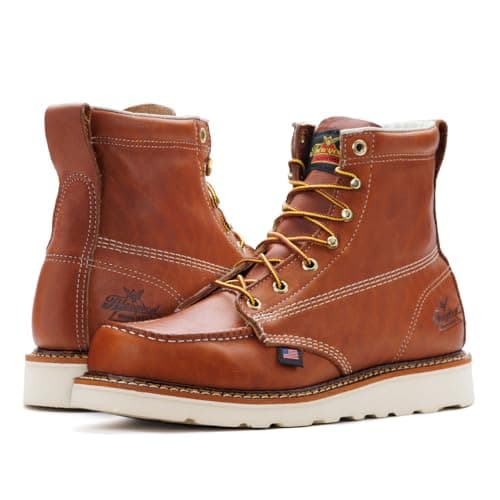
| 1 | Thorogood American Heritage 6" Moc Toe Safety Toe MAXWear Wedge (804-4200) A Goodyear-welted, USA-built wedge with a steel toe and an EH rating — the default answer for anyone who stands on a flat hard floor and wants a boot that can be resoled. | The comfort default on flat floors | Steel safety toe, moc toe shapeASTM F2413-18, EH | |
| 2 |  Red Wing King Toe 6-inch Waterproof Safety Toe Boot (#2240) Red Wing publishes 44% more toe room than a standard work boot and stocks four widths — the clearest answer on this list for a foot that fights every other last. | Most published toe room | Non-metallic safety toeASTM F2413-24, I/C, EH | |
| 3 | 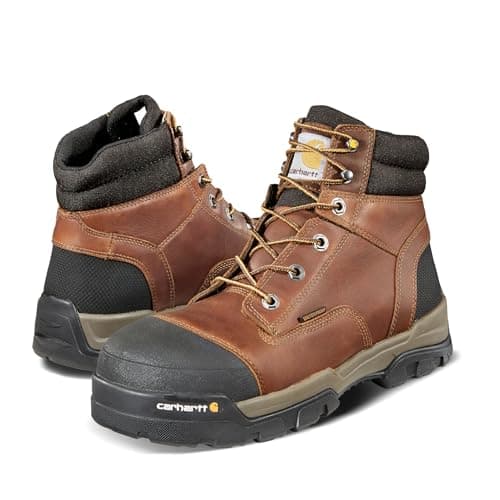 Carhartt Ground Force Waterproof 6" Composite Toe Work Boot A waterproof composite toe with a heat-rated outsole and an APMA-accepted footbed — the pick when arch support is the deciding factor. | Support underfoot, non-metallic cap | Composite safety toe — lightweight, non-metallic, non-conductiveComposite safety toe meeting ASTM F2413-24 EH; outsole meets ASTM F3445-24 SR | |
| 4 | 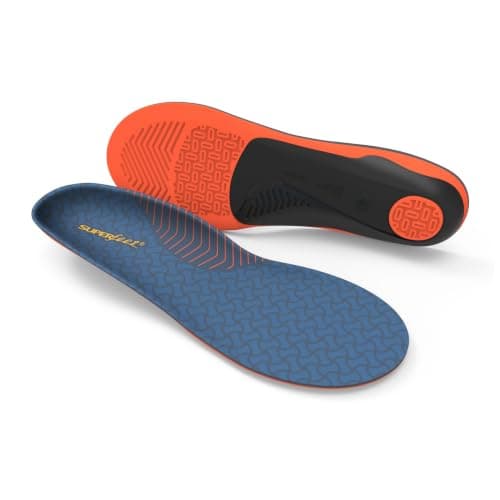 Superfeet Work Cushion Insoles A work-specific insole with a tapered forefoot designed to fit under a safety toe — the detail most aftermarket insoles get wrong. | Fixing a boot you already own | Not applicable — insoleNot applicable to the Work Cushion; Superfeet's Work PR model is tested to ASTM F2413 and EN ISO 22568-4:2021 Type PS |
Tap a row to jump to that boot's full write-up. The price column goes straight to Amazon.
The short version
The cap is a rigid shell sitting over the toes. You should never touch it. If you can feel it — on top of the toes, across the knuckles, at the end of the foot — the boot is the wrong length or the wrong volume, and that is a fitting problem rather than a steel problem. People who swap to a composite cap and report instant relief have usually also changed last, size or brand at the same time.
That said, steel does two things the other cap materials do not, and both are real: it conducts heat away from the toes in cold weather, and it weighs more at the far end of your leg. Steel toe vs composite toe puts numbers on the weight question. Neither of those is pain, though. They are reasons to choose a different cap, not reasons a correctly fitted steel toe hurts.
The four things that actually cause steel-toe pain
| Cause | Where you feel it | The fix |
|---|---|---|
| Boot too short | Toes hitting the front of the cap, worst going downstairs or downhill | Size up a half and refit; the cap cannot flex out of the way |
| Toe box too shallow or too narrow | Pressure across the top of the toes, numbness after an hour | A wider width or a higher-volume last, not a longer boot |
| Dead or thin midsole | Heel and arch ache late in the shift, on hard floors | A supportive insole, or a boot built for standing |
| Heel slip | Blisters at the heel, toes jammed forward into the cap | Lace lock at the ankle, a thicker sock, or a narrower heel last |
Length is the one people get wrong
In an unrated boot, a short fit is uncomfortable. In a safety-toe boot it is a genuine injury risk, because the cap does not give. Your toes reach an immovable wall, and every step downhill drives them into it. The standard advice — about a thumb's width of room in front of the longest toe — exists precisely because of the cap.
Measure at the end of the day when your feet are at their largest, fit in the sock you actually work in, and walk a slope if the store has one. How steel toe boots should fit has the full method, and the sizing guide covers width letters and conversions.
Volume matters more than width letters
Two boots in the same width can have very different amounts of room above the toes, because the cap's height varies by last. This is what people mean when they say one brand's steel toe is comfortable and another's is not — the cap is the same standard, the space under it is not.
Red Wing publishes the clearest figure in this registry: it states the King Toe last gives 44% more toe room than a standard work boot, and stocks four widths including a narrow B and a wide H. That is the direct answer for a foot that fights every other last. Thorogood stocks D and EE across sizes 7 to 14 on the American Heritage, and BRUNT's SWITCH-FIT changes a single boot between D and EE after purchase.
The floor decides as much as the boot
NIOSH's review of prolonged standing at work reports consistent increases in low back pain, physical fatigue, muscle pain and leg swelling, with clear detrimental effects from around three hours of standing onward. Concrete makes that worse because it returns the full impact of every step. None of it is caused by the cap, and all of it gets blamed on the cap.
On a flat hard floor, a wedge outsole spreads load across the whole sole instead of concentrating it at a heel breast, which is why the welted wedge is the default comfort recommendation here. Best work boots for concrete is the longer version of that argument.
New boots are stiff; that is not the cap either
Leather needs to mold, and welted and stitchdown boots need more of it than cemented ones. Danner says plainly that the stitchdown Bull Run needs real break-in. What a break-in period cannot do is add length or volume: if the cap presses on day one, it will press on day thirty. How to break in steel toe boots covers the distinction, and the no-break-in page lists the builds that skip it.
If it still hurts after the fit is right
Then the midsole is the next place to look, and it is the cheapest thing to change. A supportive aftermarket insole replaces the thin factory foam that most mid-priced boots ship with, and it costs a fraction of a new pair — worth trying before you write the boot off. Best insoles for work boots goes through the options.
If none of that helps, the cap may genuinely be the wrong material for your job rather than for your foot: cold work and long walking distances both favour a non-metallic cap. Most comfortable steel toe work boots is the roundup, and are steel toe boots safe for your feet answers the related worry about long-term damage.
The picks in full
#1 — The comfort default on flat floors
Thorogood American Heritage 6" Moc Toe Safety Toe MAXWear Wedge (804-4200)
A Goodyear-welted, USA-built wedge with a steel toe and an EH rating — the default answer for anyone who stands on a flat hard floor and wants a boot that can be resoled.
Published specifications
- Toe
- Steel safety toe, moc toe shape
- Safety rating
- ASTM F2413-18, EH
- Upper
- Tobacco full-grain American leather, unlined
- Outsole
- MAXWear Wedge slip-resistant outsole
- Midsole / shank
- Rubber midsole with composite shank
- Construction
- Goodyear storm welt
- Waterproof
- Not waterproof
- Insulation
- Not insulated
- Widths
- D and EE, sizes 7-14 in both widths
- Weight
- Not published on the manufacturer page
- Made in
- Made in USA with USA and globally sourced components
Specifications read from Thorogood product page (804-4200) on 2026-09-27. We have not worn this boot.
What works
- Goodyear storm welt is a resoleable construction, not a disposable one
- Flat wedge spreads load evenly on concrete instead of concentrating it under a heel
- Unlined upper breaks in to the foot rather than around a liner
- EE width is stocked across the whole size run, not just the middle
What doesn't
- Not waterproof and not insulated — the unlined upper soaks
- A flat wedge gives up bite on mud, gravel and ladder rungs
- Manufacturer publishes no weight figure, so weight comparisons are guesswork
Who this is wrong for
Anyone working outdoors on soft or uneven ground, or in standing water. The wedge has no lugs to bite and the unlined upper is not waterproof.
Sizing
Thorogood's moc-toe last is widely reported to run large; owner reviews consistently suggest going a half size down from a measured Brannock length. D and EE are both stocked, so take the width rather than sizing up for room.
Illustrative category photo — not this model#2 — Most published toe room
Red Wing King Toe 6-inch Waterproof Safety Toe Boot (#2240)
Red Wing publishes 44% more toe room than a standard work boot and stocks four widths — the clearest answer on this list for a foot that fights every other last.
Published specifications
- Toe
- Non-metallic safety toe
- Safety rating
- ASTM F2413-24, I/C, EH
- Upper
- Waterproof waxed nubuck leather
- Outsole
- TPU-PU Galaxy outsole
- Midsole / shank
- Non-metallic shank
- Construction
- Direct attach — Red Wing states this model is not resoleable
- Waterproof
- Yes — Red Wing waterproofing system
- Insulation
- Not stated on the product page
- Widths
- Narrow (B), Regular (D), Wide (EE), Wide (H)
- Weight
- 3 lb 7 oz
- Made in
- Globally sourced
Specifications read from Red Wing Shoes product page (#2240) on 2026-09-27. We have not worn this boot.
What works
- Genuinely the widest toe box on this list, and Red Wing publishes the figure
- Four widths including an H, which almost nobody stocks
- Fully non-metallic underfoot — relevant for metal detectors
- Red Wing publishes an actual weight, which most brands do not
What doesn't
- Direct-attach construction: Red Wing states it is not resoleable
- Expensive for a boot you cannot rebuild
- The square King Toe silhouette is divisive
Who this is wrong for
Anyone buying for longevity through resoling. Red Wing's own page says no on this model — look at their welted Heritage lines instead.
Sizing
The King Toe last adds room at the toes, not at the heel. If you have a narrow heel, take the B width before you size down; sizing down to fix heel slip will crowd the toes the boot was built to free.
#3 — Support underfoot, non-metallic cap
Carhartt Ground Force Waterproof 6" Composite Toe Work Boot
A waterproof composite toe with a heat-rated outsole and an APMA-accepted footbed — the pick when arch support is the deciding factor.
Published specifications
- Toe
- Composite safety toe — lightweight, non-metallic, non-conductive
- Safety rating
- Composite safety toe meeting ASTM F2413-24 EH; outsole meets ASTM F3445-24 SR
- Upper
- Leather upper with Storm Defender waterproof breathable protection and FastDry lining
- Outsole
- Oil- and slip-resistant non-marking rubber lug outsole with a defined heel and ladder-lock grooves; heat-resistant to 300°C / 572°F
- Midsole / shank
- Carhartt LWD midsole with a nylon shank
- Construction
- Not published as a welt construction
- Waterproof
- Waterproof — Storm Defender
- Insulation
- Not insulated in this model
Specifications read from Carhartt product page (Ground Force waterproof 6" composite toe) on 2026-09-27. We have not worn this boot.
What works
- Both an EH and an SR designation, each against a named ASTM standard
- APMA acceptance is third-party, not marketing
- Ladder-lock grooves are a specific feature for a specific job
What doesn't
- Not resoleable
- Lug outsole tracks debris onto finished floors
- No published weight
Who this is wrong for
Finished-floor work. A deep lug outsole carries grit into rooms you are being paid not to damage.
Sizing
Carhartt's Ground Force last is fairly generous. If you plan to use your own orthotic, pull the INSITE footbed out first — the two together will crowd the boot.
#4 — Fixing a boot you already own
Superfeet Work Cushion Insoles
A work-specific insole with a tapered forefoot designed to fit under a safety toe — the detail most aftermarket insoles get wrong.
Published specifications
- Toe
- Not applicable — insole
- Safety rating
- Not applicable to the Work Cushion; Superfeet's Work PR model is tested to ASTM F2413 and EN ISO 22568-4:2021 Type PS
- Upper
- Not applicable
- Outsole
- Not applicable
- Midsole / shank
- Not applicable
- Construction
- Molded work insole with a tapered forefoot
- Waterproof
- Not applicable
- Insulation
- Not applicable
Specifications read from Superfeet product page (Work Cushion) on 2026-09-27. We have not worn this boot.
What works
- The tapered forefoot is the difference between fitting and jamming
- A cheap way to extend a boot whose factory footbed has packed out
- Puncture-resistant and ESD variants exist for specific hazards
What doesn't
- Takes up volume — a snug boot becomes a tight one
- Does not fix a boot that is the wrong shape
- Needs replacing periodically like any insole
Who this is wrong for
A boot that already fits tightly. Pull the factory footbed out before adding this, and if it still crowds, the boot is too small.
Sizing
Trim to the factory footbed, not to the boot. Use the old insole as the template and cut once.
Frequently asked questions
Are steel toe boots uncomfortable?
Not inherently. A correctly fitted safety-toe boot should never let you feel the cap at all. Discomfort almost always traces to a boot that is too short, too shallow over the toes, or built on a thin midsole for the surface you stand on — all fitting and specification problems rather than properties of steel.
Why do my steel toe boots hurt the top of my toes?
That is the cap pressing down, which means the toe box is too shallow or too narrow for your foot, or the boot is a half size short so your toes have slid forward under the cap. Going up in width or choosing a higher-volume last fixes it; a longer boot on the same last often does not.
Are composite toe boots more comfortable than steel?
They are lighter and they do not conduct cold, which matters over a long shift and in winter. They are not inherently roomier — the cap shape and the last decide that, not the material. If a composite boot felt better in the store, compare the lasts before concluding it was the cap material.
How long does it take to get used to steel toe boots?
Leather break-in typically runs one to three weeks of partial-day wear, longer for welted and stitchdown builds. But break-in only softens the upper; it cannot add length or height over the toes. If the cap presses on the first day, it will still press after break-in and the boot is the wrong fit.
Sources
- ASTM F2413 protective footwear standard — technical summary — Label format, the mandatory I and C designations, and each optional code
- NIOSH Science Blog — Prolonged Standing at Work — NIOSH's own summary of the evidence on prolonged standing
- OSHA 29 CFR 1910.136 — Foot protection — The federal rule itself: when protective footwear is required, and which consensus standards it accepts
Read next
How Should Steel Toe Boots Fit
The fitting method that prevents almost all of this.
Most Comfortable Steel Toe Work Boots
The boots that get the fit around the cap right.
Are Steel Toe Boots Safe for Your Feet
The related worry: whether a cap causes long-term damage.
Best Insoles for Work Boots
The cheapest fix when the fit is right and the floor is hard.