Soles
Best Heavy-Duty Work Boots
When the hazard assessment asks for more than a toe cap.
Disclosure: product links on this page go to Amazon. As an Amazon Associate we earn from qualifying purchases, at no extra cost to you. It does not change which boots we recommend or the order they appear in — here is the full disclosure.
Quick picks
| # | Product | Best for | Toe & rating | Price |
|---|---|---|---|---|
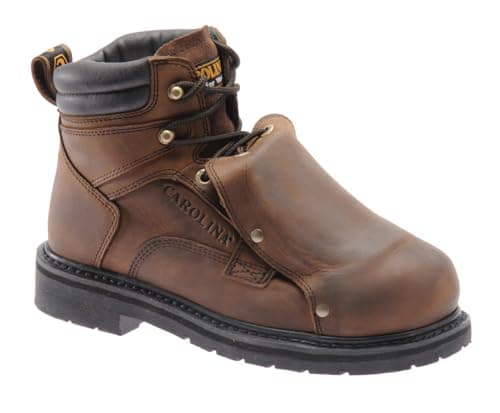
| 1 | Carolina Metpro 6" Wide Steel Toe External Met Guard (599) A welted steel toe with a leather-wrapped external met guard on a heat-resisting Vibram outsole — the heaviest-duty combination here, and one of the few met-guard boots that publishes the Mt class, the EH test and the outsole's heat rating together. | The most protection published on one spec sheet | Steel safety toe cap behind a heavy plastic, dense-foam-lined external metatarsal guardASTM F2413-18 safety toe; ASTM F2413-18 Class Mt75 metatarsal impact resistance; electrical-hazard rated, tested to withstand 18,000 volts at 60Hz for one minute | |
| 2 | 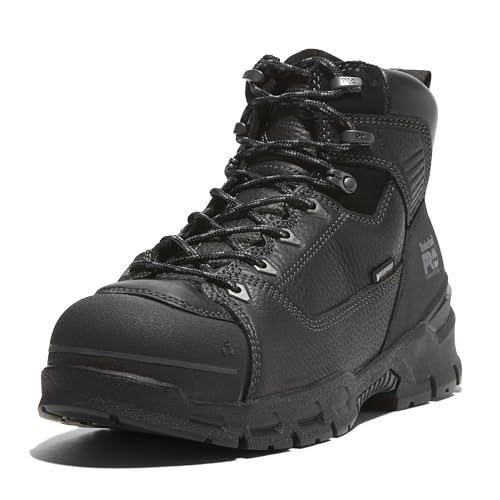 Timberland PRO Endurance EV 6" Composite Toe Puncture-Resistant Waterproof Work Boot (A5YXU) The best-documented puncture-resistant boot on this page: a metal-free cap, a PR plate, a waterproof full-grain upper and an outsole rated heat-resistant to 1,000 degrees F, all published line by line. | Puncture plate plus a waterproof upper | Composite safety toe, described by Timberland PRO as metal freeASTM F2413 protective toe classification, ASTM F2413 puncture resistant standards and the ASTM F2413 electrical hazard standard; CSA Grade 1, CAN/CSA-Z195-02 puncture resistance, and CAN/CSA-Z195 protection from open circuits up to 18,000 volts | |
| 3 | 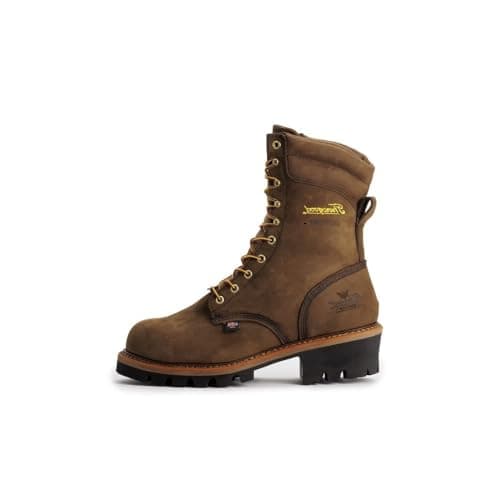 Thorogood Logger Series 9" Waterproof Steel Toe, Stud Horse (804-3555) A USA-built, storm-welted 9-inch logger with a Vibram outsole over a Vibram rubber midsole and a steel shank — the Vibram boot to buy if you intend to have it resoled rather than replaced. | Heavy duty you can have rebuilt | Steel safety toe, round toeASTM F2413-18 safety toe with EH; oil-resisting, slip-resistant outsole | |
| 4 | 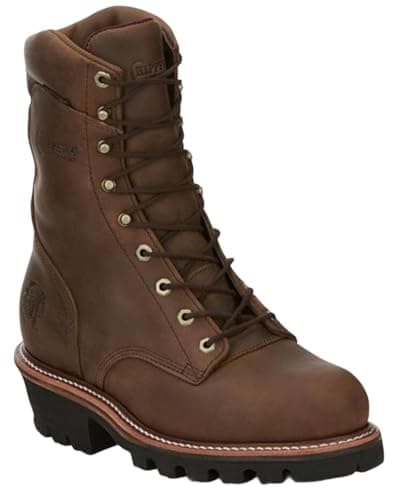 Chippewa Super DNA 9" Waterproof Steel Toe Logger (59407) A Goodyear leather-welted logger on Vibram's Tacoma TC4 Plus — a self-cleaning compound Chippewa specifies for high heat, which is the reason to choose it over a generic lug. | Heat-rated Vibram on broken ground | Steel safety toeSteel toe with EH; Chippewa states it meets ASTM F2413 safety footwear standards | |
| 5 | 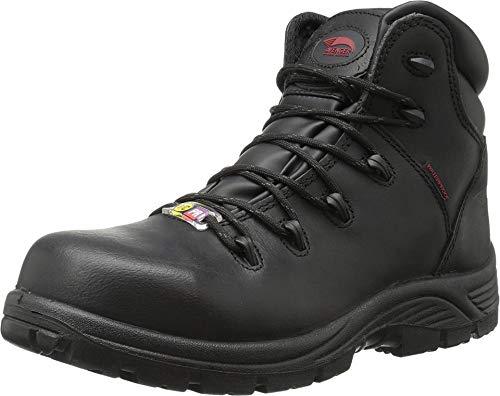 Avenger Framer 6" Composite Toe Puncture-Resistant Waterproof Work Boot (A7223) The cheapest honest route to an ASTM F2413 puncture-resistant sole, and the only pick here that is metal-free end to end — a Lenzi textile plate instead of a steel one, under a composite cap. | Budget pick — cheapest ASTM puncture-resistant boot here | Composite safety toe; Avenger states the boot is 100% metal freeASTM F2413 protective toe classification, ASTM F2413 puncture resistant standards and the ASTM F2413 electrical hazard standard. Mark II slip results published as wet 0.50, oily 0.45, oily wet 0.40 |
Tap a row to jump to that boot's full write-up. The price column goes straight to Amazon.
What "heavy duty" has to mean
"Heavy duty" is a marketing phrase on most listings, so this page uses a working definition: a boot that publishes protection beyond the toe cap. In practice that is one or more of four things — a metatarsal guard with an Mt class, a puncture-resistant plate tested to ASTM F2413, an outsole with a published heat rating, or rebuildable construction so the boot survives the environment that is destroying it.
A thick upper and an aggressive photo are not protection. Under OSHA 29 CFR 1910.136 the employer's hazard assessment decides what your footwear has to do, and the answer is written in classifications, not adjectives.
How these five were chosen
1. A classification beyond the toe. Mt75, a PR plate, or a published outsole heat rating. Four of these five publish two or more.
2. The hazard is named. Impact on the instep, nails underfoot, heat, abrasion — each pick is here for a specific hazard rather than general toughness.
3. Construction stated. On a boot being used hard, the difference between rebuildable and disposable is most of the cost.
4. A live price. Heavy-duty models go in and out of stock constantly; every pick had a buyable offer at the last refresh.
The five, on what each maker certifies
| Beyond-the-toe protection | Outsole | Construction | |
|---|---|---|---|
| Carolina Metpro 6" | ASTM F2413-18 Class Mt75 external met guard; EH tested at 18,000 V, 60 Hz, 1 minute | Vibram, heat-resistant to a minimum of 500°F | Welt construction — resoleable |
| Timberland PRO Endurance EV 6" | ASTM F2413 puncture-resistant plate; CSA Grade 1; CAN/CSA-Z195 to 18,000 V | Heat resistant up to 1,000°F, defined climbing heel | Not published as a welt |
| Thorogood Logger 804-3555 9" | ASTM F2413-18 steel toe with EH; steel shank; waterproof membrane | Vibram outsole over a Vibram rubber midsole | Goodyear storm welt — resoleable |
| Chippewa Super DNA 9" | Steel toe with EH; steel shank; waterproof membrane | Vibram Tacoma TC4 Plus, self-cleaning, specified for high heat | Goodyear leather welt — resoleable |
| Avenger Framer 6" | ASTM F2413 puncture-resistant Lenzi plate; 100% metal free; Mark II slip results published | Oil- and slip-resistant polyurethane | Lace-to-toe hiker build, no welt |
Carolina Metpro — the instep answer
Most met-guard boots publish the toe rating and go quiet about the guard. Carolina publishes the Mt75 class, the EH test conditions and the outsole's heat rating on the same page: a steel cap behind a heavy plastic, dense-foam-lined external guard, a Vibram heat-resisting outsole rated to a minimum of 500°F, a steel shank, Crazy Horse leather, welt construction, in D and 2E from 7 to 14.
An external guard is the version employers specify when they want to see the protection. It is also the version that catches on things.
The honest cons. Carolina does not publish waterproofing or insulation for this model, so treat it as neither. It is heavy, and the external guard makes kneeling and crawling awkward — Rocky's internal-met Worksmart is the answer there, and metatarsal guard boots compares the two guard styles properly.
Wrong for: anyone covering distance, or working in standing water.
Timberland PRO Endurance EV — the best-documented plate
This is the most thoroughly published boot in the registry. A composite cap Timberland PRO describes as metal free, an ASTM F2413 puncture-resistant plate, CSA Grade 1 and CAN/CSA-Z195-02 puncture resistance, CAN/CSA-Z195 protection from open circuits up to 18,000 volts, a waterproof full-grain upper with Ever-Guard abrasion-resistant leather, an outsole rated heat resistant up to 1,000°F with a defined climbing heel, a fiberglass shank, and a published 2.30 lbs at size 10M, in D and EE from 7 to 15.
The honest cons. The cap is composite but the puncture plate is not metal-free in the detector sense — if a gate is your problem, the Avenger is the answer. Not a welted boot. No insulation.
Wrong for: metal-detector sites and cold outdoor work.
Thorogood 804-3555 — heavy duty that comes back from the cobbler
A USA-built 9-inch logger on a Goodyear storm welt, with a Vibram outsole over a Vibram rubber midsole, a steel shank, a waterproof membrane, ASTM F2413-18 with EH, in D and EEE from 8 to 15. On a boot that is being destroyed by the ground rather than by the job, the welt is the heavy-duty feature: you replace the consumable and keep the upper.
The honest cons. It is the most expensive boot here, it is a logger, so the raised heel is wrong on a slab, and it is not insulated — the 804-3554 is the same boot with 400 grams of Thinsulate if you need that.
Wrong for: flat indoor floors.
Chippewa Super DNA — the compound
A Goodyear leather-welted waterproof 9-inch logger on Vibram's Tacoma TC4 Plus, which Chippewa specifies as a technical self-cleaning sole for outdoor terrain and high-heat environments. Steel toe with EH, steel shank, Dri-Lex lining, orthotic insole, E and EEE.
The self-cleaning pattern is the reason to pick it over the Thorogood if your ground is sticky rather than simply rough. A sole that clears itself keeps its edges working.
The honest cons. The narrowest width is an E. No published weight. Not insulated in this version.
Wrong for: narrow feet.
The budget pick
Avenger's Framer is the cheapest route in this registry to an ASTM F2413 puncture-resistant sole, and it does it with a Lenzi textile plate instead of a steel one, under a composite cap, so Avenger states the boot is 100% metal free. It also publishes its Mark II slip results — wet 0.50, oily 0.45, oily wet 0.40 — which almost nobody does. Waterproof membrane, D and EE in sizes 7 to 17, a published 2.5 lbs per pair at size 10.
What you give up: no insulation at all, no welt, and a textile plate is a different thing from a steel one in a crush rather than a puncture. For nails, swarf and scrap underfoot on a metal-detector site, it is the most capable cheap boot here. Best puncture-resistant work boots goes deeper on plates.
Heavy duty is heavy, and that has a cost
Every one of these boots is heavier than a standard safety boot, and weight on the foot is the thing you feel at hour nine. NIOSH and CDC work on prolonged standing is clear that cumulative load matters, so buying more protection than your hazard assessment calls for is not a free safety margin — it is fatigue you are choosing.
The honest order of operations: get the hazard assessment, buy the classification it names, and buy the lightest boot that carries it. If nothing can land on your instep, you do not need a met guard; best lightweight work boots is the other direction.
The picks in full
#1 — The most protection published on one spec sheet
Carolina Metpro 6" Wide Steel Toe External Met Guard (599)
A welted steel toe with a leather-wrapped external met guard on a heat-resisting Vibram outsole — the heaviest-duty combination here, and one of the few met-guard boots that publishes the Mt class, the EH test and the outsole's heat rating together.
Published specifications
- Toe
- Steel safety toe cap behind a heavy plastic, dense-foam-lined external metatarsal guard
- Safety rating
- ASTM F2413-18 safety toe; ASTM F2413-18 Class Mt75 metatarsal impact resistance; electrical-hazard rated, tested to withstand 18,000 volts at 60Hz for one minute
- Upper
- Dark brown Crazy Horse leather upper, Taibrelle lined
- Outsole
- Vibram heat-resisting rubber outsole, rated heat-resistant to a minimum of 500°F
- Midsole / shank
- Steel shank; removable AG7 polyurethane footbed
- Construction
- Welt construction
- Waterproof
- Not published on the product page — treat this model as not waterproof
- Insulation
- Not published on the product page — treat as uninsulated
- Widths
- D and 2E, sizes 7-14
Specifications read from Carolina Shoe product page (Metpro 6" wide steel toe external met guard, 599) on 2026-10-16. We have not worn this boot.
What works
- Steel handles repeated heavy impact better than any composite
- Publishes the Mt class, the EH test condition and the outsole heat rating — most met-guard listings publish none of the three
- Welt construction, so the heaviest-duty boot here is also the one you can have resoled
What doesn't
- Heavy, and it feels it by hour ten
- An external guard catches on ladder rungs and is awkward to kneel in
- No waterproof membrane published, so this is a dry-site boot
Who this is wrong for
Anyone who walks long distances or works in standing water. This is a boot for standing in one hazardous dry place, not covering ground.
Sizing
Between the steel cap and the guard, the front half of this boot has the least spare volume of anything here, and the guard changes how the instep laces: loose over the guard, tight at the ankle. Take the 2E before you take a longer size. Fit it in the afternoon, when your feet are at their largest.
#2 — Puncture plate plus a waterproof upper
Timberland PRO Endurance EV 6" Composite Toe Puncture-Resistant Waterproof Work Boot (A5YXU)
The best-documented puncture-resistant boot on this page: a metal-free cap, a PR plate, a waterproof full-grain upper and an outsole rated heat-resistant to 1,000 degrees F, all published line by line.
Published specifications
- Toe
- Composite safety toe, described by Timberland PRO as metal free
- Safety rating
- ASTM F2413 protective toe classification, ASTM F2413 puncture resistant standards and the ASTM F2413 electrical hazard standard; CSA Grade 1, CAN/CSA-Z195-02 puncture resistance, and CAN/CSA-Z195 protection from open circuits up to 18,000 volts
- Upper
- Premium waterproof full-grain leather with Ever-Guard abrasion-resisting leather, a gusseted suede tongue and molded TPU at toe and heel
- Outsole
- Outsole heat resistant up to 1,000 degrees F, with insulating bottoms for secondary electrical-hazard protection in dry conditions and a defined heel for climbing
- Midsole / shank
- Puncture-resisting plate, Anti-Fatigue Technology conical polyurethane midsole, fiberglass shank and a removable comfort insole
- Construction
- Not published as a welt construction
- Waterproof
- Waterproof
- Insulation
- Not published on the product page — treat as uninsulated
- Widths
- Medium (D) and Wide (EE), sizes 7-15
- Weight
- 2.30 lbs average at size 10M
Specifications read from Lehigh Safety Shoes product page (Timberland PRO Endurance EV CSA composite toe puncture-resisting waterproof, A5YXU) on 2026-11-09. We have not worn this boot.
What works
- Publishes more of its own specification than anything else on this page
- Waterproof and puncture-resistant together, which narrows the field to almost nothing
- Dual ASTM and CSA certification, so it travels across the border
- The defined heel genuinely catches a rung
What doesn't
- The plate is metallic even though the toe cap is not, so this is not a metal-free boot
- No welt, so no resole
- Uninsulated, despite being sold into the Canadian market
Who this is wrong for
Anyone who has to pass a metal detector. The cap is composite but the puncture plate is not — the Avenger is the metal-free answer.
Sizing
Timberland PRO's work last is roomy through the forefoot and the EV's gusseted tongue takes up slack over a high instep. Order your measured length; the toe box does not need extra.
#3 — Heavy duty you can have rebuilt
Thorogood Logger Series 9" Waterproof Steel Toe, Stud Horse (804-3555)
A USA-built, storm-welted 9-inch logger with a Vibram outsole over a Vibram rubber midsole and a steel shank — the Vibram boot to buy if you intend to have it resoled rather than replaced.
Published specifications
- Toe
- Steel safety toe, round toe
- Safety rating
- ASTM F2413-18 safety toe with EH; oil-resisting, slip-resistant outsole
- Upper
- Stud Horse full-grain American leather
- Outsole
- Vibram outsole with a reinforced tip stitch
- Midsole / shank
- Vibram rubber midsole with a steel shank and a removable Ultimate Shock Absorption footbed
- Construction
- Goodyear storm welt
- Waterproof
- Waterproof membrane
- Insulation
- Not published on this model; an insulated 400g version (804-3554) is listed separately
- Widths
- D and EEE, sizes 8-15
- Weight
- Not published on the manufacturer page
- Made in
- Made in USA with USA and globally sourced components
Specifications read from Thorogood product page (Logger Series 9" steel toe, 804-3555) on 2026-09-29. We have not worn this boot.
What works
- Storm welt plus a Vibram sole is the combination that actually justifies paying for Vibram
- EEE width across the whole size run
- A steel shank under a raised heel is the right structure for rungs and pitches
- USA built at a price well under the handmade makers
What doesn't
- A 9-inch logger is heavy and slow to put on
- Thorogood publishes no weight figure
- Logger tread is wrong on finished floors and carries grit indoors
Who this is wrong for
Flat indoor floors. A raised logger heel on a slab concentrates load exactly where you do not want it — take the wedge instead.
Sizing
Thorogood's logger last is less generous than its moc last. Take your measured length here rather than the half size down people recommend for the 804-4200.
#4 — Heat-rated Vibram on broken ground
Chippewa Super DNA 9" Waterproof Steel Toe Logger (59407)
A Goodyear leather-welted logger on Vibram's Tacoma TC4 Plus — a self-cleaning compound Chippewa specifies for high heat, which is the reason to choose it over a generic lug.
Published specifications
- Toe
- Steel safety toe
- Safety rating
- Steel toe with EH; Chippewa states it meets ASTM F2413 safety footwear standards
- Upper
- Premium waterproof full-grain leather
- Outsole
- Vibram Tacoma TC4 Plus — a technical, self-cleaning sole Chippewa specifies for outdoor terrain and high-heat environments; oil- and slip-resisting
- Midsole / shank
- Steel shank with an orthotic insole
- Construction
- Goodyear leather welt
- Waterproof
- Breathable waterproof membrane with a Dri-Lex lining
- Insulation
- Not published on this version; insulated Super DNA models are listed separately
- Widths
- E and EEE
- Weight
- Not published on the manufacturer page
Specifications read from Chippewa product page (Super DNA 9" waterproof steel toe logger, 59407) on 2026-09-29. We have not worn this boot.
What works
- A named Vibram compound with a stated purpose, not just the logo
- Self-cleaning tread genuinely sheds mud instead of packing it
- A leather welt is the most repairable construction here short of handmade
What doesn't
- No D width — a narrow foot has nothing to buy
- No published weight, and 9-inch loggers are never light
- Heat resistance is irrelevant to most trades and you pay for it anyway
Who this is wrong for
Narrow feet and flat floors. The narrowest width offered is an E, and a logger heel belongs on broken ground, not a slab.
Sizing
Chippewa's logger sizing runs wide by design — an E here is closer to another brand's EE. If you normally wear a D, try a half size down before assuming the width is wrong.
#5 — Budget pick — cheapest ASTM puncture-resistant boot here
Avenger Framer 6" Composite Toe Puncture-Resistant Waterproof Work Boot (A7223)
The cheapest honest route to an ASTM F2413 puncture-resistant sole, and the only pick here that is metal-free end to end — a Lenzi textile plate instead of a steel one, under a composite cap.
Published specifications
- Toe
- Composite safety toe; Avenger states the boot is 100% metal free
- Safety rating
- ASTM F2413 protective toe classification, ASTM F2413 puncture resistant standards and the ASTM F2413 electrical hazard standard. Mark II slip results published as wet 0.50, oily 0.45, oily wet 0.40
- Upper
- Full-grain leather upper, laced to the toe
- Outsole
- Oil- and slip-resistant polyurethane outsole
- Midsole / shank
- Lenzi puncture-resistant plate, stated to meet the ASTM standard, over a nylon shank and a removable dual-density polyurethane footbed
- Construction
- Lace-to-toe hiker build; no welt construction published
- Waterproof
- Waterproof membrane
- Insulation
- Not published on the product page — treat as uninsulated
- Widths
- Medium (D) and Wide (EE), sizes 7-17
- Weight
- 2.5 pounds per pair for a size 10, per the published feature list
Specifications read from Lehigh Safety Shoes product page (Avenger composite toe puncture-resistant waterproof, A7223) on 2026-11-09. We have not worn this boot.
What works
- A non-metallic plate flexes with the sole instead of fighting it
- Metal free throughout, so detectors and cold bridging are both non-issues
- Publishes actual Mark II coefficients rather than the word slip-resistant
- The widest size run on the page, up to 17
What doesn't
- Lehigh's own page contradicts itself on outsole material and on weight — the figures here are the ones in its feature list
- No welt, so the boot is replaced rather than rebuilt
- Lace-to-toe takes longer to put on than a six-eyelet boot
Who this is wrong for
Cold outdoor work — there is no insulation here at all. Also wrong for anyone who wants a rebuildable boot.
Sizing
Lace-to-toe gives more adjustment over the instep than a standard eyelet row, so judge fit by heel hold first. Avenger runs close to true to length.
Frequently asked questions
What makes a work boot heavy duty?
Published protection beyond the toe cap: a metatarsal guard with an Mt class under ASTM F2413, a puncture-resistant plate tested to the same standard, an outsole with a stated heat rating, or rebuildable construction. Thickness and marketing language are not classifications.
Do I need a metatarsal guard?
Only if your employer's hazard assessment under OSHA 29 CFR 1910.136 identifies instep impact — dropped tools, swinging loads, heavy material handling. A met guard adds weight and stiffness across the instep, so it is not a free upgrade.
Is a composite toe heavy duty?
For impact and compression it meets exactly the same ASTM F2413 I/75 C/75 requirement as steel. Where steel still has an edge is repeated heavy strikes on the same cap; non-metallic caps are designed around one serious hit.
Which heavy-duty boots can be resoled?
On this page the Carolina Metpro (welt), the Thorogood 804-3555 (Goodyear storm welt) and the Chippewa Super DNA (Goodyear leather welt). The Timberland PRO Endurance EV and the Avenger Framer are not published as welted and should be treated as replace-rather-than-rebuild.
Will a puncture-resistant plate pass a metal detector?
Only if the plate is non-metallic. The Avenger Framer uses a Lenzi textile plate and Avenger states the boot is 100% metal free. Timberland PRO's Endurance EV has a metal-free cap but the puncture plate is not described that way, so do not assume it will clear a gate.
Sources
- OSHA 29 CFR 1910.136 — Foot protection — The federal rule itself: when protective footwear is required, and which consensus standards it accepts
- ASTM F2413 protective footwear standard — technical summary — Label format, the mandatory I and C designations, and each optional code
- NIOSH Science Blog — Prolonged Standing at Work — NIOSH's own summary of the evidence on prolonged standing
- Carolina Shoe — electrical hazard test conditions — A manufacturer stating the EH test in full: 18,000 volts at 60 Hz for one minute without leakage
Read next
Metatarsal Guard Boots
Internal vs external guards, and which employers accept.
Best Puncture-Resistant Work Boots
If the hazard is underfoot rather than on top.
Best Lug Sole Work Boots
When grip on broken ground is the real requirement.
Best Lightweight Work Boots
The opposite trade-off, for when the hazard does not justify the weight.