Safety Toes
Steel Toe vs Alloy Toe
One is lighter. Neither is warmer, and neither passes a detector.
Disclosure: product links on this page go to Amazon. As an Amazon Associate we earn from qualifying purchases, at no extra cost to you. It does not change which boots we recommend or the order they appear in — here is the full disclosure.
Quick picks
| # | Product | Best for | Toe & rating | Price |
|---|---|---|---|---|
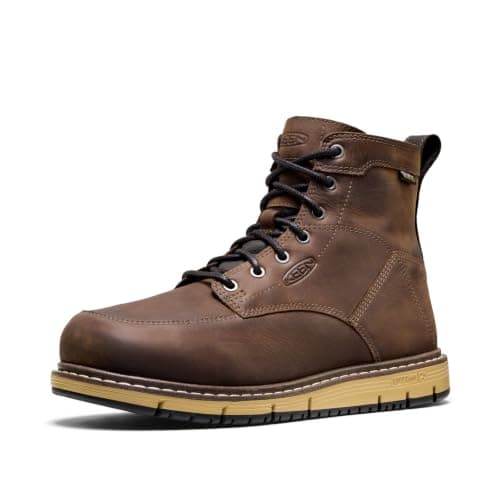
| 1 | KEEN Utility San Jose 6" Aluminum Toe Wedge Work Boot A wedge-sole boot with an asymmetrical aluminum toe that KEEN states weighs 35% less than steel — the lightweight answer for flat-floor trades. | Alloy: the lightest metal cap | Asymmetrical aluminum safety toeASTM F2413-18 M/I/75/C/75 with EH (KEEN Utility safety-toe standard); KEEN states aluminum toes weigh 35% less than steel | |
| 2 | 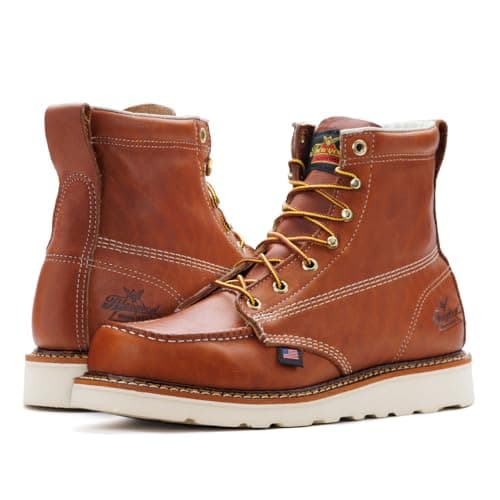 Thorogood American Heritage 6" Moc Toe Safety Toe MAXWear Wedge (804-4200) A Goodyear-welted, USA-built wedge with a steel toe and an EH rating — the default answer for anyone who stands on a flat hard floor and wants a boot that can be resoled. | Steel: welted and resoleable | Steel safety toe, moc toe shapeASTM F2413-18, EH | |
| 3 | 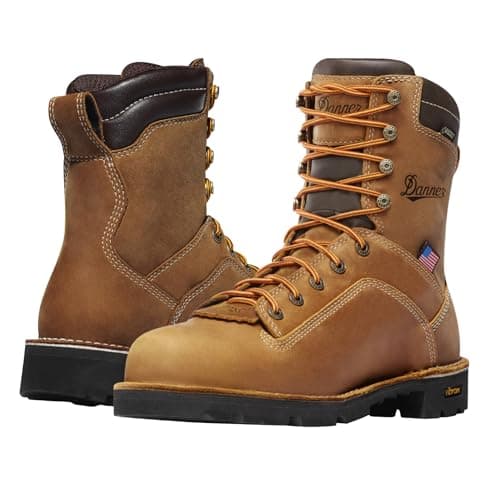 Danner Quarry USA 8" Alloy Toe Work Boot A USA-built 8-inch boot with an alloy toe, a 90-degree heel and a non-linear lug pattern designed to shed debris rather than pack it. | Alloy: recraftable, USA-built | Alloy safety toe — a lighter alternative to steelAlloy safety toe meets or exceeds ASTM F2413-11 I/75 C/75 EH for impact, compression and electrical hazard resistance | |
| 4 | 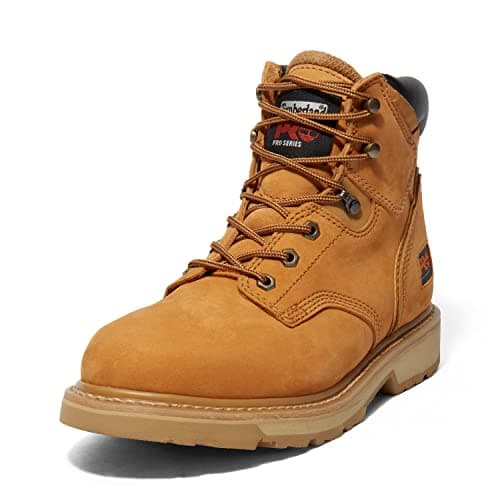 Timberland PRO Pit Boss 6" Steel Toe Work Boot The volume-seller steel toe: asymmetrical cap, EH rating, and a slip- and oil-resistant outsole, in a cement-built boot you replace rather than resole. | Steel: lowest-cost compliance | Asymmetrical steel safety toeElectrical hazard protection; all Timberland PRO safety toes meet ASTM F2413 impact (I) and compression (C) when tested to ASTM F2412 |
Tap a row to jump to that boot's full write-up. The price column goes straight to Amazon.
The comparison
| Steel toe | Alloy toe (aluminum / titanium) | |
|---|---|---|
| ASTM F2413 rating | 75 ft-lb impact, 2,500 lb compression | Identical — 75 ft-lb impact, 2,500 lb compression |
| Weight | The heaviest common cap material | 35% lighter than steel, per KEEN's published figure |
| Cap thickness | Thinnest profile of any cap type | Thicker than steel — no maker here publishes a figure |
| Toe-box room | The most interior room for a given external shape | Marginally less; try both lasts rather than assuming |
| Cold conduction | Conducts heat out of the toes | Also conducts — no meaningful improvement |
| Metal detectors | Triggers | Also triggers |
| Repeated heavy impact | Best of all cap types — deforms and keeps structure | Good; it is metal, but thinner-walled makers vary |
| Price and availability | Cheapest cap, on almost every model | A premium, and a much smaller range of boots |
The standard does not rank materials
ASTM F2413 sets performance thresholds, not materials. A cap passes if it withstands a 75 foot-pound impact and 2,500 pounds of compression while preserving a specified clearance above the toes. Steel, alloy, composite and carbon fiber caps carrying the marking have all passed the same test to the same numbers.
So “is alloy as strong as steel?” has a precise answer: yes, at the certified level. Above that threshold steel keeps more structure under repeated strikes, which is why it survives in scrap, demolition and heavy materials handling. That is a real difference and a narrow one. ASTM F2413 explained decodes the marking line.
Weight is the whole case for alloy
And it is a genuine one. KEEN publishes 35% less weight than steel for its aluminum toes, which is the clearest figure any maker in this registry states, and weight at the far end of the leg is paid for with every step. Over a shift that covers real distance, the cap is the worst place to carry mass.
The honest comparison, though, is not steel against alloy — it is alloy against the non-metallic caps. Carbon fiber is lighter still, at about 15% under steel per KEEN, and composite is lighter than steel too. Both also pass detectors and neither conducts cold. Alloy's remaining advantage over them is metal's tolerance of repeat impact. Best work boots for walking all day goes further into the distance arithmetic.
The trade nobody mentions: toe-box room
Steel is the thinnest cap material for a given rating, which is why the non-steel caps are consistently described as thicker — and a thicker cap takes its thickness out of the inside of the boot. None of the makers in this registry publishes a cap thickness, so treat this as a direction rather than a measurement: for a given external shell, expect a steel cap to leave marginally the most room above and around the toes.
It is a small difference, but it matters in one specific case: if you already fight for toe room — wide forefoot, bunions, hammertoes — the lighter cap is not automatically the more comfortable one. Fit decides that, not the material. How safety-toe boots should fit has the method, and the bunions page covers the hardest version of the problem.
Two things alloy does not fix
Availability is the quiet decider
Steel is on nearly every model a maker sells. Alloy is on very few, and the range has been shrinking for years as composite and carbon took over the lightweight slot — they are lighter or comparable, they pass detectors, and they do not conduct. This registry holds three alloy boots against dozens with steel caps, and that ratio reflects the market rather than our selection.
The practical consequence: if you need a specific feature set — a particular width, a met guard, a wedge sole, a side zip, insulation — you will usually find it in steel and often not in alloy. Choosing alloy means accepting a shorter list. Best alloy toe work boots is that list in full.
Choose steel if…
Something lands on your toes more than once in a career — scrap, demolition, heavy materials, or pipefitting, where flanges and valve bodies are dropped at instep height all day. You want the widest choice of models, widths and features. You are buying on price, since steel is the cheapest cap on almost every boot. Or you need every interior millimeter of toe room you can get. Best steel toe work boots is the roundup.
Choose alloy if…
You cover distance on hard floors and want the weight saving, detectors are irrelevant to your working day, and you want metal's impact behavior rather than a non-metallic cap's. Alloy is a long-established, well-understood cap — it is just a narrow window, and most people who land on it would be equally well served by carbon fiber.
And if neither fits the job
Three common cases point away from both. Cold outdoor work wants a non-metallic cap. Screening wants a fully non-metallic boot. And a job with no hazard assessment requiring protective footwear may not need a cap at all — best soft toe work boots covers when that is genuinely allowed. For the full four-way picture, composite toe vs alloy toe and steel toe vs composite toe are the other two sides of the same triangle.
The picks in full
#1 — Alloy: the lightest metal cap
KEEN Utility San Jose 6" Aluminum Toe Wedge Work Boot
A wedge-sole boot with an asymmetrical aluminum toe that KEEN states weighs 35% less than steel — the lightweight answer for flat-floor trades.
Published specifications
- Toe
- Asymmetrical aluminum safety toe
- Safety rating
- ASTM F2413-18 M/I/75/C/75 with EH (KEEN Utility safety-toe standard); KEEN states aluminum toes weigh 35% less than steel
- Upper
- Leather upper
- Outsole
- Oil- and slip-resistant wedge outsole
- Midsole / shank
- Air-infused KEEN Luftcell midsole
- Construction
- Not published as a welt construction
- Waterproof
- Both a non-waterproof and a waterproof San Jose are listed; check the specific variant
- Insulation
- Not insulated
Specifications read from KEEN Utility product page (San Jose 6" aluminum toe) on 2026-09-27. We have not worn this boot.
What works
- Lightest metal safety toe on this list, with a published figure
- Wedge sole suits concrete and finished floors
- Luftcell midsole is softer underfoot than a plain rubber wedge
What doesn't
- Aluminum is still metal — it conducts cold and trips detectors
- A wedge gives up traction on mud and gravel
- Not resoleable
Who this is wrong for
Cold outdoor work. A metal cap of any kind pulls heat out of the toes; take a composite or carbon toe into the cold.
Sizing
KEEN's roomy forefoot plus a wedge platform means the boot feels wide immediately. Do not read that as too big — check heel hold before you size down.
#2 — Steel: welted and resoleable
Thorogood American Heritage 6" Moc Toe Safety Toe MAXWear Wedge (804-4200)
A Goodyear-welted, USA-built wedge with a steel toe and an EH rating — the default answer for anyone who stands on a flat hard floor and wants a boot that can be resoled.
Published specifications
- Toe
- Steel safety toe, moc toe shape
- Safety rating
- ASTM F2413-18, EH
- Upper
- Tobacco full-grain American leather, unlined
- Outsole
- MAXWear Wedge slip-resistant outsole
- Midsole / shank
- Rubber midsole with composite shank
- Construction
- Goodyear storm welt
- Waterproof
- Not waterproof
- Insulation
- Not insulated
- Widths
- D and EE, sizes 7-14 in both widths
- Weight
- Not published on the manufacturer page
- Made in
- Made in USA with USA and globally sourced components
Specifications read from Thorogood product page (804-4200) on 2026-09-27. We have not worn this boot.
What works
- Goodyear storm welt is a resoleable construction, not a disposable one
- Flat wedge spreads load evenly on concrete instead of concentrating it under a heel
- Unlined upper breaks in to the foot rather than around a liner
- EE width is stocked across the whole size run, not just the middle
What doesn't
- Not waterproof and not insulated — the unlined upper soaks
- A flat wedge gives up bite on mud, gravel and ladder rungs
- Manufacturer publishes no weight figure, so weight comparisons are guesswork
Who this is wrong for
Anyone working outdoors on soft or uneven ground, or in standing water. The wedge has no lugs to bite and the unlined upper is not waterproof.
Sizing
Thorogood's moc-toe last is widely reported to run large; owner reviews consistently suggest going a half size down from a measured Brannock length. D and EE are both stocked, so take the width rather than sizing up for room.
#3 — Alloy: recraftable, USA-built
Danner Quarry USA 8" Alloy Toe Work Boot
A USA-built 8-inch boot with an alloy toe, a 90-degree heel and a non-linear lug pattern designed to shed debris rather than pack it.
Published specifications
- Toe
- Alloy safety toe — a lighter alternative to steel
- Safety rating
- Alloy safety toe meets or exceeds ASTM F2413-11 I/75 C/75 EH for impact, compression and electrical hazard resistance
- Upper
- Full-grain leather upper, triple-stitched with hyper-strong thread
- Outsole
- Oil- and slip-resistant Vibram Quarry rubber outsole with a 90° heel and a non-linear lug pattern for traction and debris release
- Midsole / shank
- Danner Quarry midsole with a removable OrthoLite triple-density footbed
- Construction
- Recraftable stitchdown construction
- Waterproof
- Waterproof — breathable GORE-TEX lining
- Insulation
- Not insulated
- Made in
- Made in Portland, Oregon
Specifications read from Danner product page (Quarry USA 8" alloy toe) on 2026-09-27. We have not worn this boot.
What works
- The debris-release claim is a real design choice, and you feel it in mud
- 90° heel breast is what you want on a rung or a roof edge
- US-built at a price below the handmade makers
What doesn't
- Alloy is metal: it conducts cold and trips detectors
- A GORE-TEX membrane keeps water out but also slows the boot drying through
- 8-inch shaft is slow to get on and off
Who this is wrong for
Flat-floor indoor trades. Lugs on a polished concrete floor are wasted, and they carry grit onto finished surfaces.
Sizing
Danner's work lasts are fairly true to size but firm through the midfoot. If you have a high instep, lace the lower eyelets loosely for the first week.
#4 — Steel: lowest-cost compliance
Timberland PRO Pit Boss 6" Steel Toe Work Boot
The volume-seller steel toe: asymmetrical cap, EH rating, and a slip- and oil-resistant outsole, in a cement-built boot you replace rather than resole.
Published specifications
- Toe
- Asymmetrical steel safety toe
- Safety rating
- Electrical hazard protection; all Timberland PRO safety toes meet ASTM F2413 impact (I) and compression (C) when tested to ASTM F2412
- Upper
- Premium Timberland nubuck leather with a padded top collar
- Outsole
- Heat-, oil-, slip- and abrasion-resistant non-marking rubber outsole
- Midsole / shank
- Timberland PRO 24/7 Comfort Suspension with arch support
- Construction
- Not published as a welt construction — treat as non-resoleable
- Waterproof
- Not waterproof
- Insulation
- Not insulated
- Weight
- Not published on the manufacturer page
Specifications read from Timberland PRO product page (Pit Boss 6" steel toe) on 2026-09-27. We have not worn this boot.
What works
- Cheapest honest path to an ASTM-compliant steel toe on this list
- Asymmetrical cap gives more usable toe room than a symmetrical one
- Non-marking outsole matters on finished floors
What doesn't
- Not a welted boot — when the sole goes, the boot goes
- No waterproofing
- Nubuck scuffs and stains faster than oil-tanned leather
Who this is wrong for
Anyone who wants a boot to last several years and be resoled. This is a replace-it boot, and it is priced like one.
Sizing
Owner reports on the Pit Boss last skew toward roomy; if you are between sizes, the smaller one is usually the safer bet. Try it with the sock you actually wear.
Frequently asked questions
Is an alloy toe as strong as a steel toe?
At the certified level, yes. Both must withstand a 75 foot-pound impact and 2,500 pounds of compression to carry an ASTM F2413 marking, and the standard is a threshold rather than a scale. Above that threshold steel keeps more structure under repeated strikes, which is why it persists in scrap and demolition work.
How much lighter is an alloy toe than steel?
KEEN publishes 35% less weight than steel for its aluminum toes, the clearest figure any maker in this registry states. That makes aluminum the lightest metal cap available, though carbon fiber is lighter still at about 15% under steel per KEEN.
Are alloy toe boots warmer than steel toe boots?
No, and this is the most common misunderstanding about them. Aluminum and titanium are metals and conduct heat away from the toes much as steel does. If cold toes are the problem, a composite or carbon cap is the fix — changing the cap material does more for toe temperature than adding insulation.
Do alloy toe boots set off metal detectors?
Yes. Alloy means aluminum or titanium, both metals, both detectable. If screening is why you are avoiding steel you need a composite or carbon cap and a non-metallic shank — a non-metallic cap over a steel shank still triggers.
Which has more toe room, steel or alloy?
Steel, marginally. Aluminum is less strong per unit thickness, so an alloy cap is built thicker to pass the same test and that thickness comes out of the inside of the boot. The difference is small, but it means the lighter cap is not automatically the roomier or more comfortable one.
Why are alloy toe boots harder to find?
Composite and carbon caps took over the lightweight slot. They are lighter or comparable in weight, they pass metal detectors and they do not conduct cold, so makers moved their lightweight ranges across. Choosing alloy means accepting a much shorter list of models, widths and features.
Sources
- KEEN Utility — aluminum toe collection and ASTM compliance — KEEN's published ASTM F2413-18 M/I/75/C/75 EH designation and the 35%-lighter aluminum claim
- ASTM F2413 protective footwear standard — technical summary — Label format, the mandatory I and C designations, and each optional code
- What changed in ASTM F2413-18 — Why the Class 50 tier and the numeric suffix disappeared from the marking