Brands
Timberland PRO vs KEEN Utility
One builds to the middle of the market. The other builds for a wide foot.
Disclosure: product links on this page go to Amazon. As an Amazon Associate we earn from qualifying purchases, at no extra cost to you. It does not change which boots we recommend or the order they appear in — here is the full disclosure.
Quick picks
| # | Product | Best for | Toe & rating | Price |
|---|---|---|---|---|
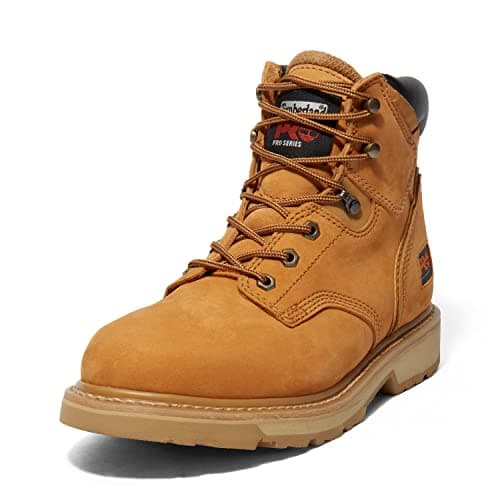
| 1 | Timberland PRO Pit Boss 6" Steel Toe Work Boot The volume-seller steel toe: asymmetrical cap, EH rating, and a slip- and oil-resistant outsole, in a cement-built boot you replace rather than resole. | Timberland PRO: the cheapest compliant steel toe | Asymmetrical steel safety toeElectrical hazard protection; all Timberland PRO safety toes meet ASTM F2413 impact (I) and compression (C) when tested to ASTM F2412 | |
| 2 | 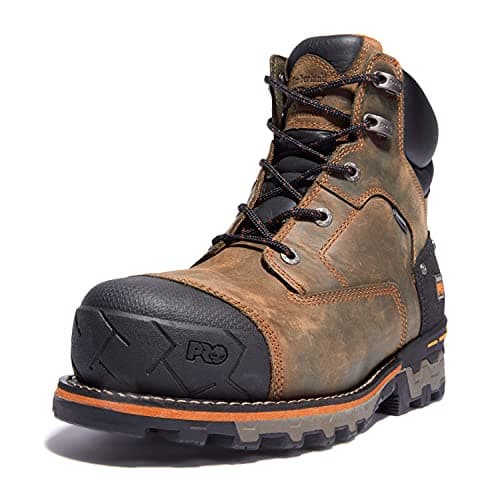 Timberland PRO Boondock 6" Composite Toe Waterproof Work Boot A waterproof composite-toe boot whose all-weather TPU outsole is specifically formulated to stay flexible when it gets cold — which is when most rubber compounds stop gripping. | Timberland PRO: wet and cold ground | Asymmetrical composite safety toe, non-metallicMeets ASTM F2412-18a and ASTM F2413-18 for impact (I) and compression (C); EH protection meets ASTM F2413-18 and ASTM F2892-18; waterproof membrane meets ASTM F1671-07 | |
| 3 | 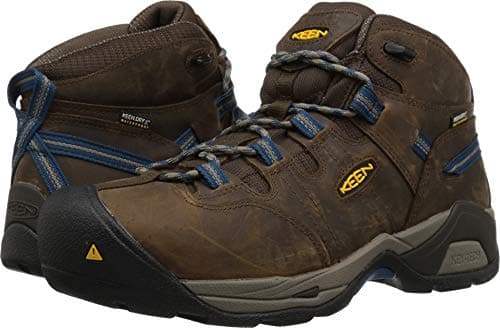 KEEN Utility Detroit XT Mid Steel Toe Waterproof Work Boot A waterproof steel-toe boot built on a hiking-inspired fit, with KEEN's underfoot support plate — the pick for anyone whose feet hate a traditional work-boot last. | KEEN: a hiking-boot fit, sealed | Steel safety toeKEEN Utility safety toe footwear is tested to ASTM F2413-18 M/I/75/C/75 with EH protection on applicable styles | |
| 4 | 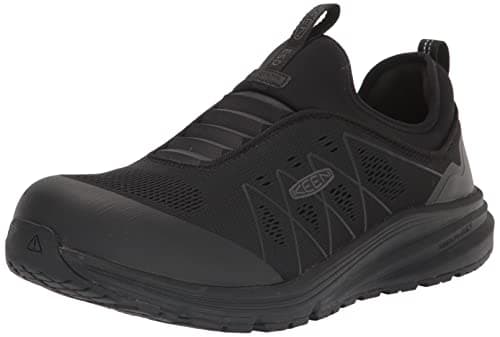 KEEN Utility Vista Energy Shift Carbon-Fiber Toe Work Sneaker A safety-toe work sneaker with a midsole KEEN rates at up to 50% energy return — for warehouse and plant floors where you cover distance rather than terrain. | KEEN: the lightest rated option here | Carbon-fiber safety toe, non-metallicKEEN Utility safety toe tested to ASTM F2413-18 M/I/75/C/75; the ESD version adds an electrostatic dissipative outsole |
Tap a row to jump to that boot's full write-up. The price column goes straight to Amazon.
What each brand is actually selling
Timberland PRO is the volume occupational line of a very large footwear company, and that shapes everything: a last built to the middle of the market, broad retail distribution, and prices that start lower than almost anything comparable. What it does unusually well is publish test methods. The Boondock listing names ASTM F2412-18a and F2413-18 for impact and compression, F2413-18 and F2892-18 for electrical hazard, and F1671-07 for the waterproof membrane. That is four named standards where most brands write “meets ASTM.”
KEEN Utility came into work boots from hiking and outdoor footwear, and it sells that difference deliberately: lasts that run wide through the forefoot, asymmetrical caps shaped left and right rather than domed, and the lightest cap materials in the category. KEEN publishes a full designation string — ASTM F2413-18 M/I/75/C/75 with EH — and a specific claim that its aluminum toes weigh 35% less than steel and its carbon-fiber toes roughly 15% less.
The comparison
| Timberland PRO | KEEN Utility | |
|---|---|---|
| Fit philosophy | Middle-of-market work last; asymmetrical caps on most models | Hiking-derived, deliberately wide forefoot |
| Cap materials | Steel and composite across the range | Steel, aluminum and carbon fiber, with published weight claims |
| ASTM disclosure | Names individual test methods, including F1671-07 and F2892-18 | Publishes the full M/I/75/C/75 EH designation string |
| Signature technology | Anti-Fatigue inverted-cone footbed geometry | KEEN.DRY membrane, KEY-TECH FLEX plate, ReGEN midsole |
| Construction | Not published as welted — treat as non-resoleable | Not published as welted — not resoleable |
| Entry price point | Lowest in this comparison (Pit Boss) | Higher — $190 list on the Detroit XT |
| Weakest point | Nubuck scuffs; the Boondock is heavy for its class | EVA midsoles compress; flex plate is wrong for ladder work |
Fit is the real decision
This comparison is unusual in that the deciding factor is not price or durability but shape. If a standard work boot has always felt narrow across the ball of your foot, or you have been sizing up to buy width, KEEN is the brand built for you — the lasts run wide by design and the asymmetrical caps put the extra height over the big toe where it is needed instead of across a dome.
If a conventional last fits you fine, that advantage disappears and you are paying for it. KEEN's own weakness is the mirror image: a narrow foot will get heel lift in a KEEN unless the laces are snug, and the brand does not publish a width run on most models. The work boot sizing guide covers measuring for width, and do work boots run big covers why sizing up for room is the wrong move.
Weight, and who should care
KEEN wins this outright, and it publishes figures to support it: an aluminum cap at 35% lighter than steel, a carbon cap at roughly 15% lighter, and the Vista Energy Shift, which is a work sneaker rather than a boot. The Boondock, by contrast, is well known among owners as heavy for its class — a membrane plus a thick all-weather outsole is not a light combination.
Weight matters if you walk or climb for a living and matters much less if you stand in one place. Note also that a lighter cap is not a weaker cap: every certified toe meets the same 75 foot-pound impact and 2,500 pound compression thresholds, which is the point of having a standard — carbon fiber toe vs composite toe has the thickness and weight detail.
The verdict
Timberland PRO for the cheapest compliant boot on a shelf near you, for cold wet ground where the all-weather TPU outsole earns its keep, and for anyone who wants to read the actual test methods before buying. The Pit Boss is the most honest cheap steel toe in this comparison, and its asymmetrical cap gives more usable toe room than a symmetrical one.
KEEN Utility for a wide forefoot, for the lightest certified caps, and for anyone whose feet have been failed by traditional work lasts. The Detroit XT is the sealed version of that fit; the Vista Energy Shift is for distance on smooth floors and nothing else.
If neither brand settles it, Timberland PRO vs Thorogood puts the Pit Boss against a welted USA boot, and Danner vs KEEN is the other comparison where KEEN's fit is the whole argument.
Each line, on its own
Best Timberland PRO work boots under $200 and best KEEN Utility work boots under $200 take the two lines separately in the same price band, which is the cleanest way to see the difference: Timberland PRO publishes more of the compliance line, KEEN publishes cap weight savings and builds on a hiking last. If the answer is neither, Timberland PRO alternatives includes the cheapest way to keep the Anti-Fatigue footbed and change the boot.
The picks in full
#1 — Timberland PRO: the cheapest compliant steel toe
Timberland PRO Pit Boss 6" Steel Toe Work Boot
The volume-seller steel toe: asymmetrical cap, EH rating, and a slip- and oil-resistant outsole, in a cement-built boot you replace rather than resole.
Published specifications
- Toe
- Asymmetrical steel safety toe
- Safety rating
- Electrical hazard protection; all Timberland PRO safety toes meet ASTM F2413 impact (I) and compression (C) when tested to ASTM F2412
- Upper
- Premium Timberland nubuck leather with a padded top collar
- Outsole
- Heat-, oil-, slip- and abrasion-resistant non-marking rubber outsole
- Midsole / shank
- Timberland PRO 24/7 Comfort Suspension with arch support
- Construction
- Not published as a welt construction — treat as non-resoleable
- Waterproof
- Not waterproof
- Insulation
- Not insulated
- Weight
- Not published on the manufacturer page
Specifications read from Timberland PRO product page (Pit Boss 6" steel toe) on 2026-09-27. We have not worn this boot.
What works
- Cheapest honest path to an ASTM-compliant steel toe on this list
- Asymmetrical cap gives more usable toe room than a symmetrical one
- Non-marking outsole matters on finished floors
What doesn't
- Not a welted boot — when the sole goes, the boot goes
- No waterproofing
- Nubuck scuffs and stains faster than oil-tanned leather
Who this is wrong for
Anyone who wants a boot to last several years and be resoled. This is a replace-it boot, and it is priced like one.
Sizing
Owner reports on the Pit Boss last skew toward roomy; if you are between sizes, the smaller one is usually the safer bet. Try it with the sock you actually wear.
#2 — Timberland PRO: wet and cold ground
Timberland PRO Boondock 6" Composite Toe Waterproof Work Boot
A waterproof composite-toe boot whose all-weather TPU outsole is specifically formulated to stay flexible when it gets cold — which is when most rubber compounds stop gripping.
Published specifications
- Toe
- Asymmetrical composite safety toe, non-metallic
- Safety rating
- Meets ASTM F2412-18a and ASTM F2413-18 for impact (I) and compression (C); EH protection meets ASTM F2413-18 and ASTM F2892-18; waterproof membrane meets ASTM F1671-07
- Upper
- Leather upper with a waterproof membrane
- Outsole
- All-weather TPU outsole, formulated to stay flexible in variable weather; slip-, oil- and abrasion-resistant
- Midsole / shank
- Not published as a shank specification
- Construction
- Not published as a welt construction
- Waterproof
- Waterproof, membrane meets ASTM F1671-07
- Insulation
- Not insulated in this version; Timberland PRO also lists a 600g insulated Boondock
- Weight
- Not published on the manufacturer page
Specifications read from Timberland PRO Boondock composite toe specifications (Timberland PRO product listing) on 2026-09-27. We have not worn this boot.
What works
- The cold-weather outsole claim is specific and testable, not marketing mush
- Composite toe does not conduct cold into the toes
- Waterproofing is stated against a named ASTM test method
What doesn't
- Well known among owners as a heavy boot for its class
- A membrane plus a thick outsole is a warm combination in summer
- Not a resoleable construction
Who this is wrong for
Anyone counting grams. If weight is your first criterion, a composite-toe work hiker will be noticeably lighter.
Sizing
The Boondock's toe box is generous but the instep is snug; owners with a high instep frequently report needing a wide. Fit it with the insole you intend to use.
#3 — KEEN: a hiking-boot fit, sealed
KEEN Utility Detroit XT Mid Steel Toe Waterproof Work Boot
A waterproof steel-toe boot built on a hiking-inspired fit, with KEEN's underfoot support plate — the pick for anyone whose feet hate a traditional work-boot last.
Published specifications
- Toe
- Steel safety toe
- Safety rating
- KEEN Utility safety toe footwear is tested to ASTM F2413-18 M/I/75/C/75 with EH protection on applicable styles
- Upper
- Leather upper with the KEEN.DRY waterproof breathable membrane
- Outsole
- Oil- and slip-resistant KEEN Utility outsole
- Midsole / shank
- KEEN.KEY-TECH FLEX underfoot support with a dual-density compression-molded EVA midsole
- Construction
- Not published as a welt construction
- Waterproof
- Waterproof — KEEN.DRY membrane
- Insulation
- Not insulated
Specifications read from KEEN Utility product page (Detroit XT Mid steel toe) on 2026-09-27. We have not worn this boot.
What works
- Hiking-derived fit is more forgiving than a traditional work last for most feet
- Breathable membrane rather than a plain waterproof liner
- KEEN publishes its ASTM designation string, which many brands do not
What doesn't
- EVA midsoles compress over time — this is not a decade boot
- Not resoleable
- Steel toe in a boot otherwise designed around low weight is an odd pairing
Who this is wrong for
Anyone who needs a rigid shank for ladder rungs or pole work. The KEY-TECH FLEX plate is built to flex, which is the opposite requirement.
Sizing
KEEN lasts run wide through the forefoot by design. Most owners take their normal size; if you have a narrow foot, expect to need the laces snug to stop heel lift.
#4 — KEEN: the lightest rated option here
KEEN Utility Vista Energy Shift Carbon-Fiber Toe Work Sneaker
A safety-toe work sneaker with a midsole KEEN rates at up to 50% energy return — for warehouse and plant floors where you cover distance rather than terrain.
Published specifications
- Toe
- Carbon-fiber safety toe, non-metallic
- Safety rating
- KEEN Utility safety toe tested to ASTM F2413-18 M/I/75/C/75; the ESD version adds an electrostatic dissipative outsole
- Upper
- Textile and synthetic upper
- Outsole
- Oil- and slip-resistant outsole; ESD outsole on the ESD version
- Midsole / shank
- KEEN.ReGEN midsole, returning up to 50% energy per step, per KEEN
- Construction
- Cemented athletic construction
- Waterproof
- Not waterproof
- Insulation
- Not insulated
Specifications read from KEEN Utility product page (Vista Energy Shift ESD) on 2026-09-27. We have not worn this boot.
What works
- By far the lightest safety-toe option on this list
- ESD version solves a real problem for electronics and plant work
- Athletic flex suits smooth floors and long walking distances
What doesn't
- No ankle support at all
- Textile upper is not a match for abrasion, sparks or sharp debris
- Not waterproof, not resoleable
Who this is wrong for
Anyone on uneven ground, around welding, or handling anything that drags across the upper. This is an indoor smooth-floor shoe.
Sizing
Sneaker sizing, so it feels shorter than a boot in the same number. Leave a thumbnail of room ahead of the longest toe.
Frequently asked questions
Is Timberland PRO or KEEN better for work boots?
They answer different questions. Timberland PRO is cheaper, more widely stocked, and publishes individual ASTM test methods including F1671-07 for its waterproof membrane. KEEN Utility builds deliberately wide forefoot lasts and the lightest certified caps, with a published 35%-lighter claim for aluminum. If a standard work last has never fit you, KEEN; otherwise Timberland PRO is better value.
Are KEEN work boots wider than Timberland PRO?
Yes, by design. KEEN's lasts come from its hiking footwear and run wide through the forefoot, with asymmetrical caps shaped left and right rather than domed. The flip side is heel lift for narrow feet, and KEEN does not publish a width run on most models.
Can Timberland PRO or KEEN work boots be resoled?
Neither publishes a welted construction on the models compared here, so treat both as non-resoleable: when the outsole is gone, the boot is finished. That is normal for this part of the market. If resoling matters, look at Goodyear-welted or stitchdown boots instead.
Is a lighter safety toe less protective?
No. Every certified protective toe — steel, aluminum, composite or carbon fiber — meets the same ASTM F2413 thresholds of 75 foot-pounds of impact and 2,500 pounds of compression. Cap material changes weight, cold conduction and metal-detector behaviour, not the certified protection level.
Sources
- ASTM F2413 protective footwear standard — technical summary — Label format, the mandatory I and C designations, and each optional code
- KEEN Utility — aluminum toe collection and ASTM compliance — KEEN's published ASTM F2413-18 M/I/75/C/75 EH designation and the 35%-lighter aluminum claim
- Timberland PRO technology glossary — Anti-Fatigue Technology and the inverted-cone footbed geometry, in Timberland's words
- ASTM F2413 safety footwear ratings explained — The 18,000-volt / 60 Hz / one-minute EH test condition, stated in full