Comfort & Fit
Best Work Boots for Narrow Feet
Two boots that publish a B width, and two that cinch down to one.
Disclosure: product links on this page go to Amazon. As an Amazon Associate we earn from qualifying purchases, at no extra cost to you. It does not change which boots we recommend or the order they appear in — here is the full disclosure.
Quick picks
| # | Product | Best for | Toe & rating | Price |
|---|---|---|---|---|
| 1 |  Red Wing King Toe 6-inch Waterproof Safety Toe Boot (#2240) Red Wing publishes 44% more toe room than a standard work boot and stocks four widths — the clearest answer on this list for a foot that fights every other last. | Publishes a narrow (B) width | Non-metallic safety toeASTM F2413-24, I/C, EH | |
| 2 | Danner 8" Composite Toe EMS/CSA Side-Zip Work Boot (23826) A waterproof 8-inch composite-toe boot with a semi-locking side zip and a B-through-EE width run — the fit-first side zip, and the only one here in a narrow width. | B through EE, sizes 6-16 | Composite toe capANSI/ASTM I75 and C75 approved; electrical hazard rated; NFPA EMS certified; body-fluid-borne pathogen resistant | |
| 3 | 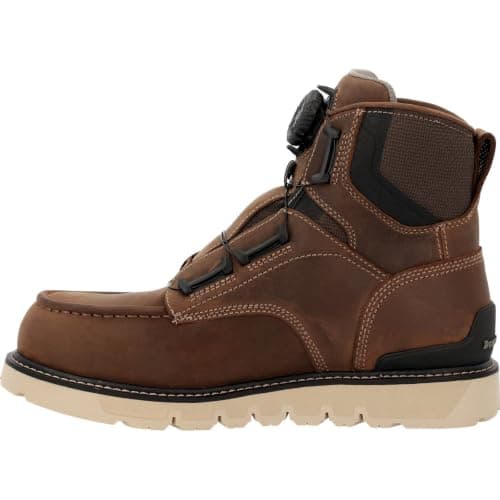 Georgia Boot Carbon Flex 6" BOA Waterproof Carbon Toe Moc-Toe Work Boot (GB00729) A waterproof moc-toe wedge with a carbon cap and a BOA dial instead of laces — retension it with a gloved hand mid-shift, which is the whole argument for a dial. | Dial removes volume evenly | Ergo-Fit carbon protective toeASTM F2413 protective toe classification; ASTM F2413 electrical hazard classification | |
| 4 | 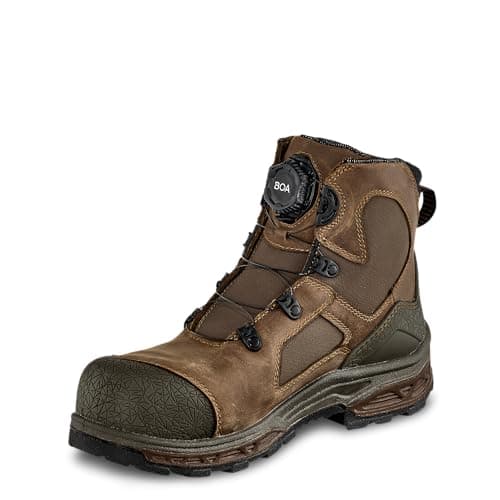 Irish Setter Kasota Safety Toe 6-inch Work Boot with BOA Fit System (83658) A waterproof safety-toe boot with a BOA dial instead of laces — you can retension it mid-shift with a gloved hand, which laces do not allow. | Dial you can retension mid-shift | Safety toeSafety toe with electrical hazard protection meeting ASTM standards |
Tap a row to jump to that boot's full write-up. The price column goes straight to Amazon.
Why the category ignores narrow feet
Work boots are built around D and EE, and the reason is commercial: those two widths cover most of the market, and the trades that complain loudest about fit complain about boots being too tight rather than too loose. So makers add width at the top of the range and almost never at the bottom. Look through this registry and the pattern is immediate — Thorogood publishes D and EE, Carolina D, 2E and 4E, Chippewa E and EEE, Georgia D and EE, Cat medium and wide.
The consequence for a slim foot is not cosmetic. A boot with too much volume lets the heel lift on every step, and heel lift is what causes blisters, toenail damage and the forward slide that jams your toes into the safety cap. It also wastes the cap's clearance: the standard certifies space above the toes, not space a sliding foot eats up.
The four, on published widths and fit systems
| Widths published | Fit mechanism | Notes | |
|---|---|---|---|
| Red Wing King Toe 2240 | Narrow (B), Regular (D), Wide (EE), Wide (H) | Laces | 44% more toe room than a standard work boot per Red Wing — roomy toes on a narrow last |
| Danner 23826 EMS side-zip | B, D and EE, sizes 6-16 | Laces plus a semi-locking side zip | The widest size run here; NFPA EMS certified |
| Georgia Carbon Flex BOA | D and EE | BOA dial | Dial pulls the upper down evenly; 1.95 lbs at size 10M |
| Irish Setter Kasota BOA | Not published | BOA dial | Retension with a gloved hand mid-shift |
What a B actually means, and why heel width matters more
Width letters step in roughly a quarter-inch of foot circumference: B is a men's narrow, D is the standard, EE is wide. What the letter does not tell you is where the width sits. Two boots in the same D can be cut very differently through the heel, and for a narrow foot the heel is the measurement that decides whether the boot works.
Red Wing makes this point about its own boot in a way worth repeating: the King Toe last adds room at the toes, not at the heel, so if you have a narrow heel you should take the B width rather than sizing down — sizing down to fix heel slip crowds the toes the boot was built to free. That is the right instinct for any narrow foot. The work boot sizing guide has the full width-letter table.
Why a dial beats laces on a slim foot
A lace pulls hardest at the eyelets you tighten and leaves slack everywhere else, which is why a narrow foot in a wide boot ends up with a cinched instep and a loose heel. A BOA dial draws the whole closure in together, so the upper closes down around the foot rather than being pinched at three points.
Georgia's Carbon Flex pairs that dial with a Counter Lock heel stabiliser, and Irish Setter's Kasota lets you retension with a gloved hand without stopping — useful because a narrow foot usually needs re-snugging once the boot warms up. Best BOA work boots covers the system in full, including where a dial is the wrong answer: if you relieve a specific pressure point by lacing around it, even tension is exactly what you do not want.
Four fixes if the boot you need only comes in D
Lace-lock at the ankle. A heel lock — running the lace through the top eyelet on the same side to form a loop, then crossing through the opposite loop — pins the heel without tightening the forefoot. It is the single most effective free fix for heel slip.
A thicker sock, fitted from the start. A midweight work sock takes up real volume. Fit the boot in the sock you will wear, not a thin liner. Best socks for work boots covers the cushioning placement that matters in a safety-toe boot.
A full-length insole. An aftermarket insole raises the foot slightly and fills volume under the arch, which tightens the fit across the instep without squeezing the toes. Best insoles for work boots goes through the options.
A tongue pad. A thin foam pad under the tongue takes up instep volume specifically, which is where a slim foot usually has the most slack. Cheapest fix on this list.
The side-zip case
Side-zip boots are often recommended for narrow feet and the logic is half right. The zip lets you set the lacing once and leave it, so the boot keeps the tension you dialed in rather than loosening each time you pull it on. The Danner 23826 is the one here that combines that with a genuine B width, which is why it is the pick for a narrow foot that also needs an 8-inch shaft. Best side-zip work boots has the rest of the field.
What a side zip will not do is make a wide last narrow. If the boot is too voluminous, a zip just means you fasten a loose boot more conveniently.
What to avoid
Sizing down. The commonest mistake, and the one that causes safety-toe injuries. A shorter boot in the same width is still too wide and now your toes hit an immovable cap — how safety-toe boots should fit explains why that goes badly.
Pull-on boots. A wellington has no closure at all, so there is nothing to take up slack. Wolverine says as much about its own Rancher: without laces you cannot correct heel slip, and heel slip is what causes blisters. If your foot is narrow, lace-up or dial is the category.
The picks in full
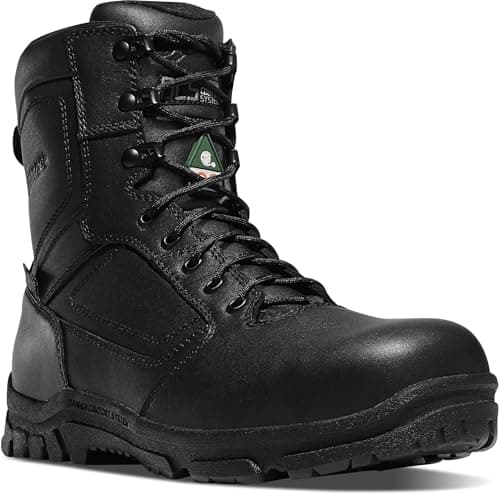
Illustrative category photo — not this model#1 — Publishes a narrow (B) width
Red Wing King Toe 6-inch Waterproof Safety Toe Boot (#2240)
Red Wing publishes 44% more toe room than a standard work boot and stocks four widths — the clearest answer on this list for a foot that fights every other last.
Published specifications
- Toe
- Non-metallic safety toe
- Safety rating
- ASTM F2413-24, I/C, EH
- Upper
- Waterproof waxed nubuck leather
- Outsole
- TPU-PU Galaxy outsole
- Midsole / shank
- Non-metallic shank
- Construction
- Direct attach — Red Wing states this model is not resoleable
- Waterproof
- Yes — Red Wing waterproofing system
- Insulation
- Not stated on the product page
- Widths
- Narrow (B), Regular (D), Wide (EE), Wide (H)
- Weight
- 3 lb 7 oz
- Made in
- Globally sourced
Specifications read from Red Wing Shoes product page (#2240) on 2026-09-27. We have not worn this boot.
What works
- Genuinely the widest toe box on this list, and Red Wing publishes the figure
- Four widths including an H, which almost nobody stocks
- Fully non-metallic underfoot — relevant for metal detectors
- Red Wing publishes an actual weight, which most brands do not
What doesn't
- Direct-attach construction: Red Wing states it is not resoleable
- Expensive for a boot you cannot rebuild
- The square King Toe silhouette is divisive
Who this is wrong for
Anyone buying for longevity through resoling. Red Wing's own page says no on this model — look at their welted Heritage lines instead.
Sizing
The King Toe last adds room at the toes, not at the heel. If you have a narrow heel, take the B width before you size down; sizing down to fix heel slip will crowd the toes the boot was built to free.
#2 — B through EE, sizes 6-16
Danner 8" Composite Toe EMS/CSA Side-Zip Work Boot (23826)
A waterproof 8-inch composite-toe boot with a semi-locking side zip and a B-through-EE width run — the fit-first side zip, and the only one here in a narrow width.
Published specifications
- Toe
- Composite toe cap
- Safety rating
- ANSI/ASTM I75 and C75 approved; electrical hazard rated; NFPA EMS certified; body-fluid-borne pathogen resistant
- Upper
- Waterproof, polishable full-grain leather with ripstop ballistic nylon
- Outsole
- Danner Lockout slip-resistant outsole with a dynamic lug pattern
- Midsole / shank
- Nylon shank with a dual-density footbed
- Construction
- Not published on the retailer spec page
- Waterproof
- Waterproof Danner Dry liner
- Insulation
- Not published
- Widths
- B, D and EE, sizes 6-16
- Weight
- Not published
Specifications read from Authorized retailer spec page (Steel-Toe-Shoes.com) — Danner 23826 on 2026-09-29. We have not worn this boot.
What works
- A narrow B width, which almost nothing else in this category offers
- Composite cap — no cold conduction and no metal-detector problem
- Polishable leather, for anywhere a boot has to look inspected
What doesn't
- Most expensive side zip here
- Neither Danner nor the retailer publishes the construction method
- Lug tread tracks grit indoors
Who this is wrong for
Flat-floor indoor trades on a budget. You are paying for EMS certification and a width run you may not need.
Sizing
Take the width before the length here — the B, D and EE run is the reason to buy this boot, and sizing up to buy room is what it is meant to prevent.
#3 — Dial removes volume evenly
Georgia Boot Carbon Flex 6" BOA Waterproof Carbon Toe Moc-Toe Work Boot (GB00729)
A waterproof moc-toe wedge with a carbon cap and a BOA dial instead of laces — retension it with a gloved hand mid-shift, which is the whole argument for a dial.
Published specifications
- Toe
- Ergo-Fit carbon protective toe
- Safety rating
- ASTM F2413 protective toe classification; ASTM F2413 electrical hazard classification
- Upper
- Full-grain leather with a stretch gusset
- Outsole
- Co-molded TPU/PU outsole — heat-, abrasion- and slip-resistant, with flex grooves
- Midsole / shank
- Fiberglass shank with a Counter Lock heel stabilizer and a removable AMP memory-polyurethane insole
- Construction
- Bond welt construction
- Waterproof
- Georgia Waterproof System with a high-performance mesh lining
- Insulation
- Not published
- Widths
- D and EE
- Weight
- 1.95 lbs, size 10M
Specifications read from Georgia Boot product page (Carbon Flex BOA, GB00729) on 2026-09-29. We have not worn this boot.
What works
- A dial you can work with gloves on, and it holds tension evenly
- Carbon cap keeps the weight down and the cold out
- Stretch gusset takes the pressure off the instep that a dial can create
- Published weight, which is more than most brands give you
What doesn't
- The dial is a mechanical part and an impact can break it
- A dial cannot skip an eyelet, so a high instep has no escape route
- Bond welt is not a resoleable construction
Who this is wrong for
Anyone who relieves a pressure point by lacing around it. Even tension is what a dial does, and that is exactly wrong for an unusually high instep.
Sizing
Dial boots feel looser than laces at the same tightness because the pressure is spread. Judge fit by heel hold, not by how snug the top of the foot feels.
#4 — Dial you can retension mid-shift
Irish Setter Kasota Safety Toe 6-inch Work Boot with BOA Fit System (83658)
A waterproof safety-toe boot with a BOA dial instead of laces — you can retension it mid-shift with a gloved hand, which laces do not allow.
Published specifications
- Toe
- Safety toe
- Safety rating
- Safety toe with electrical hazard protection meeting ASTM standards
- Upper
- Leather upper with the BOA Fit System
- Outsole
- Direct attach sole
- Midsole / shank
- Not published on the manufacturer page
- Construction
- Direct attach — flexible, lightweight and waterproof per Irish Setter
- Waterproof
- Waterproof
- Insulation
- Not insulated
Specifications read from Irish Setter product page (Kasota 83658) on 2026-09-27. We have not worn this boot.
What works
- Retension in one gloved motion — genuinely useful when feet swell mid-shift
- No laces to snag or untie
- Waterproof
What doesn't
- A BOA dial is a mechanical part that can be damaged by impact
- Even tension across the instep means less ability to lace around a pressure point
- Direct attach is not resoleable
Who this is wrong for
Anyone working where the dial will take direct hits — demolition, scrap handling, anything that drags across the instep.
Sizing
BOA distributes tension evenly, which suits a normal-volume foot and fights a very high instep. If you normally skip an eyelet to relieve a pressure point, BOA will not let you.
Frequently asked questions
Do work boots come in narrow widths?
A few do, but it is rare. Red Wing stocks the King Toe 2240 in a narrow B alongside D, EE and H, and Danner lists the 23826 EMS side-zip in B, D and EE. Most of the category publishes D and EE only, because makers add width at the top of the range rather than the bottom.
What should I do if my work boots are too wide?
Lace-lock the ankle to pin the heel, fit the boot in the midweight sock you actually work in, add a full-length insole to fill volume under the arch, and use a tongue pad to take up instep slack. Do not size down — a shorter boot in the same width still slips and now your toes reach the safety cap.
Are BOA boots good for narrow feet?
Generally yes. A dial draws the whole closure in evenly rather than pulling hardest at the eyelets you tighten, so it removes volume across the instep in a way laces on a wide last cannot. The exception is a foot that needs lacing around a specific pressure point, where even tension is the wrong answer.
Does heel slip go away as boots break in?
No. Break-in softens the upper and molds the leather, which generally makes a loose boot looser rather than tighter. Fix heel slip at purchase with width, a heel lock or added volume — waiting it out makes it worse.
Sources
- ASTM F2413 protective footwear standard — technical summary — Label format, the mandatory I and C designations, and each optional code
- American Podiatric Medical Association — Bunions — A podiatric body stating the footwear rule plainly: a wide and deep toe box, and no squeezing the toes together